Medical Research Institute KITANO HOSPITAL, PIIF Tazuke-Kofukai
Inquiry
search
close


Departments
We provide everything from drug therapy to advanced treatments using catheters. As a training facility certified by the Japanese Circulation Society and the Japanese Society of Interventional Cardiovascular Therapeutics, our specialists and certified doctors make full use of the cardiac catheterization laboratory and provide medical care 24 hours a day, including for emergencies.
With the motto of "thinking sincerely," we always consider what treatment is truly needed at the moment and what type of treatment is appropriate when providing treatment.
We hold a cardiac center conference every day with the arrhythmia department and cardiovascular surgery department to decide on the appropriate treatment plan.
In October 2024, we began offering catheter-assisted valve implantation (TAVI) as a minimally invasive procedure for aortic valve stenosis, a type of heart valve disease that has been increasing in recent years. We work with cardiovascular surgeons to determine the optimal treatment plan for each patient. We have also opened an outpatient clinic for heart valve disease for patients with symptoms such as heart murmurs, palpitations, and shortness of breath.
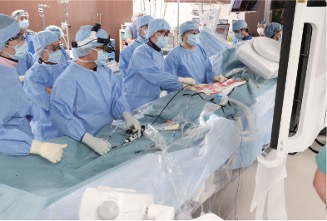
TAVI in action
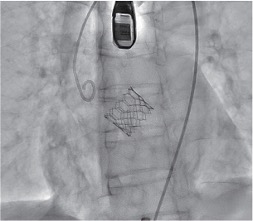
The artificial valve inserted
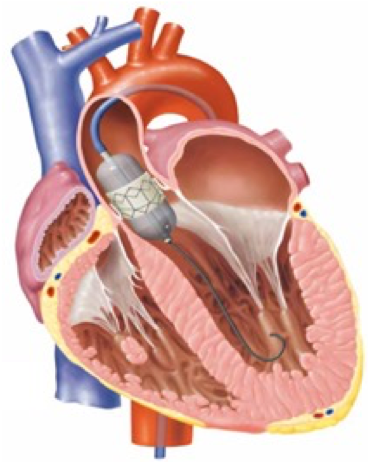
Image of TAVI
(Source: Informed Consent
Atlas of Cardiovascular Diseases for Children
Catheter treatment for ischemic heart disease has matured, and it is necessary to be able to perform it more quickly and safely. We will provide cutting-edge treatment and ensure quality of life through proactive intervention as a core general hospital and heart team in the region.24-hour medical careWe are currently working on the following.
Doctors and physical therapists with medical knowledge about the heart are involved in providing support to actively stimulate the heart after surgery, or when the body is in a state of difficulty moving due to myocardial infarction, heart failure, etc. In addition to exercise therapy, multidisciplinary support is provided that covers the disease, daily life precautions, the importance of medication, dietary therapy, and more, with the aim of helping patients return to society and preventing recurrence.
In addition to the arrival of an aging society, lifestyle-related diseases are on the rise due to the Westernization of lifestyle habits. This is also leading to an increase in arteriosclerosis. Arteriosclerosis is not limited to ischemic heart disease and cerebrovascular disease, but can affect blood vessels throughout the body. Peripheral arterial disease (PAD) has a poor prognosis when it becomes severe, leading directly to a decline in quality of life (QOL), so early detection and treatment are essential.
"My legs feel heavy when I walk," "My legs are cold," "My legs are numb," "I'm taking a lot of blood pressure medicine but my blood pressure won't go down."If you have any questions, please contact us.
The second cardiac catheterization laboratory began operation on March 9, 2020.
For detailsDigital Angiography SystemPlease see.


