Medical Research Institute KITANO HOSPITAL, PIIF Tazuke-Kofukai
Inquiry
search
close


Departments
Kitano Hospital has opened a new consultation window for those seeking treatment for tremors and Parkinson's disease.
Among the tremors experienced by many people, symptoms such as trembling hands that make it difficult to write, use chopsticks, or drink water from a cup may be the tremors of essential tremor. In addition to trembling hands, essential tremor can also cause head shaking and a trembling voice. When treating essential tremor, there are often problems such as medications being ineffective or side effects that make it difficult to take the medication properly.
Some people with Parkinson's disease have difficulty curing tremors, a symptom of the disease. Others have difficulty curing motor symptoms such as slow body movements, or dyskinesia (a motor complication) in which the body moves involuntarily when taking medication.
Our hospital provides surgical treatment for essential tremor, tremors caused by Parkinson's disease, and motor symptoms and complications of Parkinson's disease. Consultations are accepted at the Tremor/Parkinson's Disease Outpatient Clinic.
A new option, "non-incision surgery," has been added to the surgical treatment for "tremors" and "Parkinson's disease."
Currently, surgical treatments approved as covered by insurance for tremors are:
There are three ways to do this:
Among these, "focused ultrasound therapy" is attracting attention as the latest "non-surgical treatment." It uses ultrasound, eliminating the need for surgical procedures such as cutting with a scalpel or drilling holes in the bone, and does not require the implantation of a pacemaker-type device like those used in "deep brain stimulation." Focused ultrasound therapy is a groundbreaking treatment method in which the patient enters an MRI examination room with their head fixed in a device, and ultrasound is concentrated on a part of the brain to suppress tremors while confirming its effectiveness and safety. Because it is a "non-surgical" method, patients can undergo treatment with greater peace of mind compared to conventional surgery.
Our clinic will begin offering "Focused Ultrasound Therapy" from March 2021. At the moment, it is only available for symptoms on one side of the body, either the right or left side.
"Focused ultrasound therapy" is a treatment approved by insurance for "essential tremor," "tremors" of "Parkinson's disease," and the motor symptoms and complications of "Parkinson's disease." During the consultation, we will ask about the symptoms of "tremors" and "Parkinson's disease" and past treatments, and also measure skull density with a head CT scan to determine whether "Focused ultrasound therapy" is appropriate. Please note that in order to fit the ultrasound device closely to the scalp during treatment, you will need to shave all of your hair. Hospitalization is approximately one week.
At our hospital, we provide this "focused ultrasound therapy" in addition to "deep brain stimulation therapy" and "stereotactic ablation" to treat "essential tremor" and "Parkinson's disease."
Click here for international visitors.
| FUS Focused ultrasound treatment |
DBS Deep brain stimulation |
GKRS Gamma Knife |
RF High frequency thermal coagulation method |
|
|---|---|---|---|---|
| Frame installation | can be | can be | can be | can be |
| shaved head | can be | Partial | none | Partial |
| Cranial burr/operative wound | none | can be | none | can be |
| effect | Immediate effect | Immediate effect | Around 4 months | Immediate effect |
| adjustability | none | can be | none | none |
| reversibility | none | can be | none | none |
| Bilateral treatment | none | can be | can be | none |
| Medical device implantation | none | can be | none | none |
| Insurance coverage | can be | can be | none | can be |
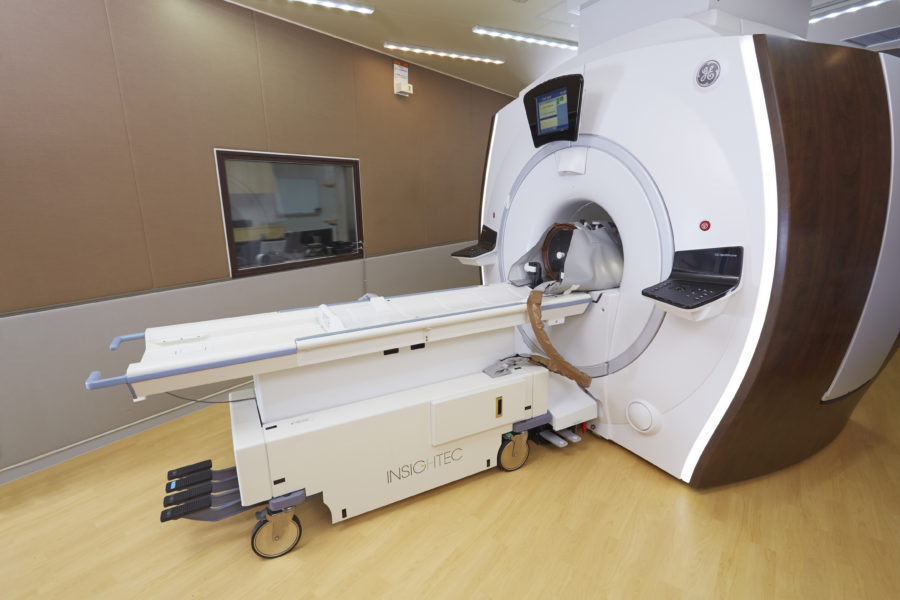
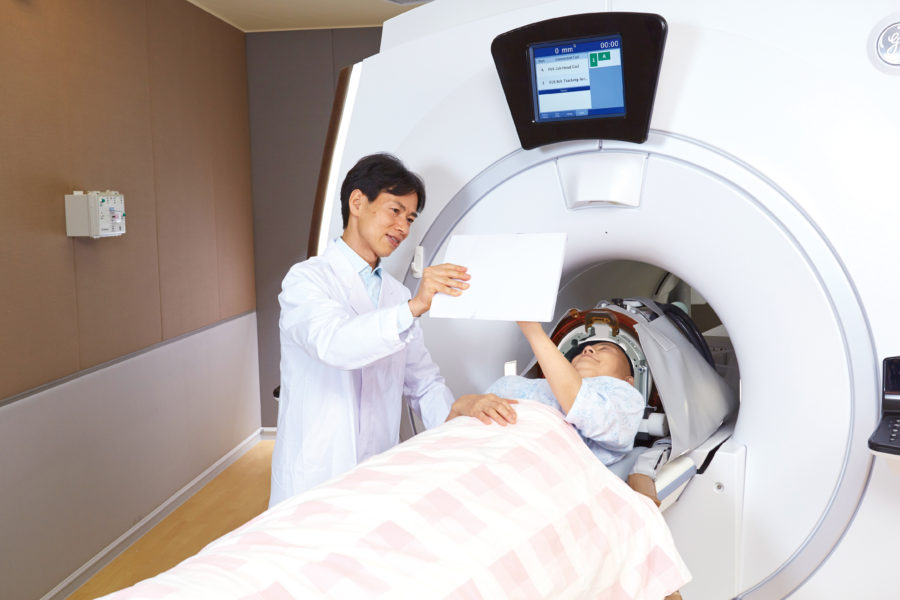
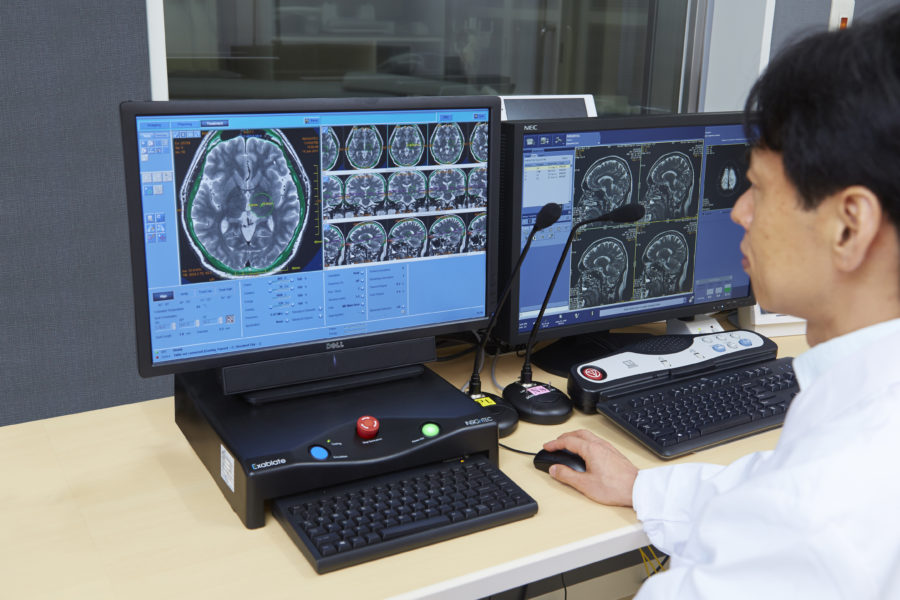
For more information about FUSThis equipment introduction pagePlease see.
*Photographs were taken with the patient's consent.
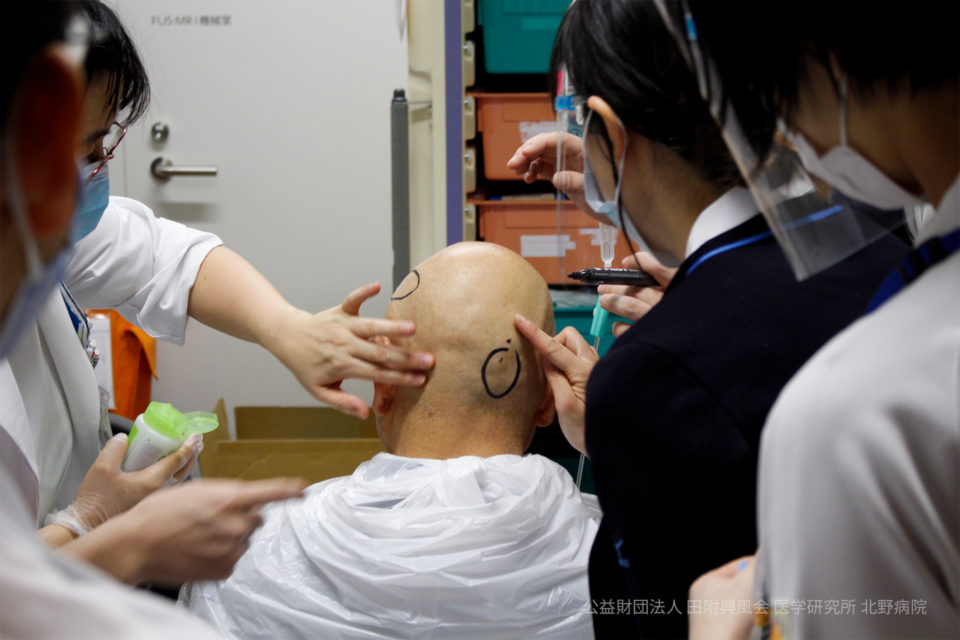
Shaving of the head
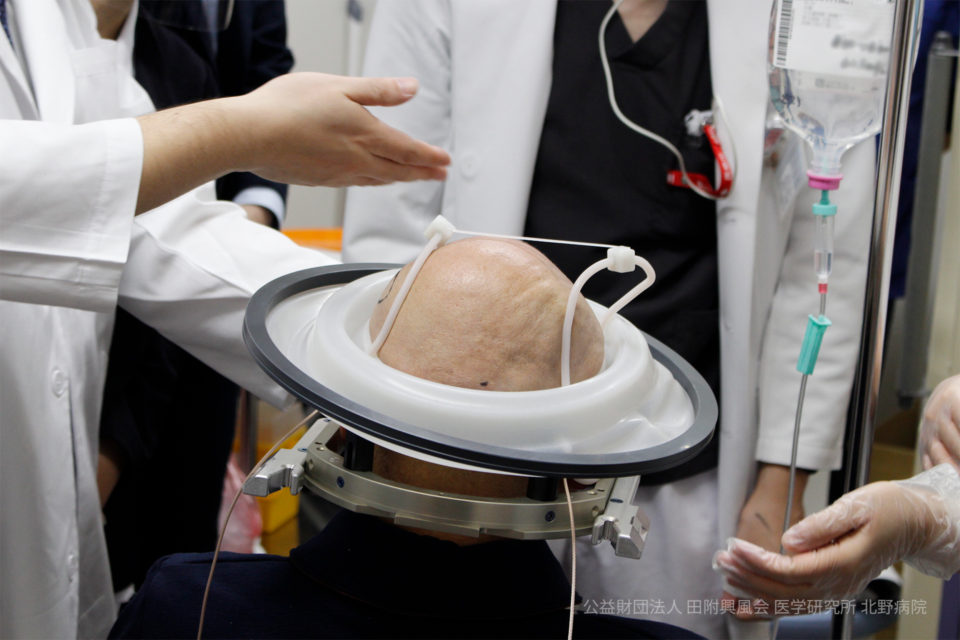
Frame installation
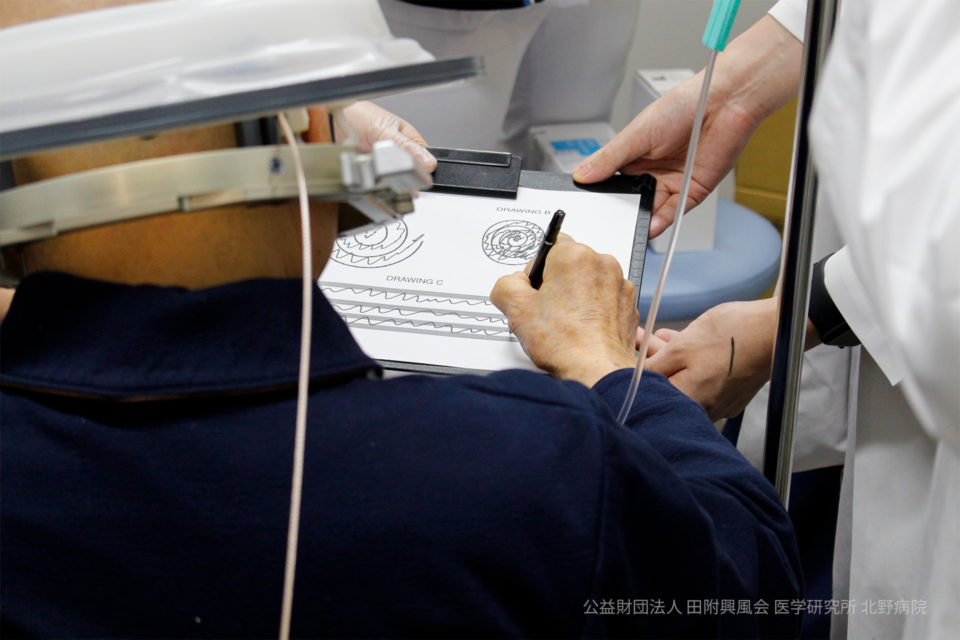
Check for tremors before treatment
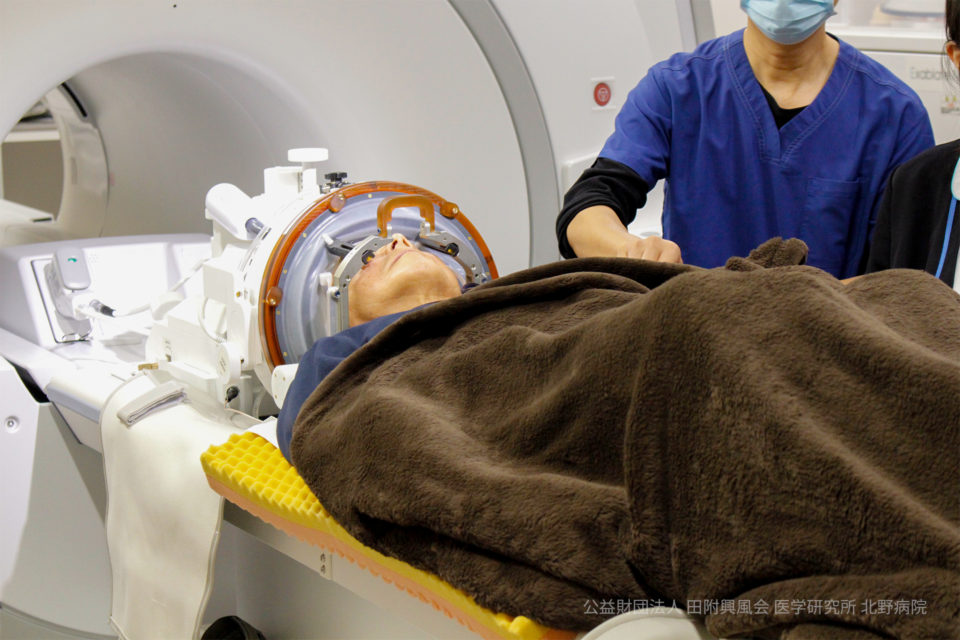
Preparation in the MRI room
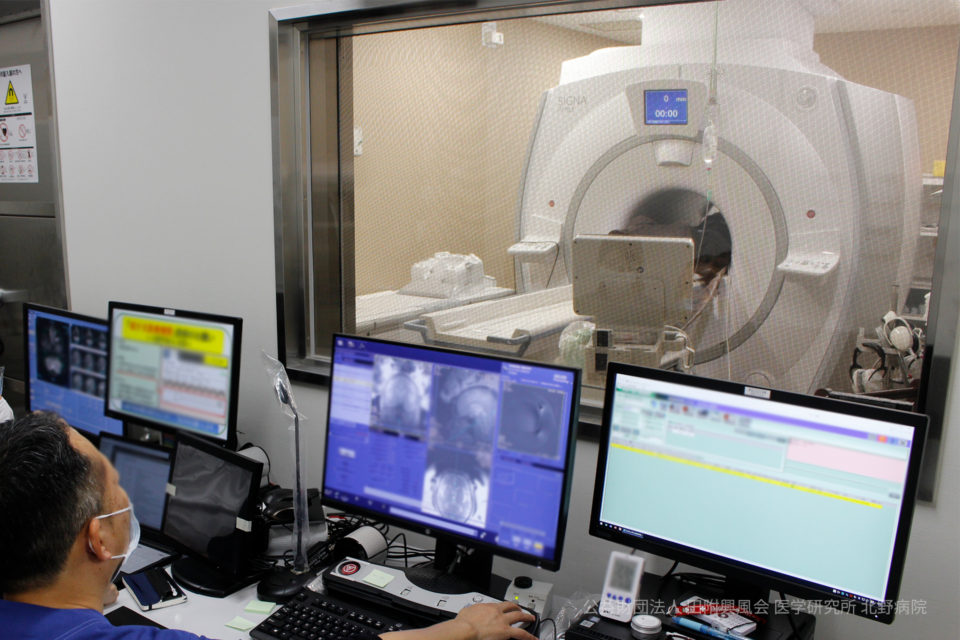
Positioning and ultrasound exposure
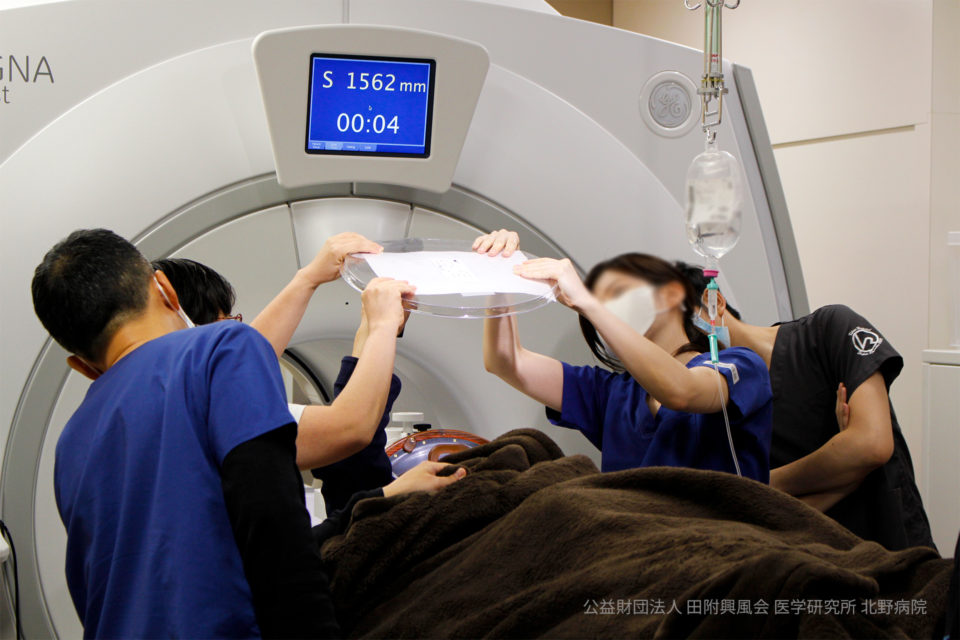
Checking for tremors during treatment
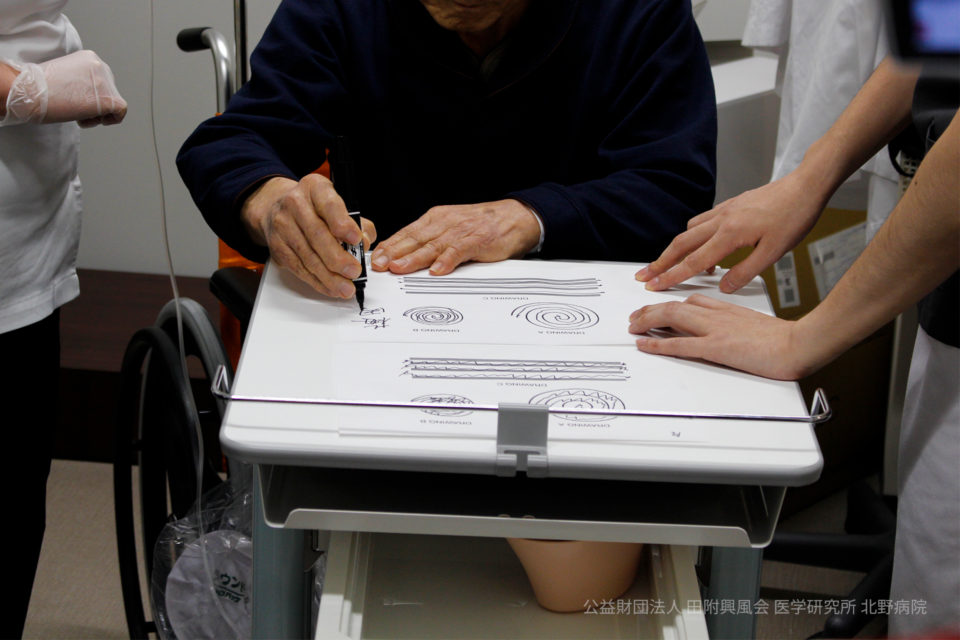
Check for tremors after treatment
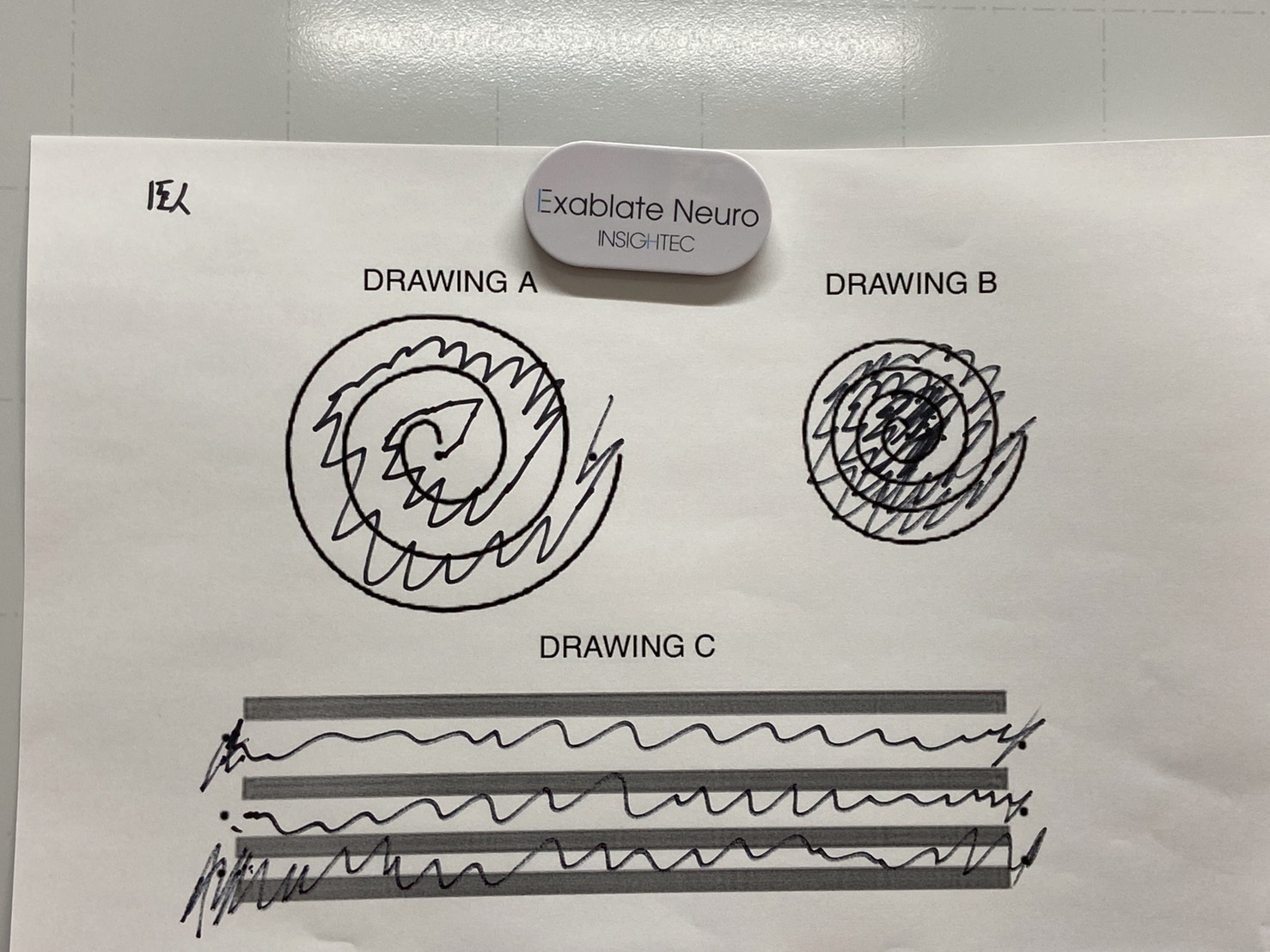
Tremor status before treatment
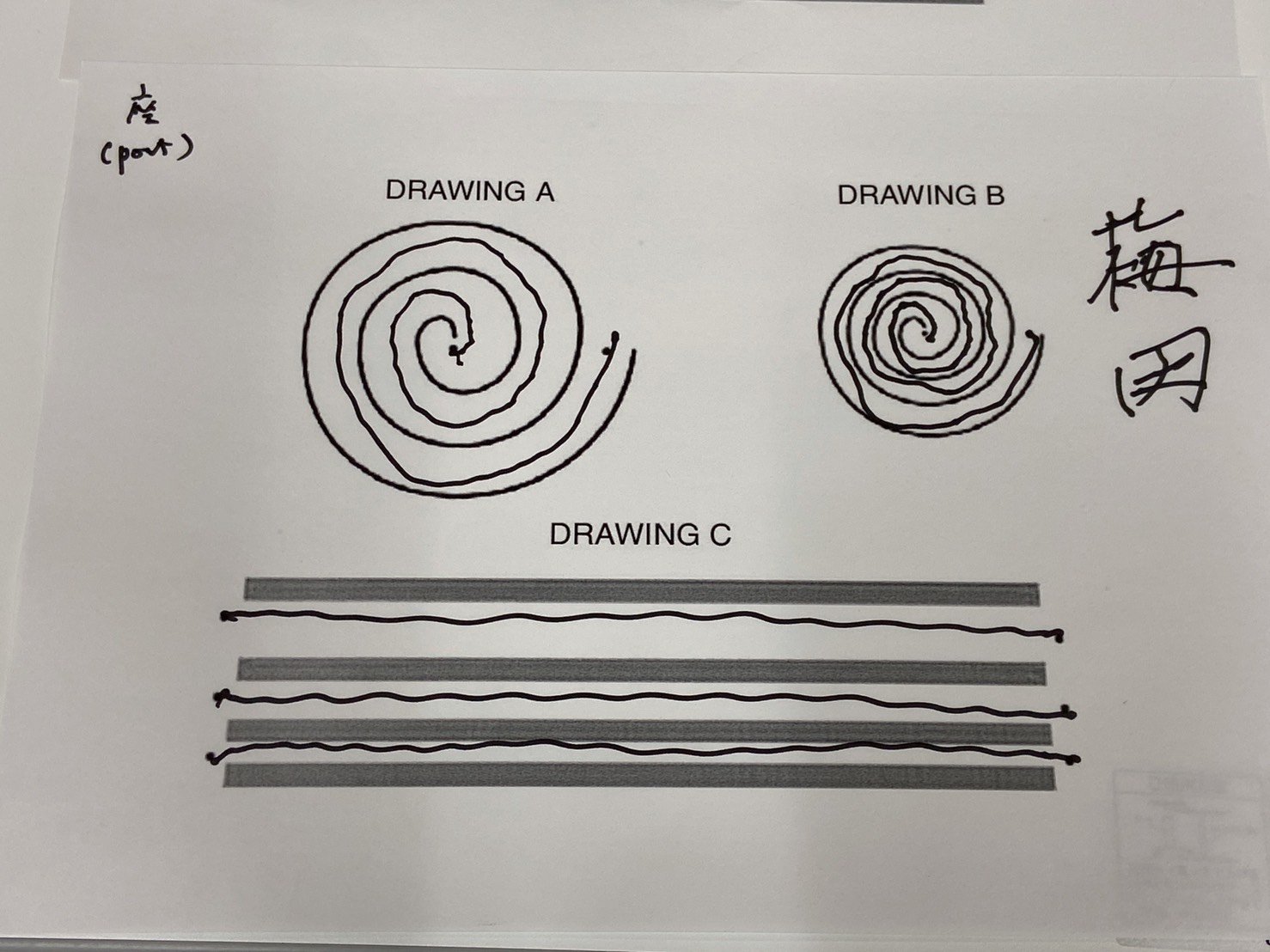
Tremor status after treatment
*After treatment, the patient wrote their name, so that part has been edited and deleted.
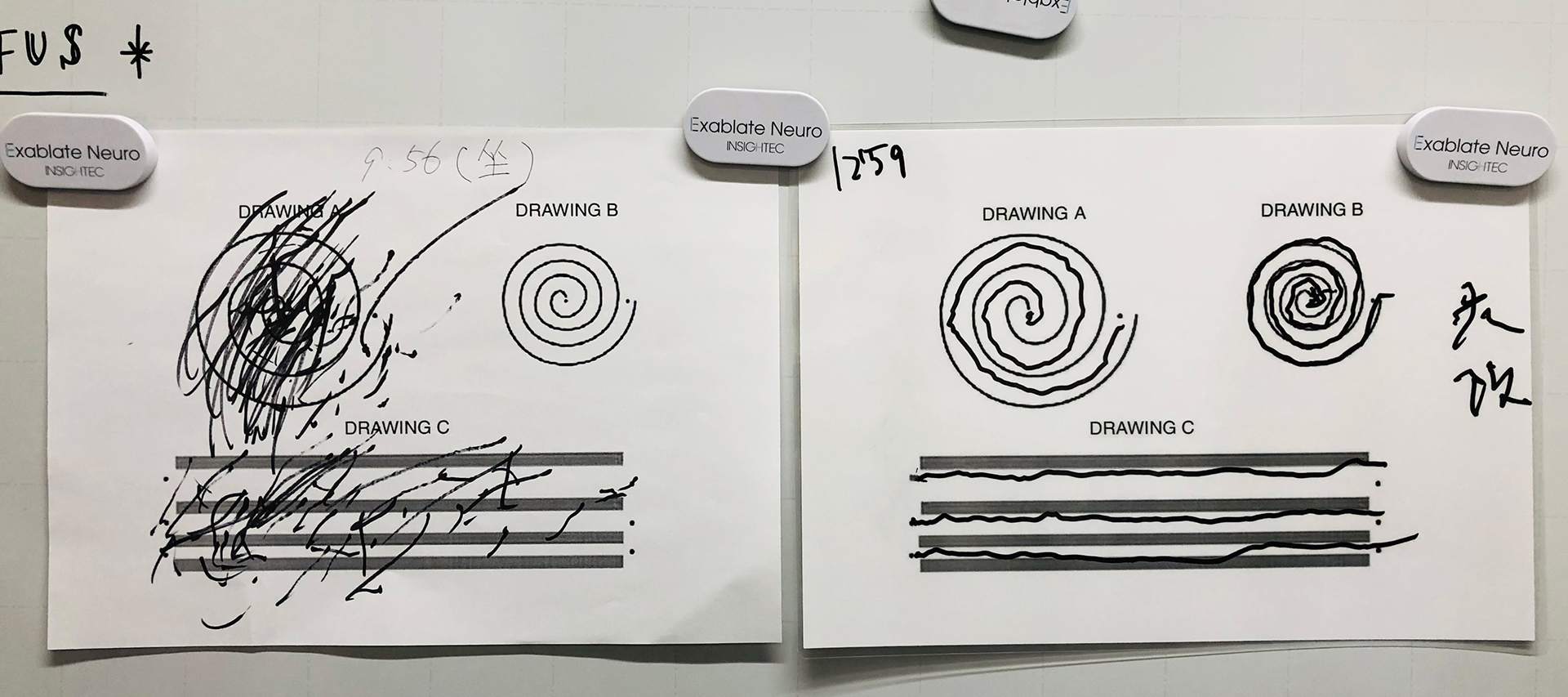
Left: Before treatment / Right: After treatment
We have put together a video of Dr. Toda and Dr. Nishida, who actually treat patients at Kitano Hospital, and the stories of patients who have actually received treatment. Please take a look.
The event was co-hosted by Kyoto University and Kitano Hospital and focused on new treatments for tremors and Parkinson's disease. The entire event is available to the public, so please take a look.
For details of each lecture and lecturer, please seeLinked pagePlease check.
Please note that FUS treatment is not suitable for all patients, and the decision will be made after the doctor has first examined and examined the patient.
| How to get examined | From other medical institutionsA letter of introduction and reservation are requiredIt is as follows.
How to make a reservation directly from another medical institution
How patients make their own reservationsPatients can make their own reservationsPlease refer to the page. |
|---|---|
| Contact Us | Kitano Hospital, 3rd floor, Outpatient Block D |