Medical Research Institute KITANO HOSPITAL, PIIF Tazuke-Kofukai
Inquiry
search
close


Departments
More common in adult men (male to female ratio 2:1)
In Japan, the number of patients with kidney cancer accounts for approximately 2.0% of all malignant tumors, with an incidence rate of approximately 15.5 per 100,000 population. Smoking and obesity increase the risk of developing kidney cancer. Genetic factors such as mutations in the von Hippel-Lindau (VHL) tumor suppressor gene and Birt-Hogg-Dube (BHD) tumor suppressor gene increase the risk of developing kidney cancer.
As the tumor grows, it may cause hematuria, abdominal pain, back pain, etc., but in recent years there has been an increase in cases where the tumor is discovered early by chance during checkups or health checkups without any noticeable symptoms.
Ultrasound examination, contrast CT, MRI, etc.
If it is difficult to determine whether the condition is benign or malignant based on the above alone, a percutaneous renal biopsy may be performed.
Localized cancer (T1, T2) Tumor lesions are limited to the inside of the kidney
Advanced cancer (T3, T4) Lesions have spread to the surrounding kidneys
Advanced cancer is more likely to develop lymph node metastasis or distant metastasis than localized cancer.
Radical nephrectomy: Removal of the entire kidney on the side with the tumor
Partial nephrectomy: Removal of only the area containing the tumor, preserving the healthy kidney.
Radical nephrectomy can now be performed laparoscopically in the majority of cases, and partial nephrectomy is becoming increasingly common, particularly in cases where the tumor is detected early and is small, with the aim of preserving kidney function.
Since April 2016, partial nephrectomy using a surgical robot (Da Vinci) for kidney cancer has been covered by health insurance, and our hospital has been actively performing this procedure.
Traditionally, immunotherapy for metastatic kidney cancer has involved two types of injectable drugs: interferon and interleukin 2. While these drugs are still used in recent years, molecular targeted therapy drugs have been covered by insurance since 2008, and various molecular targeted therapy drugs such as Nexavar, Sutent, Inlyta, Votrient, Afinitor, and Torisel are now available. Furthermore, Opdivo, an immune checkpoint inhibitor developed in Japan, was introduced in 2016. We select these drugs according to each individual case to treat metastatic lesions.
Renal pelvic cancer/ureteral cancer
Urine produced in the kidneys collects in the "renal pelvis," passes through the "ureter," is stored in the "bladder," and is then excreted from the body through the "urethra." This urinary tract is lined with cells called "transitional epithelium," and malignant tumors that develop in the transitional epithelium are called "urothelial carcinoma."
Urothelial cancer that occurs in the renal pelvis and ureter is called "renal pelvic cancer" and "ureteral cancer," respectively.
A characteristic of urothelial carcinoma is that the cancer can arise at different times and in different locations.
It tends to be more common among middle-aged and elderly people over the age of 50 (male to female ratio is approximately 2:1).
The main symptoms are hematuria, flank pain, and lower back pain, but asymptomatic cases are also observed.
Smokers are three times more likely to develop the disease than non-smokers.
Diagnosis is made using a combination of imaging tests (ultrasound, contrast CT, MRI, retrograde urography, bone scintigraphy, etc.), urine cytology, and in some cases ureteroscopy.
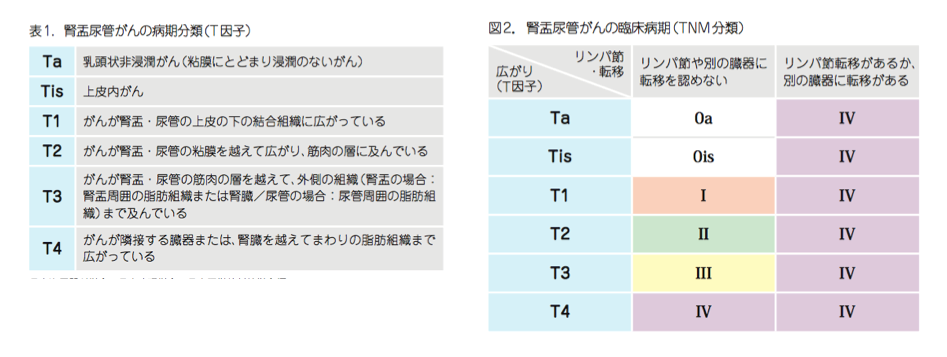
Localized cancer (carcinoma in situ, Ta, T1, T2) Localized within the renal pelvis or ureter
Invasive cancer (T3, T4) Invades the renal pelvis and ureter
Advanced cancer: distant metastasis to other organs or lymph nodes
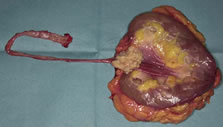 In the case of superficial cancer, surgical treatment (=total nephroureterectomy) is the standard procedure.
For invasive cancer, options include surgery and systemic chemotherapy.
In the case of advanced cancer, we will carry out systemic chemotherapy and radiation therapy in collaboration with specialist departments. If appropriate, we may also administer new types of anticancer drugs and immune checkpoint inhibitors (pembrolizumab in the case of urothelial cancer).
*The photo shows kidney and ureter tissue and tumors removed during surgery.
If the cancer is localized, the prognosis is good.
In the case of invasive or advanced cancer, it is often difficult to cure it completely, but we aim to control the cancer by combining the various treatments mentioned above.
1) Cancer Statistics '17
https://ganjoho.jp/reg_stat/statistics/brochure/backnumber/2017_jp.html
Urine produced by the kidneys accumulates in a sac-like organ in the lower abdomen called the bladder, where it is released.
The bladder is lined with cells called urothelium, and most bladder cancers are urothelial carcinomas that arise from the urothelium.
Bladder cancer is known to develop at different times and locations.
It is more common in men over the age of 50 (male to female ratio is approximately 2:1), and the incidence rate among all cancer types is approximately 2%. 1)
Blood in the urine, pain during urination, frequent urination
The risk of developing bladder cancer in smokers is about 2-5 times higher than in non-smokers.
For those who complain of the above symptoms, we will perform non-invasive tests such as ultrasound and urine cytology. If bladder cancer is suspected, we will perform a cystoscopy.
If a tumor like the one shown in the diagram below is found during cystoscopy, endoscopic surgery (TUR-Bt) will be performed to make a final diagnosis.
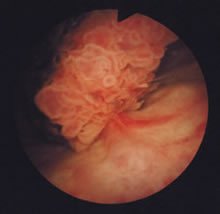
*The photo shows bladder cancer seen through an endoscope*
Superficial cancer (Ta, T1, carcinoma in situ) Superficially located near the bladder mucosa (shallow roots)
Invasive cancer (T2, T3, T4) Invading deep into the bladder (deep-rooted)
Final staging is done by endoscopic surgery.
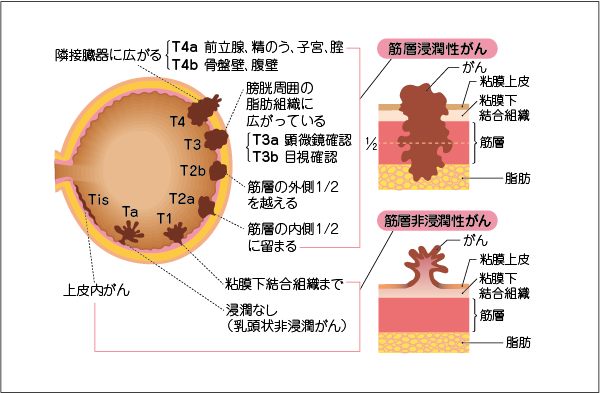 2)
2)
Treatment plans vary greatly depending on the stage of the condition.
a) Endoscopic surgery (transurethral tumor resection, TUR-Bt)
b) Intravesical therapy: After endoscopic surgery, medication may be injected into the bladder to prevent recurrence.
Radical cystectomy is the standard treatment.
There are two methods: creating an outlet (stoma) for urine in the abdomen (ureterocutaneous fistula or ileal conduit), and self-urination, which involves creating a substitute (artificial) bladder using the intestine and anastomosing it with the urethra.
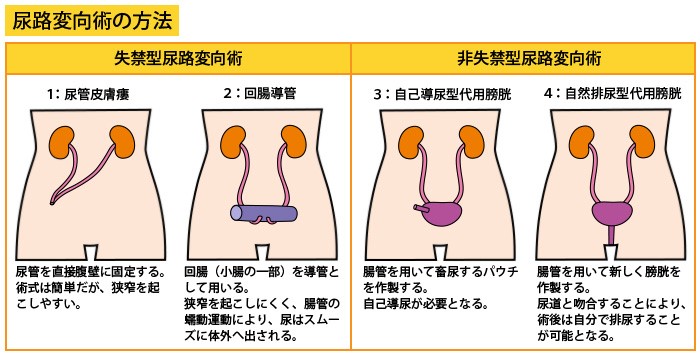 3)
3)
Those who have undergone urinary diversion after surgery will visit a specialized outpatient clinic called the Stoma Clinic, where stoma management will also be provided.
For unresectable invasive bladder cancer and metastatic bladder cancer, we provide systemic chemotherapy and radiation therapy in collaboration with specialist departments.
In addition to conventional combination therapy based on cisplatin, we also administer immune checkpoint inhibitors (pembrolizumab) if appropriate.
External radiation therapy may also be used to reduce blood in the urine and pain.
Recurrence in the bladder is relatively frequent (around 50%), but metastasis is extremely rare, so even if recurrence occurs, it can be treated endoscopically. It only takes about 5% for superficial cancer to progress to invasive bladder cancer.
If the cancer has spread outside the bladder or has metastasized to distant areas, it is difficult to cure completely, but we can try to control the cancer by combining anticancer drugs and radiation therapy.
1) Cancer Statistics
https://ganjoho.jp/data/reg_stat/statistics/brochure/2017/cancer_statistics_2017_date_J.pdf
2) National Cancer Center Cancer Information Service
https://ganjoho.jp/public/cancer/bladder/diagnosis.html
3) Cancer Treatment Database
http://www.camedata.jp
Prostate cancer is a cancer with a high incidence rate worldwide, accounting for approximately 10% of all cancers in men. It was generally thought to be more prevalent in Westerners and relatively uncommon in Asians, but in recent years, with the Westernization of lifestyle habits, prostate cancer has been increasing in Japan as well. Cases are increasing in all age groups over 50, with a particularly high incidence in those in their 60s and 70s (Figure 1).
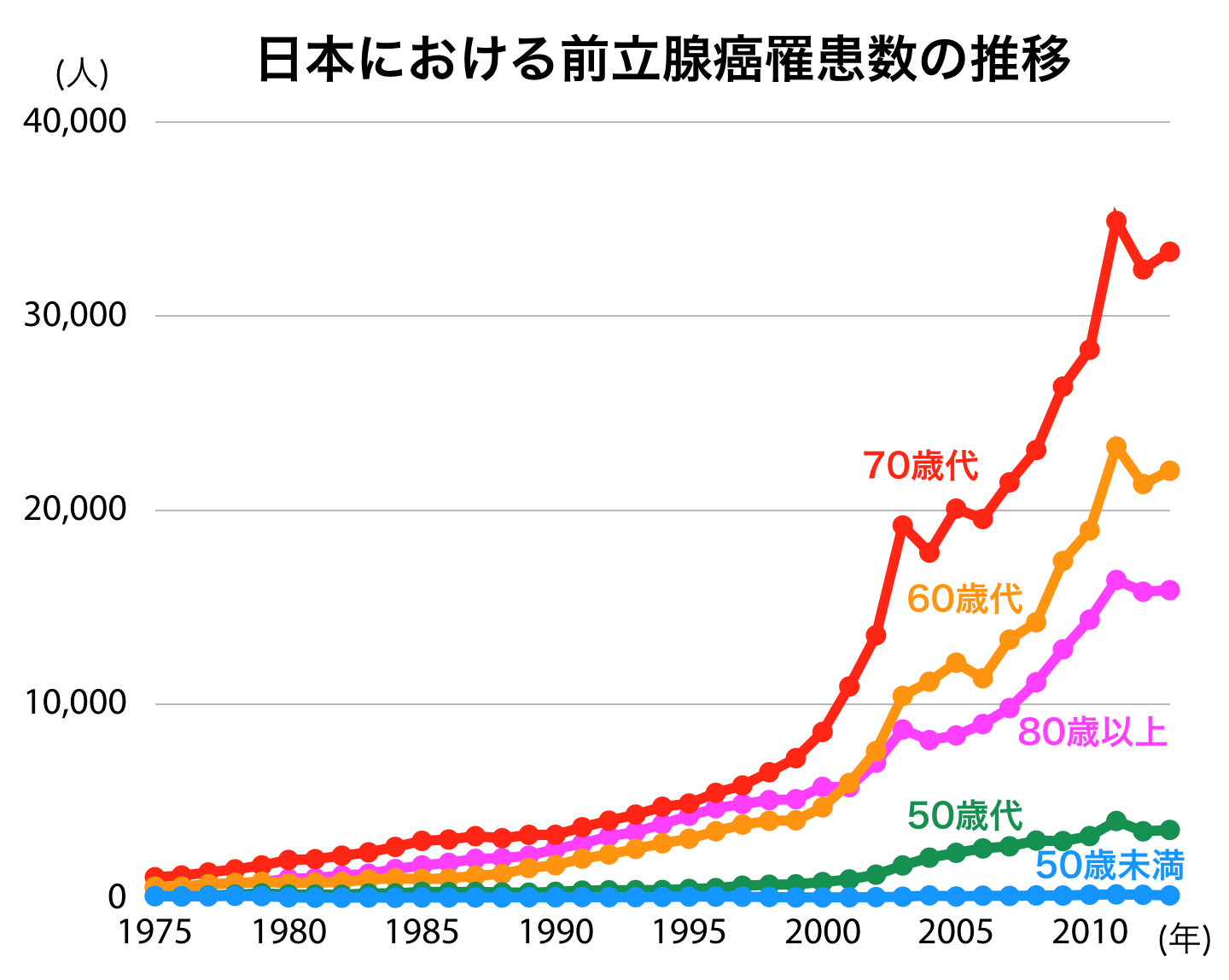
From the National Cancer Center Cancer Information Service "Cancer Registry and Statistics"
The prostate gland is found only in men. It is located just below the bladder, with the urethra passing through it. Urine from the bladder first passes through the prostate. For this reason, prostate disease affects urination (difficulty urinating, frequent urination, blood in the urine, etc.). The prostate also produces part of the semen, making it an essential organ for reproductive function.
Most prostate cancers are discovered during health checkups. Early-stage cancer rarely causes any noticeable symptoms unless it is accompanied by benign prostatic hyperplasia. If the PSA tumor marker level during a health checkup is above the normal range (4ng/mL), further testing is recommended. A tissue test called a needle biopsy is required to determine whether or not cancer is present. However, PSA levels are known to increase with prostate enlargement, inflammation, age, and other factors in addition to cancer. To avoid unnecessary biopsies, we recommend prostate biopsies only when truly necessary, taking into account data such as age, the degree of PSA elevation, prostate size, and MRI scans. The probability of detecting cancer is estimated to be approximately 30% for a PSA level of 4-10, approximately 50% for a PSA level of 10-20, and 50-70% for a PSA level of 20 or above.
As prostate cancer progresses, it puts pressure on the bladder outlet and urethra, causing difficulty in urinating (difficulty urinating), frequent urination (frequent urination), and bloody urine. Prostate cancer may also be discovered only after it has metastasized to the bones and causes pain.
When performing a prostate biopsy, an ultrasound instrument is inserted through the anus, and tissue is taken by inserting a thin needle while observing the prostate (Figure 2). The first biopsy will take samples from approximately 12 locations. The examination takes approximately 30 minutes. In rare cases, bleeding or fever may occur after the examination, so patients will be hospitalized for 1-2 nights to monitor their progress.
In addition to determining whether or not cancer is present, a biopsy can also reveal the cancer's malignancy. To classify the malignancy of cancer, a score called the "Gleason score" is used specifically for prostate cancer. There are nine levels ranging from 2 to 10, with lower scores indicating milder malignancies and higher scores indicating more malignant ones. In reality, scores below 5 are rarely given, and the range is between 6 and 10.
If you are diagnosed with prostate cancer, another important factor is the extent of the cancer (stage). CT scans and bone scans are added to classify the disease into stages A to D.
Stage A: Cancer discovered incidentally during surgery for benign prostatic hyperplasia
Stage B: Cancer confined to the prostate
Stage C: Cancer that has spread outside the prostate but has not metastasized
Stage D: Cancer that has metastasized to bones, lymph nodes, etc.
In addition, the risk of recurrence of non-metastatic prostate cancer after undergoing the following curative treatments is being studied and classified into low-risk, intermediate-risk, and high-risk. The PSA value, the extent of cancer within the prostate, and the Gleason score are used to determine the risk of recurrence.
Treatments for prostate cancer include surgery, radiation therapy, endocrine therapy (hormone therapy), and chemotherapy using anticancer drugs, and there are multiple radiation therapy methods, including external beam radiation, brachytherapy, and particle beam radiation.In addition, there is also a method called "PSA surveillance therapy," in which, rather than starting active treatment immediately, the patient's progress is monitored through periodic PSA tests, and treatment is administered only when necessary.
Although there are a wide variety of options, treatment options are narrowed down to a certain extent depending on the condition of the cancer and the patient's physical strength, etc.
If the cancer has not metastasized, it can be expected to be cured with "radical treatment" such as radical prostatectomy or radiation therapy. This applies to stage C or below. There are advantages and disadvantages to choosing between surgery and radiation therapy, so we consult with each patient thoroughly before deciding on the treatment method. When performing radical prostatectomy,We use a surgical robotic system called "Da Vinci.".
If the condition recurs after treatment
Even after surgery or radiation therapy, PSA levels may rise again and a diagnosis of recurrence may be made. In many cases, the initial PSA level is the only thing that rises, and even imaging tests cannot pinpoint the location of recurrence. Additional treatments will be considered while carefully monitoring the patient's progress. In the case of local recurrence after surgery, a cure may be achieved by adding radiation therapy to the pelvic region. On the other hand, if recurrence occurs after radiation therapy, it is difficult to perform an additional radical prostatectomy. In this case, hormone therapy, etc., as described below, will be considered while monitoring the patient's progress.
Unfortunately, if the cancer has metastasized, it is difficult to completely cure it with surgery or radiation therapy, and drug treatment is the treatment of choice. Hormone therapy is effective against prostate cancer, so hormone therapy (treatment to suppress male hormones) is usually started first.
There are two methods: removing the testicles that produce male hormones, or stopping the production of male hormones through injections. There are also oral medications that enhance the effects of hormone therapy, and in some cases, injections and oral medications are used in combination.
Hormone therapy works well at first, but its effectiveness gradually weakens over time. At that time, the oral medication is usually switched to another drug. Another option is chemotherapy. Also, if the cancer has metastasized to the bones, there are many types of treatments available, including radioactive treatments that are effective against bone metastases, and drugs that are effective in preventing fractures and pain. Please consult your doctor for more information.
20-40 years old (common among young men)
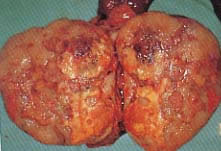
The scrotum is enlarged but usually not painful (photo).
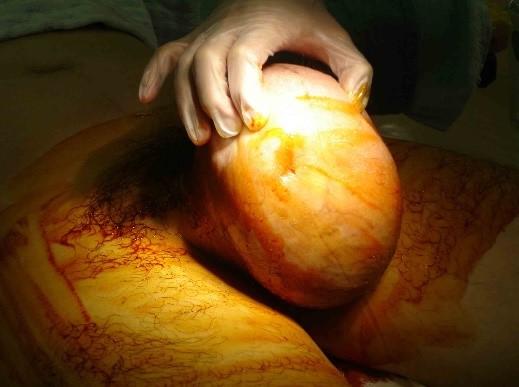
First, the size and hardness of the testicles are examined by palpation. If testicular cancer is suspected, an ultrasound examination is first performed to check the size of the tumor, the presence or absence of blood flow, and its internal characteristics, followed by a CT scan to check the extent of the lesion (metastasis). At the same time, blood tests are performed to measure testicular cancer tumor markers such as alpha-fetoprotein (AFP) and HCG.
Stage I: No metastasis
Stage II: Abdominal lymph node metastasis
Stage III: Distant metastasis to lungs and other organs
Regardless of the stage of the disease, the first step is a radical inguinal orchiectomy (photo).
Stage I: In most cases, surgery alone will be performed and the patient will be monitored over time, but in some cases, preventive treatment (radiation therapy to the lymph node area in the case of seminoma, or chemotherapy in the case of non-seminoma) will be considered.
Stages II and III: After surgery, chemotherapy is administered.
The prognosis is good for stage I cancer. Even in stages II and III cancer, where metastasis has already occurred at the time of diagnosis, complete cure is expected through anti-cancer drug treatment.
The outcomes of malignant tumor cases that underwent radical surgery in our department since 1990 (1990-2015) are as follows:
The disease-specific 5-year survival rate is calculated based on our hospital's clinical data and is the probability that a patient will survive and not die from cancer 5 years after surgery. As the above results show, if cancer is diagnosed at an early stage and appropriate treatment is administered, a complete cure and long-term survival are possible in the majority of cases.
Most tumors are benign, but they can cause symptoms such as high blood pressure and diabetes due to increased secretion of adrenal hormones. In such cases, the standard treatment is to remove the tumor through laparoscopic surgery.
Endoscopic surgery or extracorporeal shock wave fragmentation are commonly used.
Extracorporeal shock wave fragmentation can be performed as an outpatient treatment.
This is the main cause of urinary difficulty in men. Because it is a benign disease, drug treatment (sympathetic alpha blockers and others) is the first choice. If symptoms do not improve with drug treatment, endoscopic surgery (PVP surgery, transurethral resection of the prostate) is performed.
Surprisingly, many women suffer from the symptom of "urine leakage when sneezing or coughing." This can be treated with a relatively simple surgery to reinforce the urethra.
A low sperm count in a man's semen can lead to infertility, and one of the causes is varicose veins in the testicles, which can be treated with surgery.
The urology department at our hospital began offering sacral nerve stimulation therapy (SNM) in January 2018 as a treatment for intractable overactive bladder, and in October 2020, we also began offering intravesical botulinum toxin therapy (Botox therapy).
The bladder has the opposing functions of storing urine (urine storage) and releasing it (urination). When the urinary storage function is impaired, symptoms such as frequent urination during the day or night, urinary urgency (a sudden, strong urge to urinate that cannot be held back), and urinary incontinence appear, but cases accompanied by urinary urgency in particular are called "overactive bladder." Overactive bladder incidence increases with age, and data shows that in Japanese people, approximately 10% of those in their 60s, approximately 20% of those in their 70s, and nearly 40% of those over 80 have symptoms of overactive bladder.
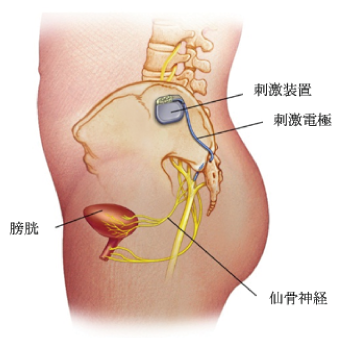
Bladder function is regulated by nerves that run from the brain through the spinal cord to the bladder. Nerves that directly affect the bladder primarily extend from the sacral region to the bladder. When this nerve regulation fails, overactive bladder symptoms, such as frequent urination, urgency, and urge incontinence, occur. SNM is a treatment that aims to improve urination and bowel symptoms by continuously stimulating the sacral nerves involved in excretion (urination and defecation). To deliver continuous electrical stimulation, a cardiac pacemaker-like device is implanted in the buttocks. While this treatment has been around in Europe and the United States since the 1990s, it became covered by insurance in Japan for fecal incontinence in April 2014, and became available for intractable overactive bladder treatment in September 2017.
The effectiveness of the treatment is confirmed in advance. First, a stimulation electrode called a lead is implanted in the sacrum, and a test stimulation is given for about 1 to 2 weeks using a stimulation device attached to the outside of the body.
According to overseas reports,
It is said that...
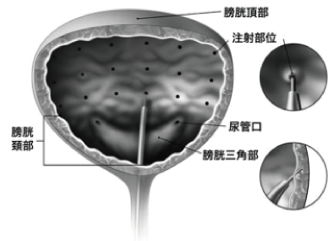
This treatment involves injecting a drug (Botox), whose active ingredient is a natural protein called botulinum toxin type A, produced by the bacterium Clostridium botulinum, into the bladder wall. This drug is approved in over 90 countries worldwide as a treatment for a variety of disorders, including overactive bladder and neurogenic bladder, and is also used in Japan to treat eyelid and facial spasms, abnormal posture of the neck and limbs, and other conditions.
When botulinum toxin type A is injected directly into the detrusor muscle of the bladder where abnormal tone is present, it relieves muscle tone and relieves symptoms, so it is used as a treatment for overactive bladder and neurogenic bladder.
The effects of this medication appear within 2-3 days and usually last 4-8 months for overactive bladder and 8-11 months for neurogenic bladder. As time passes, the effects gradually wear off and nerve function recovers, causing the condition before the injection to reappear. In this case, the same effect can be expected by administering Botox again.