Medical Research Institute KITANO HOSPITAL, PIIF Tazuke-Kofukai
Inquiry
search
close


Departments
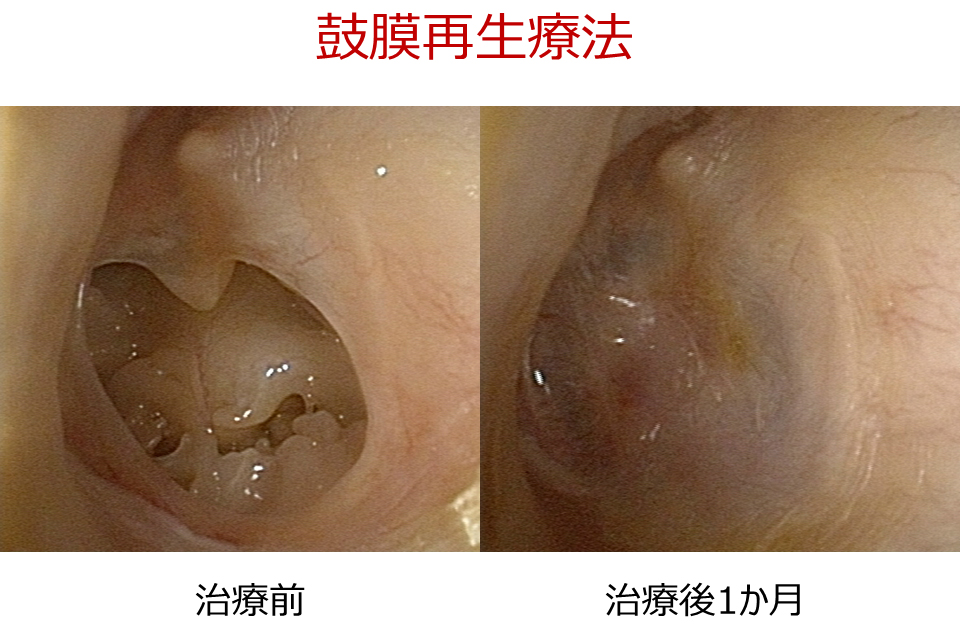
There are various causes of tympanic membrane perforation (a hole in the eardrum), but in cases where the tympanic cavity is dry and there is no active inflammation, it is considered desirable to close the hole as soon as possible. The greatest benefit of tympanic membrane closure is improved hearing. As long as the inner ear is not damaged and there are no particular lesions in the middle ear, hearing usually improves in all cases after tympanic membrane closure, which greatly contributes to improving QOL (Quality of Life).
Tympanic membrane regeneration therapy is a treatment pioneered worldwide by Shinichi Kanamaru, head of the Otolaryngology and Head and Neck Surgery Department at our hospital and director of the Hearing Loss and Tympanic Membrane Regeneration Center. Since November 2019, this regenerative medicine has been covered by health insurance in Japan.
This treatment is a new method that utilizes regenerative medicine to close eardrum perforations that do not close naturally, without the usual surgical procedure, with a simple outpatient procedure that takes about 20 minutes. Our hospital has a track record of treating hundreds of cases, with a success rate of over 90% and an improvement in hearing in nearly all cases.
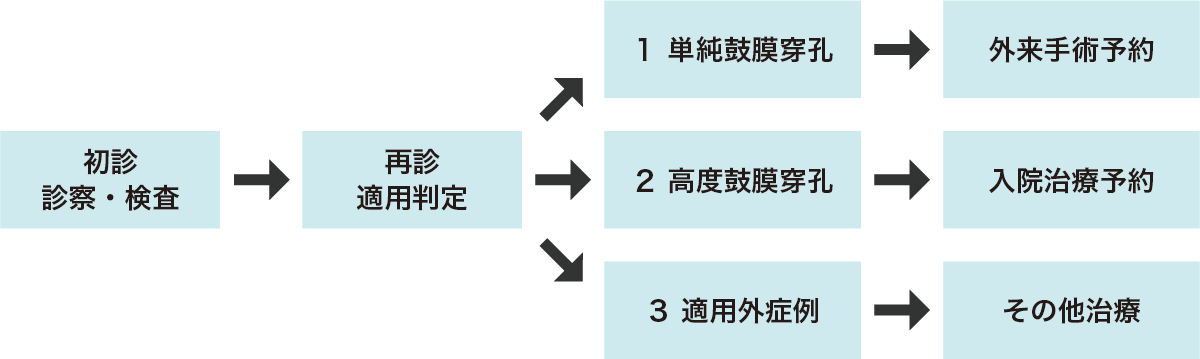
First, the patient will be examined and tested to determine whether they are suitable for this treatment, and if the doctor determines that they are, they will proceed to the treatment below at a later date.Treatment does not begin at the first or second visit.note that.
Click here for international visitors.
A simple eardrum perforation occurs when the eardrum is ruptured due to trauma (such as being poked with an ear pick or being slapped) without any previous otitis media or other condition, leaving a hole in the eardrum; this refers to a condition in which a hole appears in a normal eardrum that is not infected or inflamed.
In the case of a simple eardrum perforation, depending on the size of the perforation, treatment can be performed in an outpatient setting in about 20 minutes, as shown below, and hospitalization is not required.
If there is almost no eardrum remaining or if there is chronic otitis media, a full-scale surgery called traditional tympanoplasty is required, in which an incision is made behind the ear, the bone is scraped away, the entire middle ear is cleaned, and then tissue such as muscle membrane is harvested and transplanted from the patient's own body as a substitute for the eardrum.
In response to this, our hospital has developed a new treatment that applies eardrum regeneration. This involves removing most of the remaining eardrum, using an endoscope through the hole to clean the tympanic cavity (the space behind the eardrum), and then regenerating the eardrum. Unlike simple treatment for a perforated eardrum, this requires hospitalization for one or two nights, but the surgery time is short and the entire treatment is performed through the ear canal, leaving no scars whatsoever.
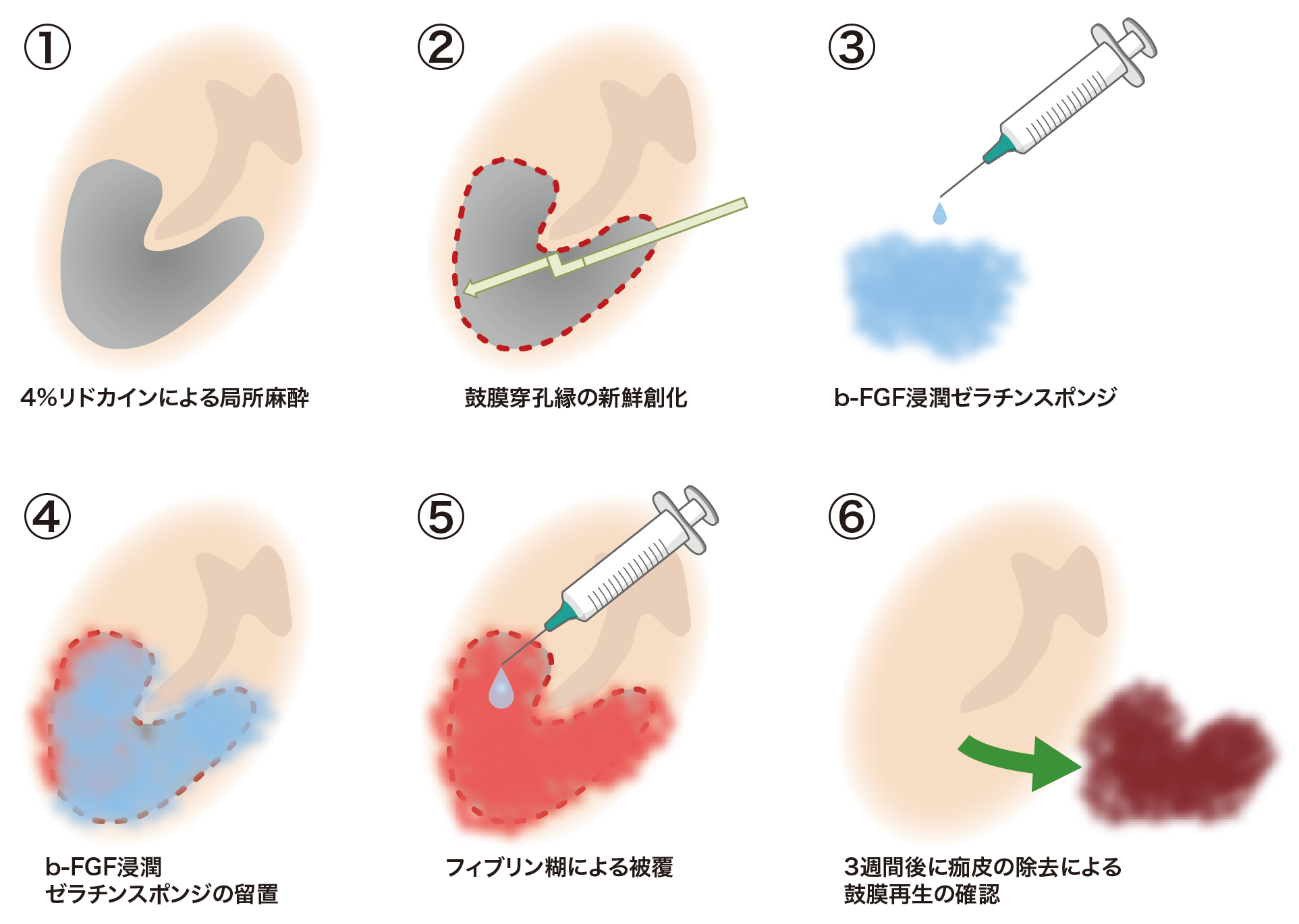
*If the wound does not close after one treatment, multiple treatments (up to a maximum of four) may be required, and there are also cases where the wound does not close even after this treatment.
| How to get examined | From other medical institutionsA letter of introduction and reservation are requiredIt is as follows.
How to make a reservation directly from another medical institution
How patients make their own reservationsPatients can make their own reservationsPlease refer to the page. |
|---|---|
| Contact Us | Kitano Hospital, 2nd floor, Outpatient Block B |
If you would like to interview Dr. Kanamaru,Please contact the Public Relations Department.


