Medical Research Institute KITANO HOSPITAL, PIIF Tazuke-Kofukai
Inquiry
search
close


Departments
"Accidental ingestion" refers to accidentally swallowing something other than food. Common examples include coins and button batteries.
If the foreign body remains in the esophagus, it will cause obstruction to the esophagus, making it difficult to swallow food and water. If the foreign body falls into the stomach, there will be no particular symptoms.
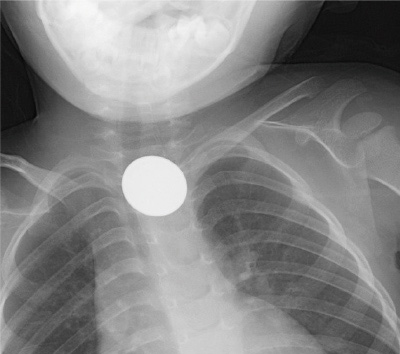
Coin lodged in the esophagus
*Lithium batteries are extremely dangerous
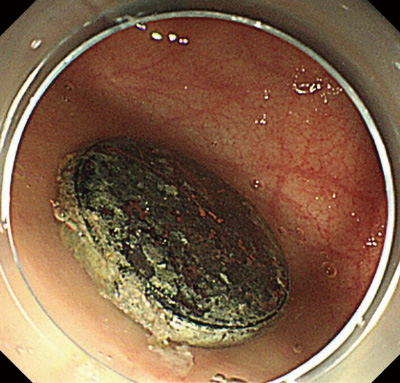
Button battery in the stomach
If the foreign body is in the esophagus, it will be removed using a balloon catheter while watching the X-ray. If it still cannot be removed, or if the foreign body is in the stomach, it will be removed using a gastroscope. Gastroscopes for children are performed under general anesthesia.
Foreign objects that have passed beyond the stomach and into the small intestine cannot be reached with a gastroscope, so we carefully wait for them to come out the anus.
*If a foreign object gets stuck in the intestine or if a hole forms in the intestine, emergency surgery will be required.


