Medical Research Institute KITANO HOSPITAL, PIIF Tazuke-Kofukai
Inquiry
search
close


Departments
This outpatient clinic specializes in hip replacement for hip joint diseases.
The main target diseases are osteoarthritis of the hip, avascular necrosis of the femoral head, and acetabular dysplasia of the hip joint.
First, a brief explanation of these diseases.
Osteoarthritis is a condition in which the cartilage in the joints degenerates for some reason, causing symptoms such as pain and limited mobility. Causes include aging and trauma. When the cartilage is damaged, it appears thinner than normal on an X-ray. It also causes deformation of the bones in the joints.
When this happens to the hip joint, it is called osteoarthritis of the hip.
As hip joint deformation progresses, the function of the joint is impaired and walking ability gradually declines.
Osteonecrosis of the femoral head is a disease in which blood circulation to the femoral head (the base of the femur, the part of the hip joint; normally spherical) is impaired for some reason, causing the bone to die.
The causes of many cases are still unclear, and the condition is called "idiopathic" necrosis of the femoral head.
Triggers include medication (steroids) and alcohol intake.
Avascular necrosis of the femoral head causes hip pain, and if the area affected by necrosis is large, the bone may collapse.
The hip joint acetabulum is the pelvic bone that covers the femoral head. If this is smaller than normal from birth, it is called hip dysplasia.
X-rays show that the pelvic part of the hip joint does not protrude to the side. This condition may be recognized after treatment for a hip dislocation that occurred in childhood, but it may also be unnoticed and become apparent when hip pain occurs in adulthood.
If you have acetabular dysplasia, the cartilage is put under greater strain than in normal people, which can lead to osteoarthritis of the hip.
In some cases, surgery may be necessary for these conditions.
The types of surgery vary depending on the type of disease, severity of the illness, age, etc., and include artificial joint surgery, osteotomy, acetabular arthroplasty, and bone grafting.
Here we will provide a brief explanation of hip replacement surgery and knee replacement surgery, which are commonly performed for osteoarthritis.
The prototype of the artificial hip joint was developed by Dr. Chanley in England around 1960, and is still widely performed today as a highly effective surgical procedure.
The surgery involves replacing the pelvic side of the damaged hip joint with high-strength plastic and the femoral side with metal or ceramic.
The new joint surface is now completely artificial, reducing pain and improving movement.
There are currently many different types of artificial joints available, and it can be difficult to decide which one is best.
However, when it comes to artificial hip joints, the early Chanley-style artificial joints that used bone cement still produce excellent clinical results today.
We are carefully trying to improve our clinical techniques and equipment to achieve better clinical results. Specifically, we are focusing on the following points:
Artificial joints are expected to last for 10-20 years.
Our clinical policy is to pursue what is essential for clinical and long-term results of artificial joint surgery.
Many of the diseases treated in this outpatient clinic are related to walking function.
Although walking is not directly related to life, it is a very basic function for humans.
In young people, a decline in walking function makes it difficult to continue working, and in older people, if it progresses, it can lead to becoming bedridden.
Even if it's not that strict, it can greatly limit the range of activities in your daily life and take away the ``fun'' in your life.
I do not believe that surgical treatment is a panacea, but it is true that appropriate surgery has the potential to dramatically improve patients' lives.
If you are unsure about the treatment plan for your illness, please consult us at our outpatient clinic.
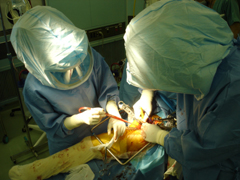
hip surgery
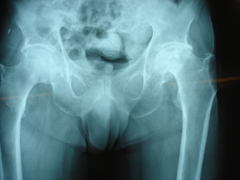
Before surgery
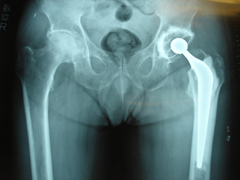
After surgery
| Doctor in charge | Jiro Tamura | Consultation date | Every Wednesday |
|---|


