Medical Research Institute KITANO HOSPITAL, PIIF Tazuke-Kofukai
Inquiry
search
close


Departments

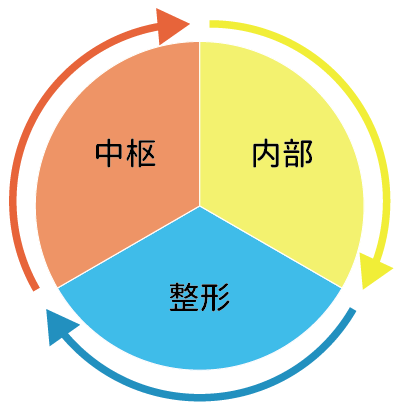
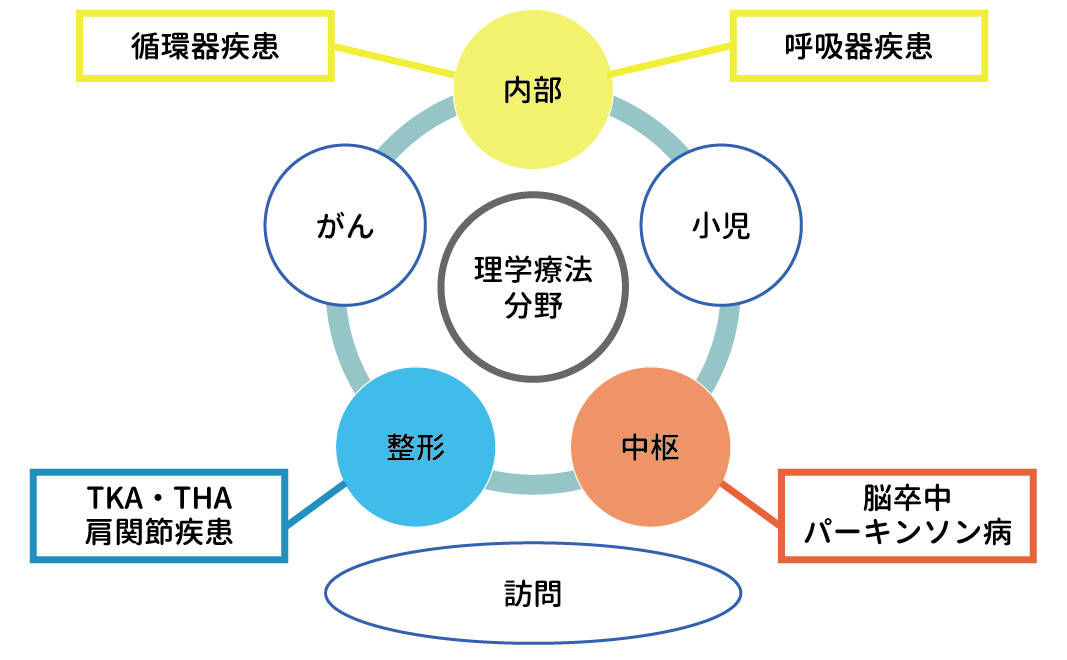
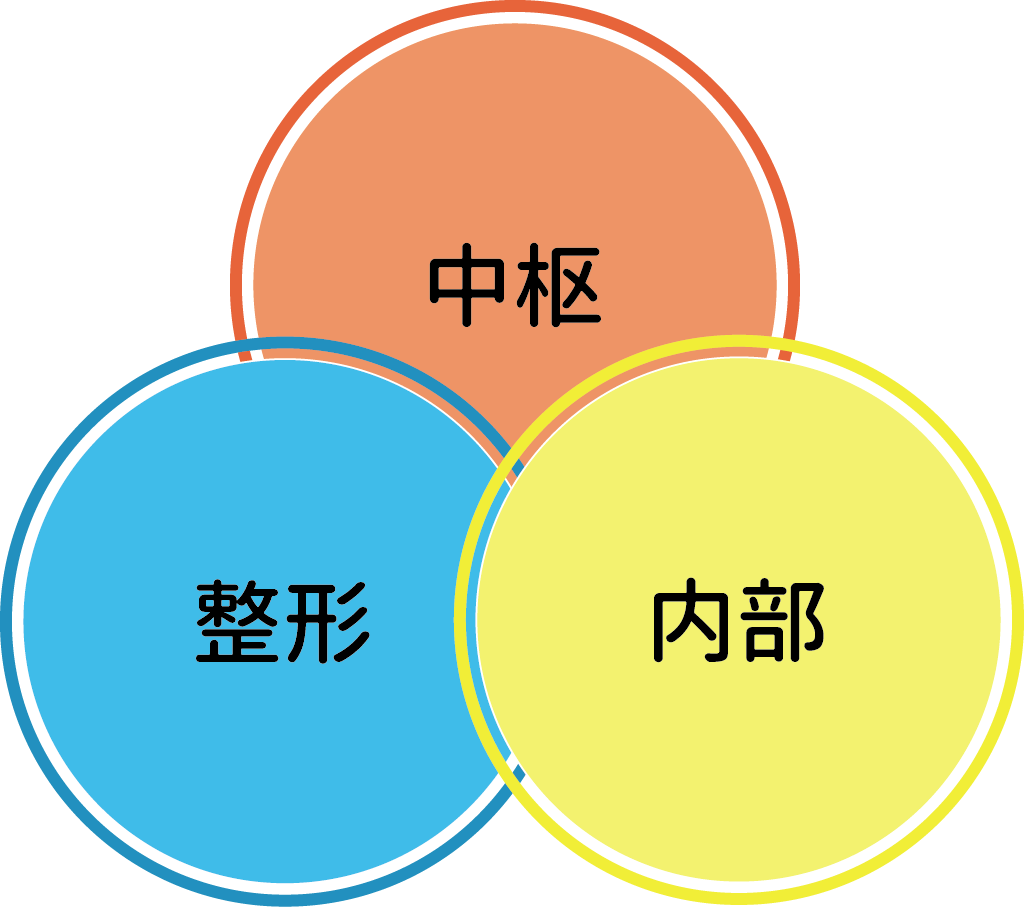
In your first year, as the first step in your growth as a physical therapist, you will rotate between the internal, central and orthopedic teams every 3-4 months to gain general knowledge and experience.
The annual goal is to "learn how to interact as a member of society and be able to understand and practice disease-specific assessments and measurements under supervision."
■In April, you will mainly learn about adapting to the workplace and extra-curricular tasks (paperwork, etc.)
■ Starting in May, students will rotate every 3-4 months to learn the characteristics of each physical therapy.
■ After completing each section, students will present their case studies to the entire rehabilitation department to deepen their clinical experience.
In addition to clinical work, students will also accompany patients to ward conferences and team medical care, learning about collaboration with other professions and team approaches.
■March is also a transition preparation period for the next fiscal year.

Risk management of internal disorders, physical assessment, how to diagnose blood data, rehabilitation nutrition, oxygen therapy, cancer rehabilitation, drainage and ventilator management, cardiac and pulmonary function tests, respiratory education, hospitalization

Understanding pathology (CVA, Parkinson's disease, brain tumors), risk management, evaluation of central nervous system diseases, acute rehabilitation, brain imaging and functional diagnosis, positioning

Inflammation and pain, posture control, femoral neck fractures, rotator cuff injuries, knee and hip OA and TKA/THA, cervical myelopathy, contraindicated limb positions and ADL guidance
From the second to fourth years, you will rotate through three departments every six months for three years (you will be assigned to an internal team twice), and you will build a foundation to "understand and practice the physical therapy process according to the disease and pathology." You will also be able to work with a variety of diseases such as cancer and pediatrics, and in your fourth year, you will learn about the role of physical therapy in the community through home rehabilitation.
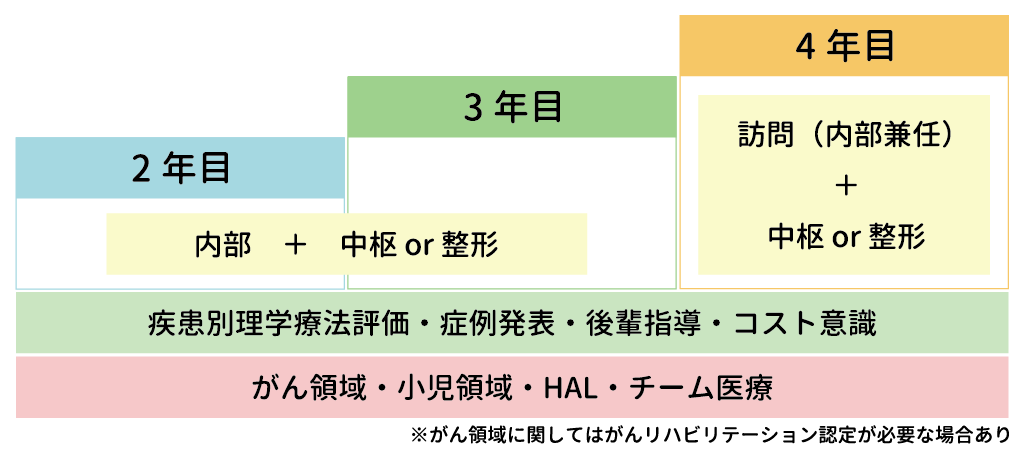
From the fifth year onwards, students will be assigned to a team for one year, taking into consideration their own preferences. Generalist and Specialist We aim to step up to
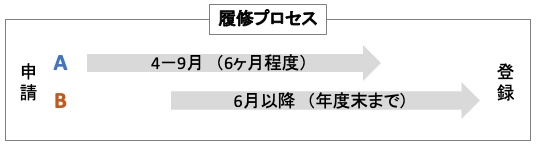
In charge: Registered physical therapist Lectures take up approximately 25% of the time Other OJT

Responsible: Registered physical therapists in each team Lectures take up approximately 25% of the time Other OJT

■In April, we will focus on observing clinical work and paperwork to help you get used to the job.
■From May, depending on the patient's abilities, they will be responsible for a wide range of patients, including those with central nervous system, orthopedic, and respiratory diseases.
■For patients who require the creation of self-help devices for ADL, such as splints for orthopedic disorders, eating implements, and sock aids, we will take care of them after observing the creation process and practicing the creation process among staff.
In addition to clinical work, students will also accompany patients to ward conferences and team medical care, learning about collaboration with other professions and team approaches.
Respiratory diseases (bathing evaluation)
Cerebrovascular disease (approach to motor paralysis, understanding of higher brain functions), Parkinson's disease, intractable neurological diseases, peripheral neuropathy
Cervical spondylosis, upper limb fractures, rotator cuff injuries, tendon rupture, rheumatism
*You will also participate in training for new physical therapists and speech-language-hearing therapists to improve your knowledge.
■In April, you will mainly learn about adapting to the workplace and extra-unit work (paperwork, etc.).
*The new employee training manual will be used and repeated throughout the year in each department.
*Starting in 2022, students will participate in lectures under the Japan Physical Therapy Association's new lifelong learning system, learning both classroom and practical skills.
■I will be taking care of patients from May. I will be mainly in charge of cases of central nervous system diseases.
■From August onwards, we will also be responsible for cases of respiratory diseases.
■From March onwards, I will be handling conferences and other matters on my own.
*The number of patients and the condition of the patients will be adjusted to suit each individual's pace. You will gradually be assigned to patients with respiratory diseases and seriously ill patients in the ICU, SCU, HCU, etc.
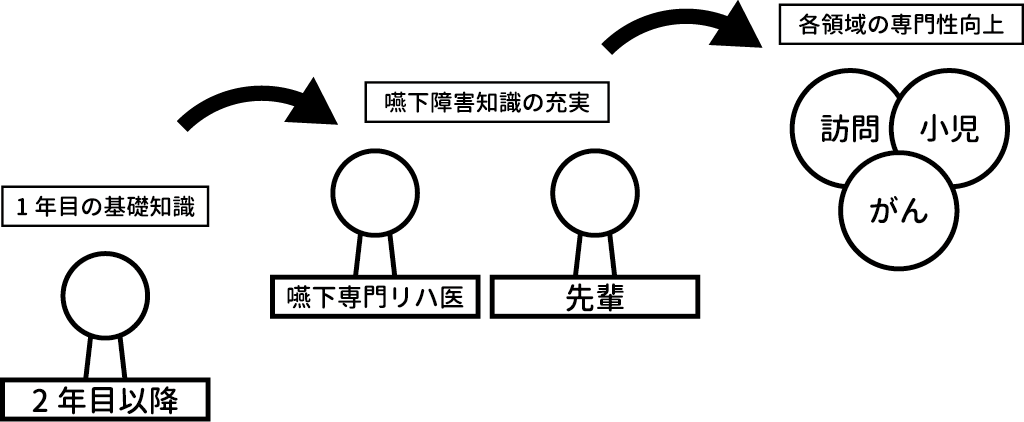
In the first year, students will gain experience focusing on adult higher brain dysfunction, speech disorders, and swallowing disorders. April will be spent mainly observing, and from May onwards, students will gain more clinical experience with a variety of disorders tailored to their abilities. In addition to the clinical work of ST, students will also gain experience participating in conferences and committees, learn about collaboration with other professions, and understand the importance of a team approach.
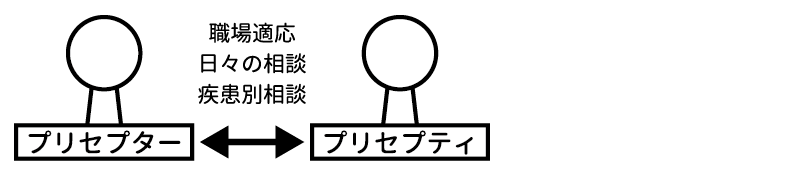
Through the OJT sheet, you will become familiar with the work by checking with your senior employees the items required for the job each month.
About higher brain dysfunction (apraxia/agnosia, attention function, intelligence, memory impairment), Parkinson's disease (pathology, DBS treatment), peripheral neuropathy
About aphasia (pathology and intervention), tracheotomy, and articulation and voice disorders
About nutrition and swallowing disorders
From the second year onwards, students may gain experience in cancer rehabilitation, pediatrics or home visits depending on their interests and abilities.
We hold swallowing conferences and case conferences once a week, creating an environment that encourages active exchange of opinions.
We perform VF tests and have a rehabilitation doctor who is a swallowing specialist on hand, so we have an environment where you can proceed in consultation, making it easy to learn more about swallowing disorders.