Medical Research Institute KITANO HOSPITAL, PIIF Tazuke-Kofukai
Inquiry
search
close


Departments
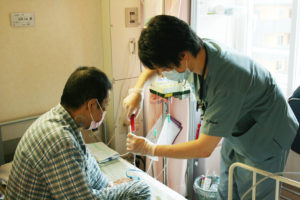
Cord blood transplant in action
Cord blood transplant in action
Blood is made up of half liquid and half solid components (blood cells), and as it moves around the body, it carries nutrients (protein, glucose, etc.) and oxygen, defends against foreign substances that enter the body, and repairs blood vessels. In an adult male, blood is the heaviest organ in the body, weighing 5,000g, compared to the brain (1,400g) and liver (1,300g).
Blood diseases include blood tumors, numerical abnormalities, functional abnormalities, autoimmune diseases, congenital diseases, and infectious diseases. Among these, we focus most on the treatment of malignant blood tumors. More than half of our hospitalized patients with blood diseases have malignant blood tumors, specifically malignant lymphoma and leukemia, followed by diseases such as multiple myeloma and myelodysplastic syndrome.
Because blood cells break down and spread throughout the body, it is not possible to remove malignant hematologic tumors by surgery alone. However, anti-cancer drugs and radiation are very effective against these tumors. In recent years, good medicines have been developed one after another, and depending on the disease, more than 80% of patients can be cured completely with anti-cancer drugs. For types of cancer that are difficult to cure completely with anti-cancer drugs and radiation therapy, there is a method called hematopoietic stem cell transplant, which involves a complete blood replacement. However, since the treatment period is longer than surgery, we often ask for the support of the patient and their family. Let's cure the disease together.


