Medical Research Institute KITANO HOSPITAL, PIIF Tazuke-Kofukai
Inquiry
search
close


Departments
As the skin ages, changes in pigmentation, such as age spots and dullness, as well as changes in shape and elasticity, such as sagging and wrinkles, occur. Medically based treatments are now available to address these age-related skin changes.
In our department,① Hair removal (laser treatment),② Skin beautifying treatment (laser treatment, phototherapy, mesoporation, chemical peeling)We strive to provide safe treatment tailored to each individual, taking into consideration social restrictions, etc.
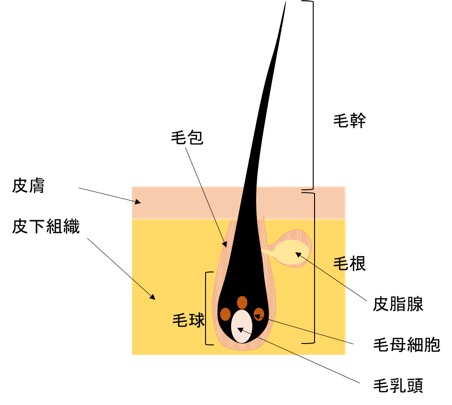 Body hair is divided into a hair shaft above the skin and a hair root below the skin, and the tissue surrounding the hair is called a hair follicle. The hair bulb is the swollen part of the hair follicle and contains a hair papilla that nourishes the hair matrix cells. Hair is produced and grows when the hair matrix cells in the hair bulb undergo cell division and keratinization.
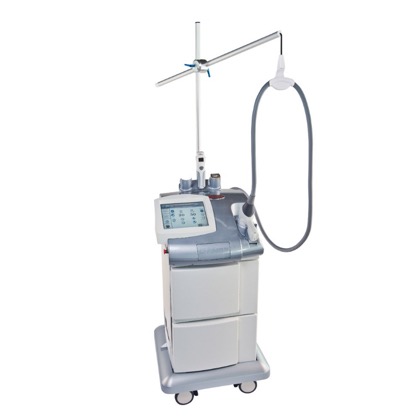 Compared to conventional medical laser hair removal, Cynosure's Vectus boasts a high hair removal effect regardless of hair color, thickness, or skin color. In addition, it has been approved by the FDA (Food and Drug Administration: U.S. Department of Health and Human Services) for its hair removal effect.http://www.accessdata.fda.gov/cdrh_docs/pdf12/k120622.pdf) and has been approved.
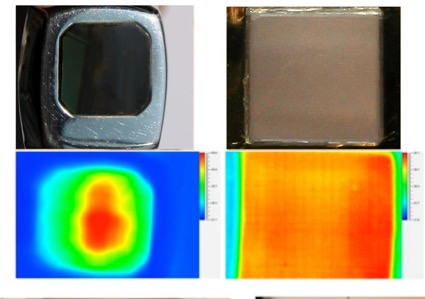
The use of a large, thick sapphire allows for uniform energy transmission across the treatment surface, as shown in the diagram below (the left is a conventional laser, the right is Vectus). Furthermore, the contact cooling function cools the skin surface as the laser is applied, minimizing the risk of burns and reducing pain during treatment.
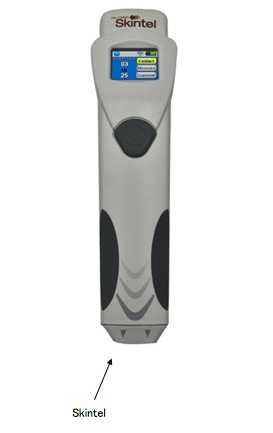
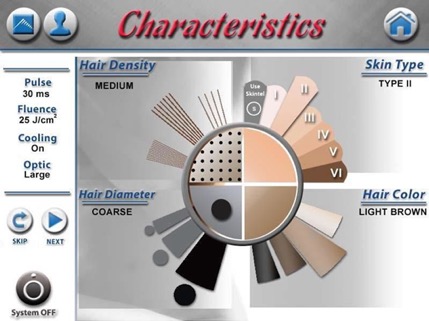
In addition, Skintel™ (melanin reader) diagnoses skin tone and predicts the optimal energy value, enabling effective hair removal while preventing complications such as burns.
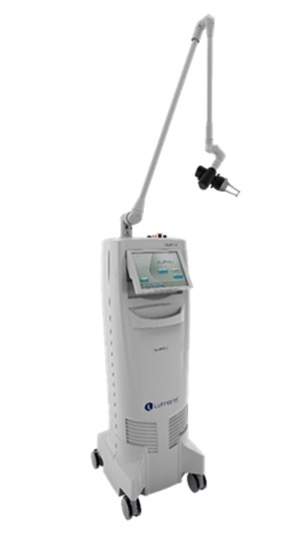 The 10,600nm wavelength emitted by the carbon dioxide laser is well absorbed by water, so it heats and vaporizes tissue containing water, thereby removing the tissue.This means that it is possible to treat raised lesions that are not colored, regardless of the color of the lesion.
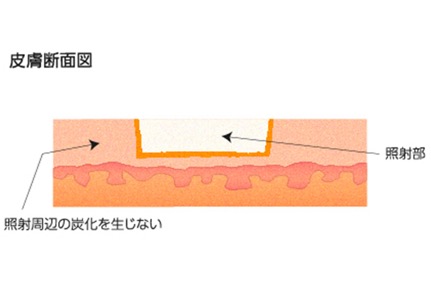
Conventional carbon dioxide lasers cause thermal damage of over 200 microns to the surrounding tissue, resulting in the formation of a carbonized layer, but Lumenis's "AcuPulse" causes extremely little thermal damage to the surrounding tissue, at less than 50 microns, resulting in less postoperative inflammation and a lower risk of pigmentation.
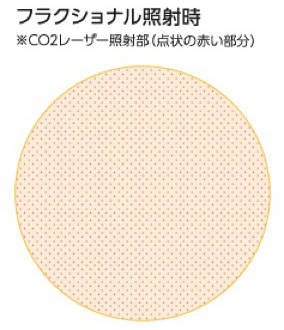 This function splits the laser light into tiny dots and irradiates the skin, creating numerous cylindrical microscopic holes at a certain density, causing the skin to evaporate. There are two types of treatments: shallow abrasion with a 1.3mm diameter spot to evaporate the surface of the skin in dots, and deep abrasion with a very small 0.12mm diameter spot to evaporate deep into the skin (2), and these can be combined for treatment.
Target diseases
Elevated lesions such as nevus cytoides (mole), common warts, and seborrheic keratosis
When using fractional function: pores, fine lines, dullness, acne scars
This device is FDA approved as a cosmetic medical treatment device.
(http://www.accessdata.fda.gov/cdrh_docs/pdf13/K132185.pdf).
It can be equipped with several types of skin treatment handpieces, allowing you to treat a variety of skin problems by using different handpieces.
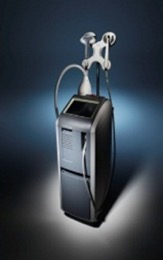 By emitting light with wavelengths of 520 to 1100 nm, this device is effective for lesions that are difficult to treat with conventional phototherapy devices. The irradiation promotes epidermal turnover and excretes melanin, improving dullness, age spots, and freckles. It also acts on dilated blood vessels to improve telangiectasia, and the thermal effect on fibroblasts and dermal collagen improves skin texture and pores.
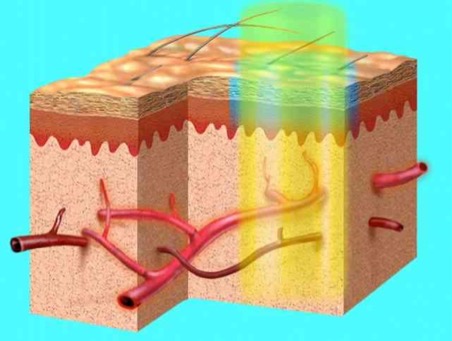
This is a 595nm dye laser with a new function that allows adjustment of the laser pulse width (irradiation time).It is selectively absorbed by hemoglobin in the blood, so in lesions where capillaries have aggregated, the hemoglobin absorbs the laser energy and converts it into heat, which causes thermal destruction of the inner walls of the blood vessels, blocking the blood vessels and eliminating the red color.
Equipped with a function called a dynamic cooling device, it blows ice air just before laser irradiation, making it possible to irradiate the hemangioma while protecting the skin, thereby reducing the risk of burns.
It also stimulates fibroblasts, which is effective against fine wrinkles.
Insurance covers vascular lesions (hemangiomas and telangiectasias).
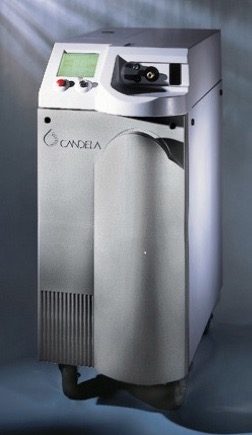
| Accupulse | Limelight | AccuChip | Titan | YAG laser | Pearl | V-Beam | |
|---|---|---|---|---|---|---|---|
| effective part |
Horny layer/epidermal layer from dermal layer |
Horny layer/epidermal layer from dermal layer |
Horny layer/epidermal layer from dermal layer |
dermal layer | horny from epidermis, dermis layer |
Horny layer/epidermal layer from dermal layer |
Horny layer/epidermal layer from dermal layer |
| effect | dye, Improve skin quality |
dye, Improve skin quality |
pigmentation | Tightening | blood flow, Improve skin quality |
Improve skin quality | dye, Improve skin quality |
| stain | ○ | ○ | ◎ | × | △ | △ | × |
| Kuroko | ◎ | △ | ◎ | × | × | × | × |
| warts | ◎ | × | × | × | × | × | × |
| Dullness | × | ○ | × | × | ◎ | ○ | × |
| pores | ◎ | ◎ | × | △ | ◎ | ○ | △ |
| sagging | △ | △ | × | ◎ | × | △ | × |
| Fine lines | × | ○ | × | ○ | △ | ○ | ○ |
| Telangiectasia redness of the skin hemangioma |
× | ○ | ○ | × | ◎ | △ | ◎ |
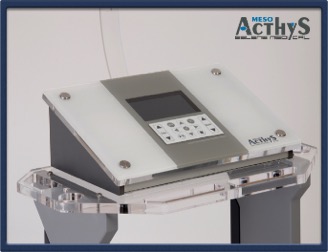 For a substance to penetrate the skin, it must pass through the stratum corneum, the outermost layer of the skin. However, the stratum corneum has a barrier function that prevents substances from easily penetrating through the skin surface.
In this method, a high-voltage current is applied to the skin for a short period of time to create temporary holes that allow substances to pass through (electroporation), and a low-voltage current is then applied through these holes, allowing the drug to be introduced painlessly, regardless of the drug's charge or molecular size.
It is effective in improving age spots, wrinkles, skin texture, dry skin, post-inflammatory hyperpigmentation, and melasma.
Chemical peeling is a treatment that uses acid to remove dead skin cells and promote skin regeneration by stimulating cell turnover.
It helps improve skin texture, acne, and blemishes.
After making a reservation and receiving the consultation, you will first undergo counseling (initial consultation).
A specialist will provide a detailed explanation of the treatment, including any risks, and will only begin treatment after obtaining fully informed consent.
If a malignant disease is suspected, a microscopic tissue examination is required, so surgery rather than laser treatment is indicated and the treatment is covered by insurance.


