What are the after-effects of COVID-19?
It is known that COVID-19 can cause various symptoms, such as those shown in Figure 1 below, to persist even four weeks or more after the onset of the disease, and these are thought to be after-effects. COVID-19 after-effects are said to often improve gradually over time, but can sometimes last for more than six months.
Figure 1
fatigue
Decreased ability to think and concentrate
difficulty breathing
cough
Joint pain and muscle pain
chest pain
Depression and anxiety
headache
fever
palpitations
Smell and taste disorders
dizziness when standing up
How to manage the after-effects?
Much about COVID-19 aftereffects remains unknown, and no fundamental solution has yet been found. It is not a single pathological condition, and the type and severity of symptoms vary from person to person, but it is known to lead to organ damage and conditions such as those shown in the table. Furthermore, what you think are COVID-19 aftereffects may actually be a result of developing another illness after COVID-19. Furthermore, mental and psychological factors can play a large role in the causes of symptoms. For these reasons, it is believed that a multifaceted approach addressing both the physical (organic disease) and mental (psychological) aspects of COVID-19 aftereffects is necessary.
Table: Typical organ damage and pathology of COVID-19 sequelae
- Interstitial pneumonia (organizing pneumonia/pulmonary fibrosis)
- sleep apnea syndrome
- gastroesophageal reflux disease
- Myalgic encephalomyelitis/chronic fatigue syndrome
- Cerebral infarction/myocardial infarction
- post-exertional malaise
About our COVID-19 Sequelae Outpatient Clinic
At our hospital's COVID-19 Sequelae Outpatient Clinic, we basically conduct tests for organ abnormalities that may be the cause of symptoms, and when necessary, we consult with a neuropsychiatrist to determine a comprehensive treatment plan. In cases where social support is required, the Community Medical Cooperation Office may intervene. Utilizing the specialized testing and collaboration with other departments that only a general hospital can offer, the Department of Infectious Diseases plays a central role in diagnosis and treatment (Figure 2).
Figure 2
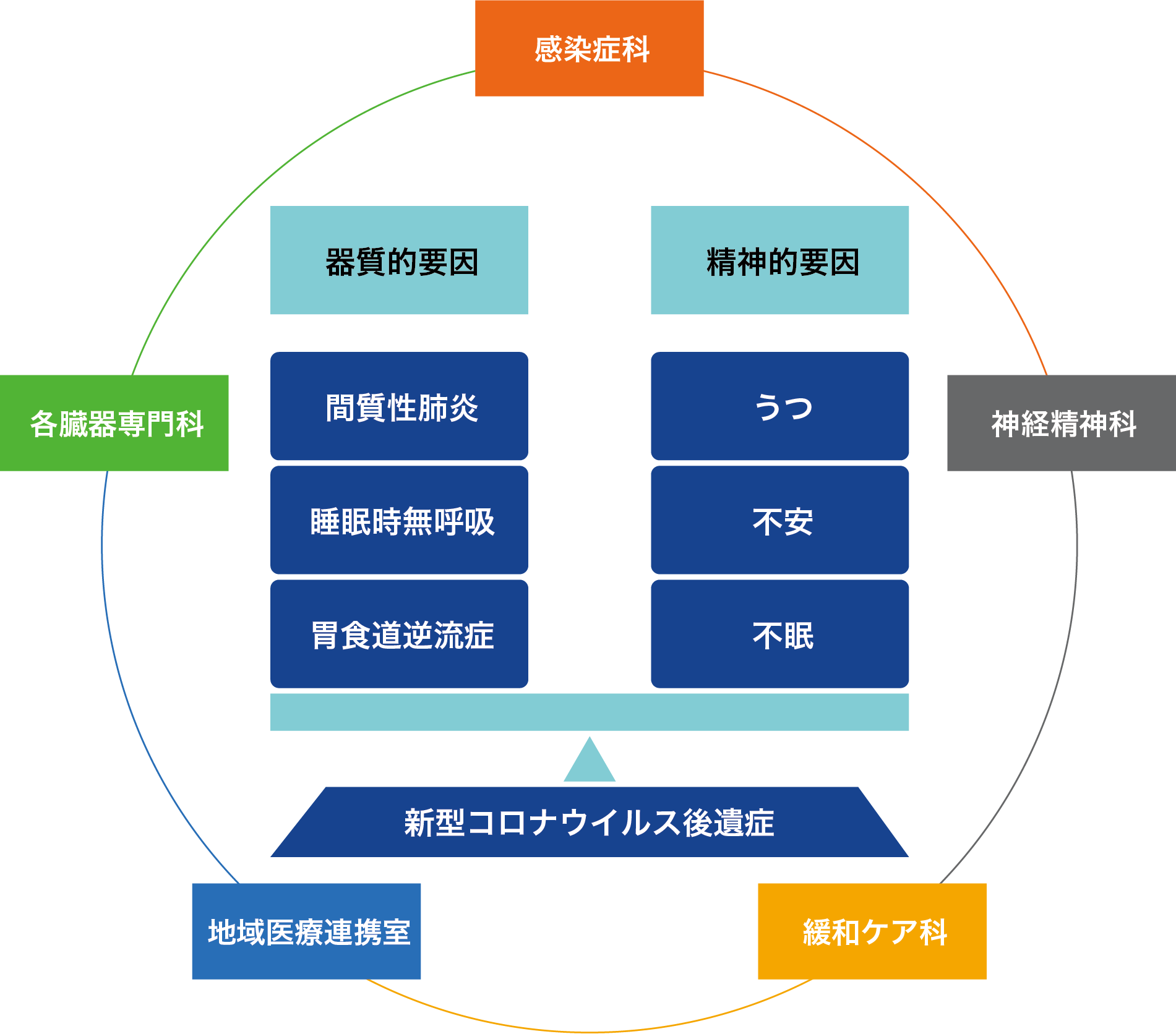
Outpatient consultation procedures and precautions
| Consultation day |
Every Wednesday afternoon
From April 2024Every Friday afternoonwill be changed to. |
| Doctor in charge |
Satoshi Maruge(Subject to change) |
| Target patients |
- 16 years or older
- COVID-19 infectionMore than 4 weeks have passed since the onset of symptoms
|
| How to get examined |
Reservations only (referrals from family doctors only) |
| How to make a reservation |
We only accept reservations made through your family doctor. Please ask your doctor when you visit.
We do not accept reservations from patients themselves. |
| Points to note |
- The basic purpose is to rule out organic diseases (organ abnormalities).
- Ultimately, we will decide on a treatment plan and refer the patient back to the original medical institution.
|
Related Press
Dr. Maruge, who is in charge of outpatient care, has been interviewed by various media outlets. This is an external link and may be broken.
For interview requests, please contact the Public Relations Departmentplease.
- March 23, 2023 – News Watch 9: The worsening aftereffects of COVID-19 in the US (NHK)
- March 15, 2023 – COVID-19 Aftereffects: What are the symptoms? What is the treatment? What we know(NHK)
- January 16, 2023 – Increased risk of aftereffects due to cognitive decline. Anyone can't let go of their notes, and the pain of aftereffects can be felt (Mainichi Shimbun)
- August 25, 2022 – Satoshi Marumoe and Koichi Hirahata "Update on Treatment for COVID-19 Sequelae"(Nihon Iji Shimposha)
- August 5, 2022 – Insomnia, headaches, forgetfulness… Patients testify about the reality of “COVID-19 after-effects”; research shows “one in eight people develops the disease” (ABC TV)
- May 3, 2022 – "Once I fall asleep, I can't wake up for 17 hours" - The number of "Omicron strain aftereffects" patients is rapidly increasing(Mainichi Broadcasting System)
- March 30, 2022 – Osaka: Patients suffering from COVID-19 aftereffects continue to grow…Omicron strain may bring about change…(TV Osaka)
- March 7, 2022 – Will the third COVID-19 pandemic affect the spring tourist season? Three Kansai prefectures extend "prevention measures" again (ABC TV)
- February 11, 2022 – Interview with Dr. Satoshi Maruge, Assistant Director of Kitano Hospital, a respiratory physician who proposed and realized the establishment of an outpatient clinic for COVID-19 sequelae, one of the few in Osaka. Vol. 1(m3.com membership registration required)
- February 3, 2022 – Symptoms lasting more than a year... Long-term "COVID-19 aftereffects": Some employees are being forced to quit their jobs, and their bosses tell them they're faking illness... Understanding is needed from those around them(Kansai TV)
- January 15, 2022 – Osaka doctors hold study session to learn about the aftereffects of COVID-19 (NHK)
- January 12, 2022 – Remote appearance on news and information program cast (ABC TV)
- January 7, 2022 – COVID-19 aftereffects: Specialist outpatient appointments booked up for a year in advance. Some patients have been visiting for over a year... Fatigue and decreased concentration (Kansai TV)
- December 15, 2021 – People who have been forced to "fire" or "retire" due to "COVID-19 aftereffects" say, "It's sad that no one understands my suffering."(Mainichi Broadcasting System)
- October 27, 2021 – No established treatment for COVID-19 aftereffects, search continues at specialist outpatient clinics (NHK)
- October 6, 2021 – A nurse who was infected in a hospital cluster and suffered from "COVID-19 aftereffects" and quit her job says, "It wasn't supposed to be like this"... Former COVID-19 patients confess(Mainichi Broadcasting System)
- August 26, 2021 – Doctor warns of serious "COVID-19 aftereffects": "Even mild symptoms should not be taken lightly"(Kansai TV)
- September 24, 2021 – Some people suffer from the aftereffect of "brain fog," while others lose their hair six months after infection... Even though they feel exhausted, "people around me treat me normally."(Yomiuri Shimbun)
Please note that reports may refer to the current reservation status of our outpatient clinic at the time of coverage, but as reservations are increasing daily, this may differ from the actual reservation status.
References


