Medical Research Institute KITANO HOSPITAL, PIIF Tazuke-Kofukai
Inquiry
search
close


Departments
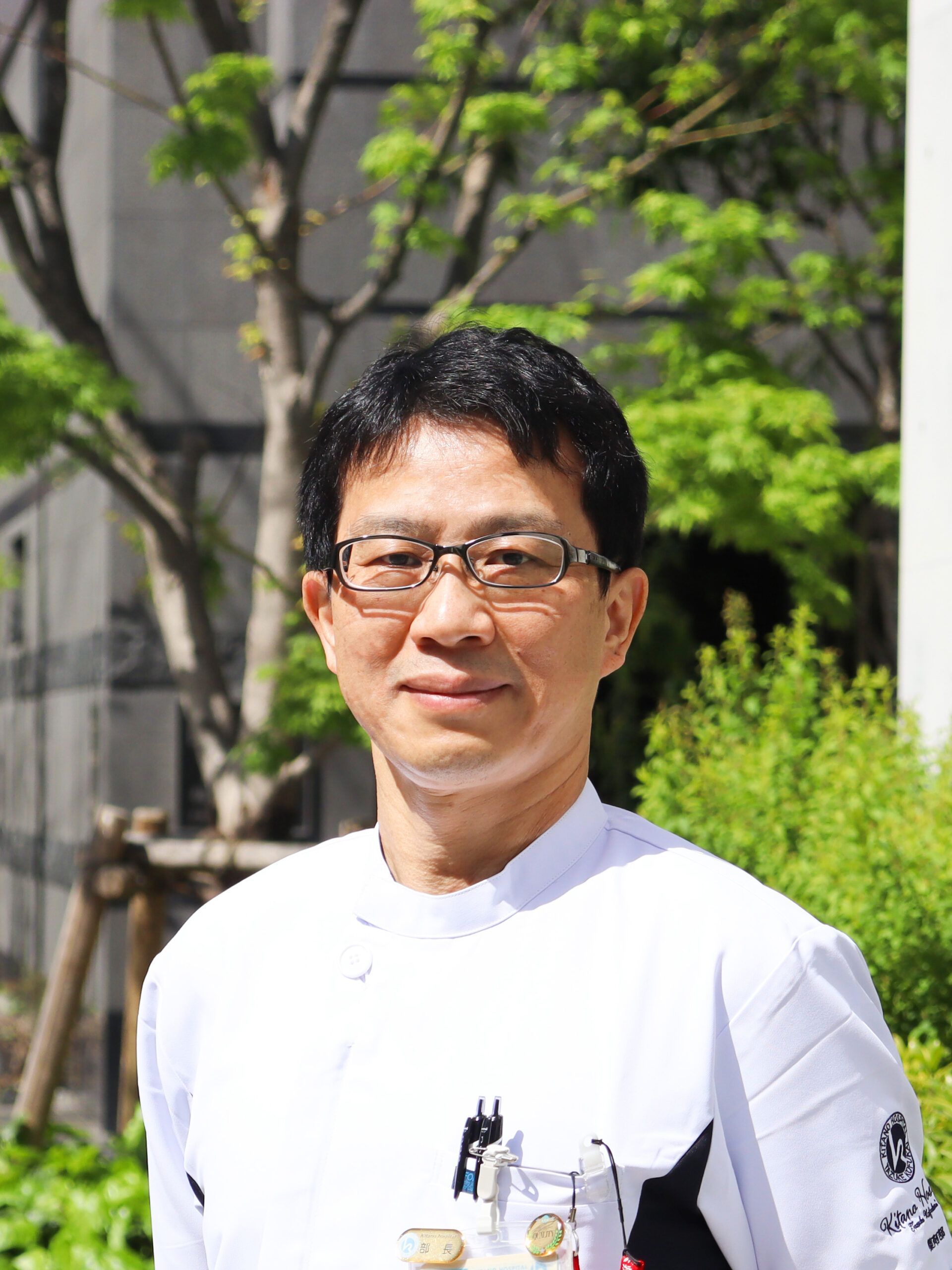
The Pharmacists Act stipulates that the duties of pharmacists are to "contribute to the improvement and promotion of public health by dispensing medicines, supplying medicines, and other pharmaceutical hygiene matters, thereby ensuring the healthy lives of the people."
In recent years, the work of pharmacists has changed significantly. At our hospital, with the aim of improving the effectiveness and safety of drug therapy and enhancing team medical care, pharmacists are involved in basic tasks such as dispensing, drug management, and drug information, and we have assigned pharmacists to all wards. We also actively participate in specialized team medical care for areas such as infection and dementia. All staff members strive to improve their skills every day, aiming to become "pharmacists who are always thinking about what they can do to give patients trust and peace of mind, and who act accordingly."
I would like to actively support pharmaceutical-related work in cooperation with each staff member to ensure that patient treatment proceeds smoothly and medication is administered safely.
Director of the Pharmacy Department
ONOUE Masahide
Based on Kitano Hospital's philosophy of being "a hospital that is trusted and gives patients peace of mind," the Pharmacy Department aims to be "pharmacists who are always thinking about and acting on what they can do to give patients trust and peace of mind."
We will promote and contribute to the following items:
The dispensing room mainly dispenses and inspects medications prescribed for hospitalized patients. We confirm the usage, dosage, and interactions of medications prescribed by doctors, and if there are any questions, we inquire before dispensing. By connecting the pharmacy department system with the hospital information system, we are able to carry out our work quickly and safely, and by continually making efforts to reduce human error, we ensure even greater safety.
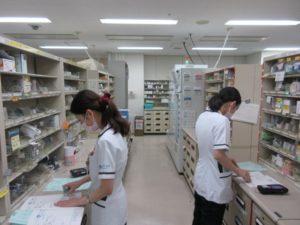
We use an audit system for dispensing powdered and liquid medicines, and fully automatic tablet packaging machines for dispensing individual doses according to dosage times, in an effort to improve work efficiency and prevent dispensing errors.
In addition, we use fully automated PTP sheet dispensers and picking support systems to prevent mistakes when picking tablets, ensuring even greater safety.Furthermore, we have implemented automation and improved safety in powder dispensing by introducing powder dispensing robots.
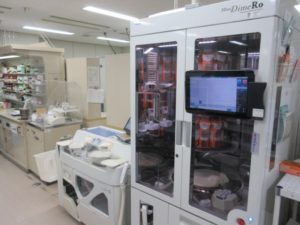
In the injection room, we dispense and inspect injectable medications for inpatients and outpatients, prepare anti-cancer drugs, and mix injectables. We confirm the dosage, administration rate, administration route, administration interval, interactions, and incompatibility of injectable medications prescribed by doctors, and if there are any questions, we inquire before dispensing. We use automated injectable dispensers (ampule pickers) and picking support tools to stock injectable medications, which not only improves work efficiency but also contributes greatly to risk management by preventing dispensing errors such as incorrect specifications or quantities. Once stocked, injectable medications are set for each administration along with labels and prescription copies and delivered to the wards. Additionally, high-calorie infusions for patients at high risk of infection are prepared in a clean bench in the sterile room.
In the formulation room, we prepare in-house formulations and mix biological preparations.
In order to accommodate advanced medical care, drugs that are not approved and supplied under the Pharmaceutical Affairs Law are prepared as in-hospital preparations in accordance with the Guidelines for Preparation and Use of In-Hospital Preparations (Version 1.0) published by the Japan Society of Hospital Pharmacists.
In-house preparations are classified according to the manufacturing process and intended use, and even Class I and Class II preparations that are highly invasive to the human body are prescribed only after a written explanation and consent from the patient has been obtained.
Since it is important to manage the dosage based on body weight and the administration intervals for biological preparations, we mix and prepare them in the formulation room.We also mix and prepare expensive pharmaceuticals.
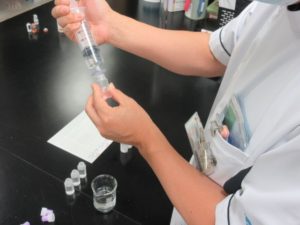
I am responsible for pharmaceutical management tasks such as ordering, delivering, and distributing pharmaceuticals used in our hospital to each department. Many pharmaceuticals these days are expensive, and some have short expiration dates or require strict temperature control. Our hospital uses an automated ordering system and has a pharmacist assigned to each shelf to ensure proper and efficient inventory management. We also pay close attention to quality control, including temperature control.
In addition to package insert revisions and emergency safety information, the Pharmaceutical Information Management Office efficiently collects, evaluates, and stores a variety of information from the internet. By organizing and processing this information and providing it to medical staff such as doctors, pharmacists, and nurses, and responding to questions about pharmaceuticals, we aim to promote the appropriate use of pharmaceuticals and contribute to improving the quality of medical care.
In addition, we work closely with ward pharmacists to provide support to patients so that they can receive appropriate drug therapy.
We also hold a pharmaceutical committee meeting every month to ensure the proper use and safety management of pharmaceuticals.
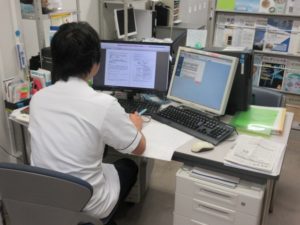
Since fiscal year 2013, we have assigned ward pharmacists to all wards.
During the first interview after admission, we will confirm the medications you normally take, your medication status, history of side effects, allergies, etc. to ensure that medication is administered safely during your hospitalization.
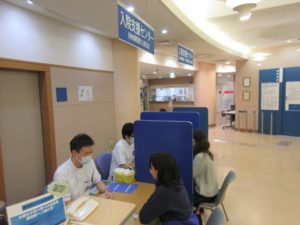
Regarding medications used during hospitalization, we calculate and confirm the dosage appropriate for the patient and make prescription suggestions to the doctor as necessary. We also participate in ward conferences and rounds to share information with ward staff and contribute to team medical care.
To ensure that patients can take their medications with peace of mind, we explain the medications to patients and their families and ask if they have any questions or concerns about the medications.
We are working to contribute to the provision of safer and more appropriate drug therapy through medication management in hospital wards.
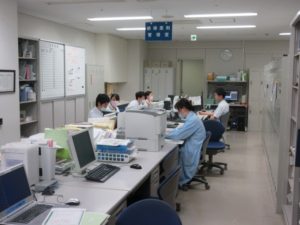
We participate in team medical care by preparing anti-cancer drugs for outpatients and inpatients within the Chemotherapy Center.
For anticancer drugs, in addition to dispensing and auditing according to prescriptions, we also conduct strict audits of the dosage and administration schedule of the anticancer drugs.Then, pharmacists prepare the anticancer drugs in a safety cabinet.
The responsible person participates in morning and evening conferences, reports any inquiries from the pharmacy department, and shares patient information with doctors, nurses, and administrative staff to ensure safe and secure chemotherapy.
In addition, we use manuals to explain the effects of anti-cancer drugs, side effects, and how to deal with them so that patients and their families can understand the treatment and receive it with peace of mind.
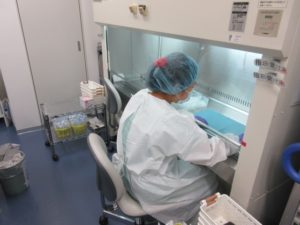
Some drugs have a close therapeutic range and a high risk of causing side effects. TDM involves determining individualized dosage and administration for each patient based on factors such as blood concentrations and clinical findings.
The Pharmacy Department conducts TDM and participates in determining optimal drug therapy. The main drugs targeted by TDM include antibiotics (glycopeptides and aminoglycosides), antiepileptic drugs, immunosuppressants, and cardiac glycosides.
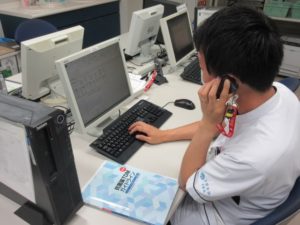
We work with other departments to manage all aspects of clinical trials within the hospital.
CRC operations are outsourced to a clinical trial management organization (SMO).
We work with local insurance pharmacies to support treatment by providing "inquiries" to ensure that prescription medications are taken properly, and by providing "medication information sheets (tracing reports)" to understand the patient's condition after taking medication. Furthermore, we operate a "pre-agreed protocol for outpatient prescriptions," and hold "Pharmaceutical Cooperation Councils" approximately four times a year to strengthen collaboration. Furthermore, we strive to provide a consistent level of medical care by enhancing our network with insurance pharmacies and medical institutions in Kita Ward through "standardization of inhalation instruction," "inhalation instruction network," and "diabetes network."
Every year, we accept eight pharmacy students and provide them with practical training in line with the Model Core Curriculum (Core Curriculum), where they not only acquire the skills, knowledge, and attitudes required of pharmacists, but also develop interprofessional collaboration, professional skills within team medical care, and ethical standards as medical professionals, leading to the development of the next generation of leaders.
Since April 2015, we have been collaborating with universities to engage in education and research by inviting faculty members from the University of Pharmacy as trainees.
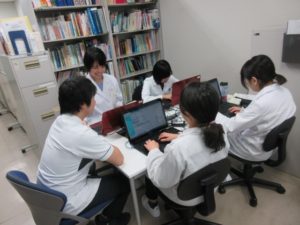
We conduct rounds within the hospital together with doctors, nurses, and other members of various professions, promoting environmental improvement and hand disinfection with the aim of protecting patients and staff from hospital-acquired infections.
Because inappropriate administration of antibiotics can lead to bacterial resistance, we monitor whether antibiotics are being administered appropriately.In addition, pharmacists, doctors, and clinical laboratory technicians specializing in infectious diseases work together to maximize therapeutic effects while minimizing adverse events, ensuring optimal infection treatment.
The NST (Nutrition Support Team) is a medical team made up of doctors, nurses, pharmacists, registered dietitians, clinical laboratory technicians, physical therapists, speech-language-hearing therapists, and others who work to provide optimal nutritional management for patients.
The roles of NST pharmacists include selecting and providing guidance on enteral nutrition formulas, proposing appropriate nutritional infusions, providing information on intravenous and enteral nutrition formulas, checking for drug interactions, and checking for side effects of oral and injectable medications (nausea, loss of appetite, diarrhea, constipation, drowsiness, etc.). Before the NST rounds, they check the medications being used by the patient and provide information during the rounds. They also work in cooperation with ward pharmacists to share information. Recently, NST activities have been expanding to each ward, and ward pharmacists are also actively participating in NSTs.
We hold multidisciplinary conferences and team rounds once a week. We work closely with ward pharmacists to work toward improving the quality of life of patients and their families. We also promote the appropriate use of medicines by providing support for palliative care drug therapy and drug information.
Doctors, nurses, pharmacists, registered dietitians, and physical therapists utilize their expertise in their respective fields to take measures against bedsores.
Pharmacists suggest medications that are appropriate for each patient's pressure ulcer condition, provide storage methods, and provide other information on medications. Pharmacists also bring medications frequently used in pressure ulcer treatment with them when they make rounds, allowing them to respond to sudden medication changes. Furthermore, the hospital has introduced in-house formulations such as 20% CMC zinc oxide ointment and 33% CMC azunol ointment, contributing to early healing.
"We hold ward rounds twice a week together with doctors, nurses, registered dietitians, speech-language-hearing therapists, physiotherapists, and others.
As a pharmacist, I check to see if the medication is being taken without aspiration, consider the method of administration, check whether the medication's side effects have any effect on swallowing function, and confirm and consider the prescription contents.
We hold conferences and rounds twice a week as a dementia care team, working with doctors (neurologists and neuropsychiatrists), dementia care certified nurses, case workers, and occupational therapists.
Pharmacists mainly provide advice and support regarding drug therapy from a pharmaceutical perspective.
*Some classes are currently suspended due to the COVID-19 pandemic.
The Pharmacy Department spoke about oral and injection diabetes medications. Each type of medication that lowers blood sugar levels works by acting on different organs and hormones in the body. We strive to ensure that patients and their families have a correct understanding of the medications they are taking.
Heart failure is a disease in which the pumping function of the heart gradually declines, resulting in repeated hospitalizations, so preventing re-hospitalization is important. In order to prevent re-hospitalization, we hold heart failure classes to provide an overview of heart failure medications and suggest ways to manage medication for patients and their families.
The Kidney Disease Class holds lectures for the public once a month, with each profession (doctors, nurses, pharmacists, nutritionists, laboratory technicians, physical therapists, and social workers) providing lectures. Pharmacists talk about medications that can prevent the progression of chronic kidney disease. After the lecture, there is time set aside for questions.


