Medical Research Institute KITANO HOSPITAL, PIIF Tazuke-Kofukai
Inquiry
search
close


Departments
A normal intestine is partially fixed to the abdominal wall, preventing it from twisting. However, if there is a congenital abnormality in the course of the intestine, the intestine may not be fixed and may become twisted. When the intestine twists, the blood vessels that supply blood to the intestine also twist, reducing blood flow to the intestine and, in the worst cases, causing intestinal necrosis. A twisted intestine is a condition that requires emergency surgery.
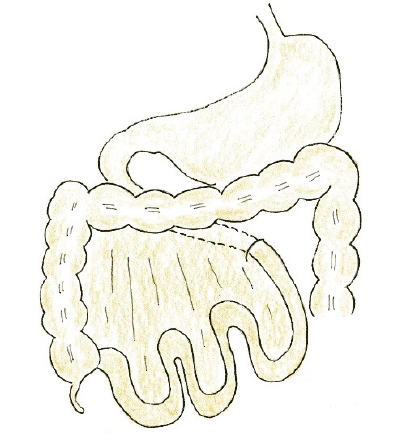
Normal intestinal flow
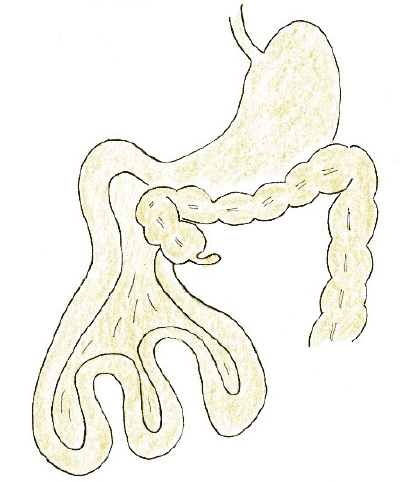
Intestinal malrotation course
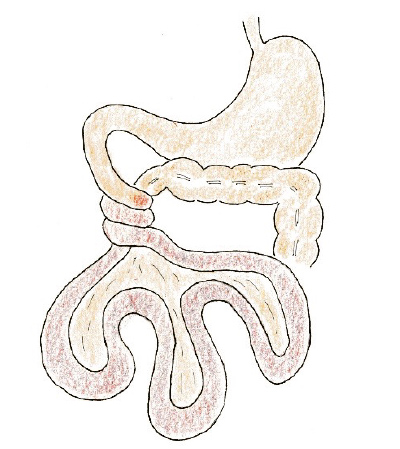
The intestine becomes twisted (torsion) → Blood flow to the twisted intestine becomes poor
In most cases, the symptoms are vomiting, abdominal pain, and abdominal distension. In particular, in neonatal cases, vomiting often contains bile (green), so green vomit in newborns requires special attention.
There are also cases where there is no intestinal torsion and only duodenal obstruction.
The presence or absence of intestinal volvulus is diagnosed by using ultrasound to check the degree of twisting of the blood vessels going to the intestines. If there is any twisting of the blood vessels, emergency surgery is required. Diagnosis can also be made by using an intestinal contrast test or CT scan.
If the intestine is twisted, emergency surgery is required. If the intestine is not twisted and the condition is found to be due to duodenal obstruction, elective surgery is planned.


