Medical Research Institute KITANO HOSPITAL, PIIF Tazuke-Kofukai
Inquiry
search
close


Departments
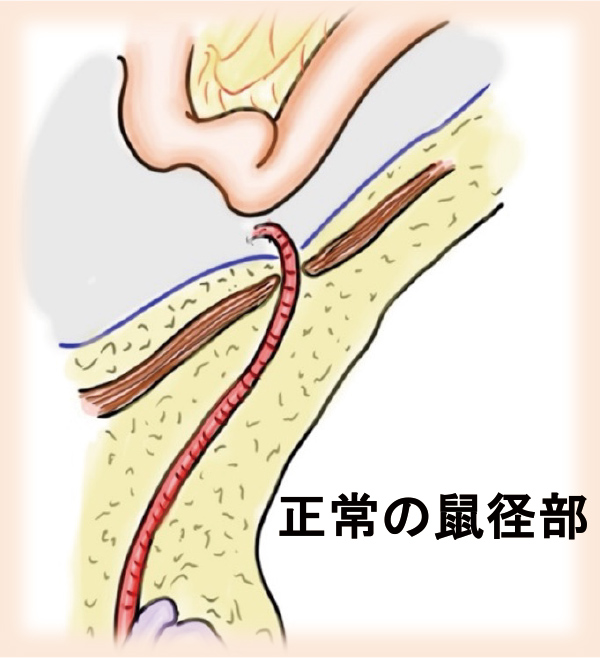
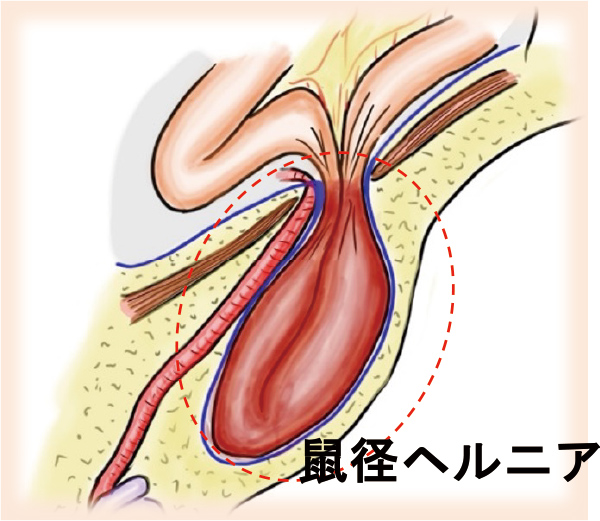
Inguinal hernia is a common condition that occurs in 1-5% of children. The membrane (peritoneum) that surrounds all the organs protrudes outside the abdominal muscles, and the intestines or ovaries enter inside, making it appear swollen. Even if the intestines enter, if they return quickly, it is not an emergency. However, sometimes the intestines do not return. The child will become irritable, and the swollen area will feel hard and very painful to the touch. If this condition is left untreated, blood will no longer flow to the intestines, which will eventually rot. Depending on the situation, emergency surgery may be necessary, so please see a doctor immediately.
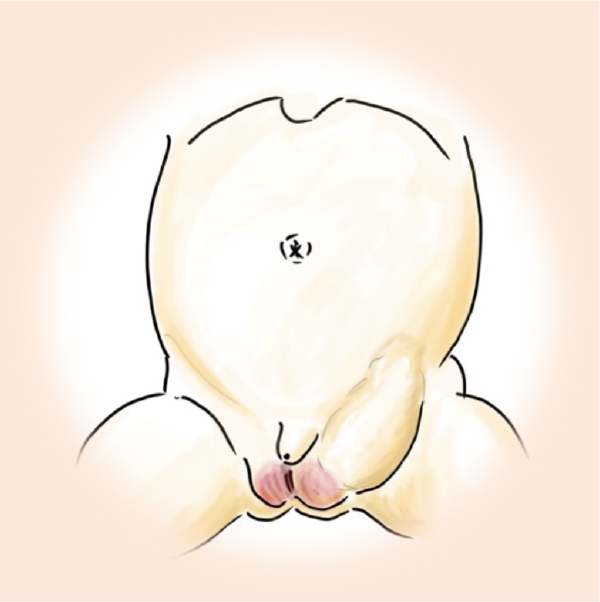
If the intestines or ovaries have escaped, they are returned to the abdomen and the hole that protrudes from the abdominal muscles is closed. The surgery takes about 30 minutes.
The anesthesia used is general anesthesia (anesthesia that puts you to sleep). You will feel a little drowsy after the surgery, but you will soon feel better. As the surgery involves only small incisions, there will not be much pain. If you have any concerns about the anesthesia, please feel free to ask the anesthesiologist during your consultation before the surgery.
At our hospital, we generally perform same-day surgery (no overnight stay). (There are cases where same-day surgery is not possible, so please feel free to contact us.)
There are no restrictions on your lifestyle as before surgery. After being discharged from the hospital, you can go to school or kindergarten. Bathing (showering) is possible from the second day after surgery. Please refrain from strenuous exercise and swimming for one week after surgery.
This surgery involves making a 2cm incision in the groin area and tying off the base of the hernia sac. The incision is hidden by pants, so it is not noticeable. Since the hernia on the other side cannot be observed, there is a risk of a hernia developing on the other side in the future.
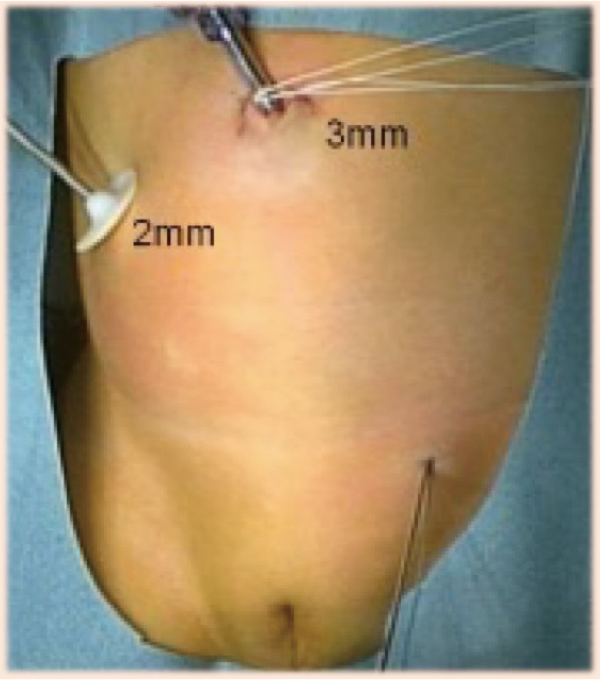
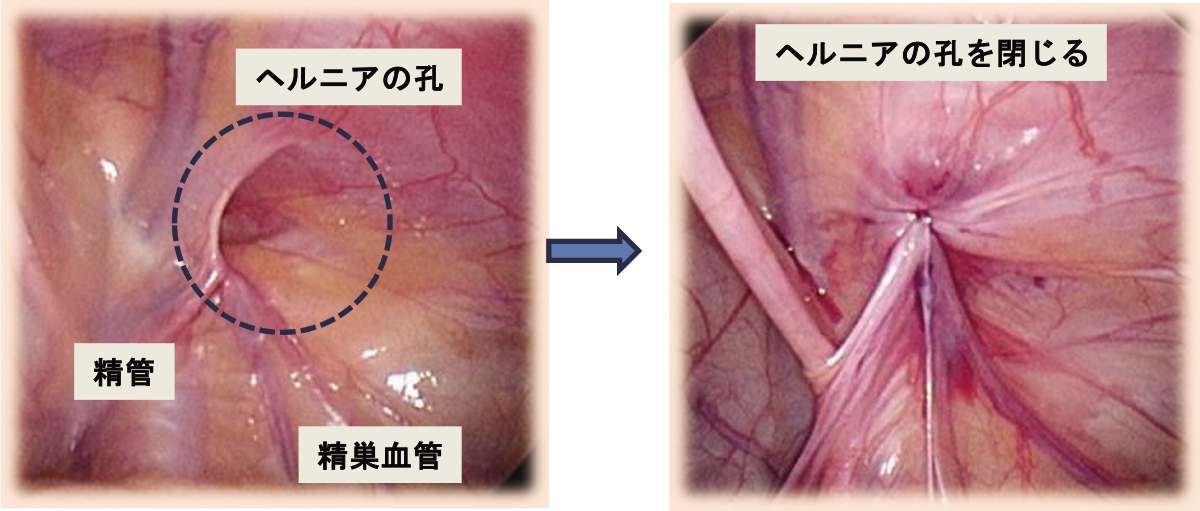
A camera is inserted through the navel, and the inside of the abdomen is displayed on a monitor to observe the hernia from the inside. After that, a thin instrument 2mm in diameter is inserted through the right or left abdomen, and the base of the hernia sac is closed using a special needle and thread. The scar is barely noticeable. If laparoscopic surgery is difficult or problems arise, the procedure may be changed to a conventional surgery midway through.
The scars are significantly smaller than those left by conventional surgery.
Laparoscopy allows observation from inside the abdomen, so it is possible to find a hernia on the opposite side (about half of patients have a hernia on the opposite side). If one is found, surgery can be performed at the same time. Therefore, laparoscopic surgery rarely results in a recurrence of a hernia on the opposite side.
In boys, the testicular blood vessels and the vas deferens that send semen are located right next to the hernia. Because the endoscope allows for magnification, it is believed to have less impact on the blood vessels and vas deferens compared to the inguinal method.