Medical Research Institute KITANO HOSPITAL, PIIF Tazuke-Kofukai
Inquiry
search
close


Departments
In the past, the term "imperforate anus" was used to refer to a congenital anal closure. However, the term now includes any abnormality, such as an anal imperforate anus being in a normal position.
Although the term "imperforate anus" is used broadly, there are many different types, and treatment will be planned to suit each individual case. In some cases, the rectum is connected to the bladder or urethra in boys, and to the vagina in girls.
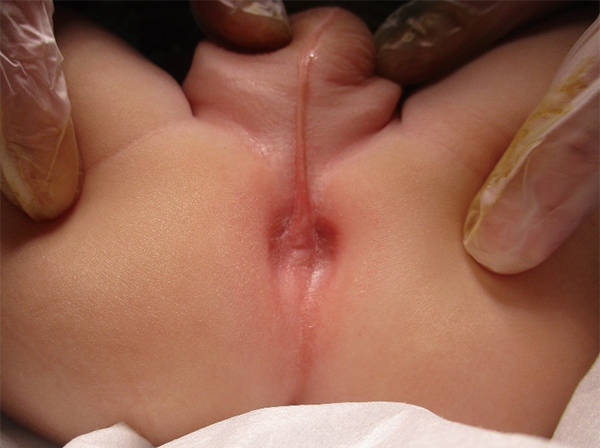
If the baby does not have an anus and is unable to defecate, emergency surgery to create an artificial anus is required. On the other hand, if there is a small hole, surgery to widen it may be possible to defecate (in which case, treatment may be completed with just this surgery). If the baby is able to defecate after surgery in the neonatal period, we will calmly examine the shape of the rectum and anus and move on to fundamental treatment.
An imaging of the rectum and urethra is performed to evaluate the location of the obstruction and its relationship to the urethra.
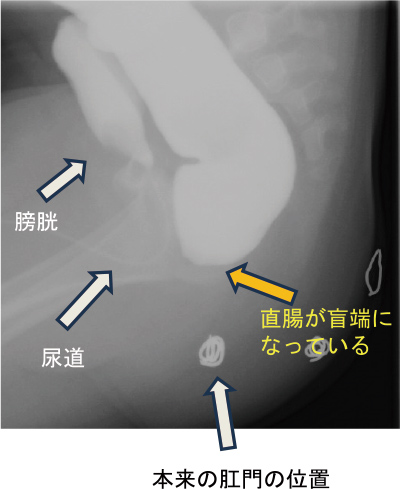
Once the patient has gained a certain amount of weight, a more fundamental surgery (surgery to reconstruct the buttocks) will be performed. Depending on the position and shape of the rectum, surgery may be performed only on the buttocks, or laparoscopy may be used to perform surgery from the abdominal side as well.
If you have a colostomy, leave it in place for now.
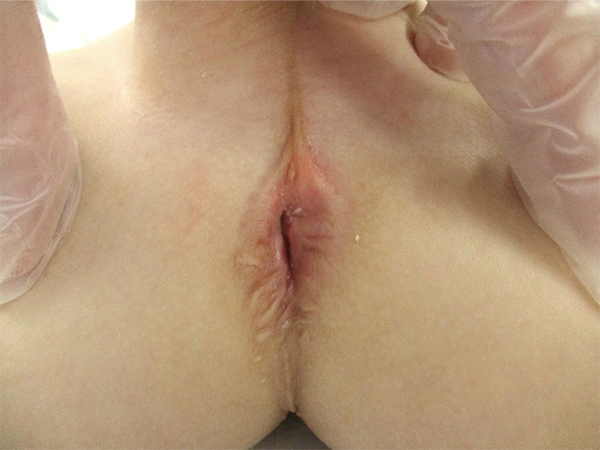
After the surgery to create a buttocks, once the wound has healed, surgery will be performed to connect the intestines to the colostomy. Once the colostomy is removed, stool will begin to come out of the created buttocks.
The bowel function of patients after imperforate anus surgery varies, with some being able to defecate completely normally and others experiencing diarrhea or constipation. We provide outpatient support tailored to each patient's bowel problems. This is a condition that requires long-term outpatient visits.


