Medical Research Institute KITANO HOSPITAL, PIIF Tazuke-Kofukai
Inquiry
search
close


Departments
Normally, the intestines are distributed with nerves that move the intestines. However, there are cases where these nerves are congenitally missing, which can lead to poor intestinal movement. This is generally the case in the large intestine near the anus, but the area of the intestinal tract where nerves are missing varies from patient to patient. Many cases are discovered with symptoms such as constipation, abdominal distension, and vomiting.
The test is called a barium enema, in which a liquid (contrast agent) that shows up on an X-ray is injected into the anus to examine the shape of the intestine. If Hirschsprung's disease is suspected, the intestine in the affected area will be thin, and there will be a difference in thickness from the normal intestine. If Hirschsprung's disease is suspected through the barium enema, a small piece of the rectal wall will be removed from the anus and examined under a microscope for nerve abnormalities. If nerve abnormalities are found, the diagnosis is confirmed.
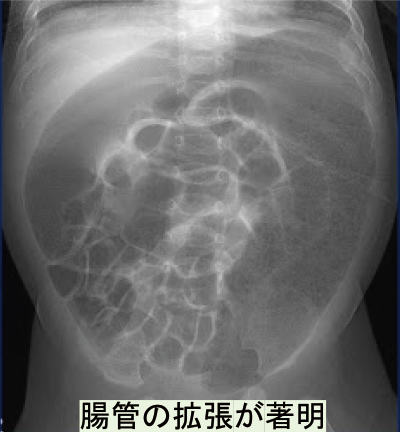
Hirschsprung's disease is a disease that requires surgery. The intestine that is not moving properly must be removed and the normal intestine reconnected to the anus. In most cases, the surgery is performed laparoscopically, so the incision is small.
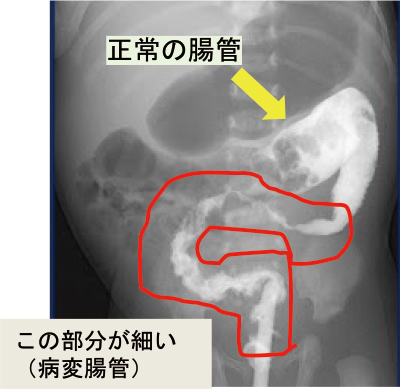
After surgery, some patients are able to defecate without any problems, but others may become constipated or, conversely, experience diarrhea. After surgery for Hirschsprung's disease, bowel problems may remain for a long time, and patients should be monitored as outpatients.


