Medical Research Institute KITANO HOSPITAL, PIIF Tazuke-Kofukai
Inquiry
search
close


Departments
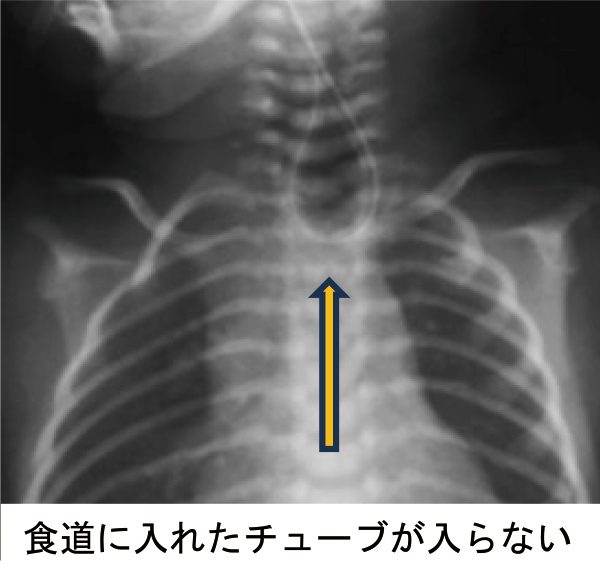
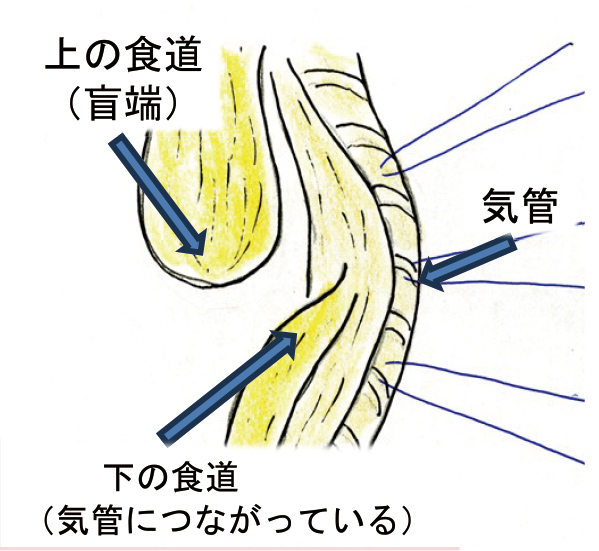
This is a congenital condition in which the esophagus is not connected. In many cases, the upper esophagus is a dead end (blind end) and the lower esophagus is connected to the trachea. Because the esophagus is not connected, the baby cannot drink milk. In addition, because the lower esophagus is connected to the trachea, the baby may experience abdominal distension or pneumonia early after birth. For this reason, some type of surgery is required within a few days after birth. If the condition is diagnosed in the fetus, planned treatment is required by obstetrics, neonatology, and pediatric surgery.
If breathing and circulation are stable, surgery is performed to separate the lower esophagus connected to the trachea and reconnect the upper and lower esophagi.
However, if the patient's overall condition is unstable, surgery may be limited to tying the esophagus in the abdomen or creating a gastrostomy tube to save the patient's life. Also, if the upper and lower esophagi are very far apart, it may not be possible to reconnect them in one surgery.
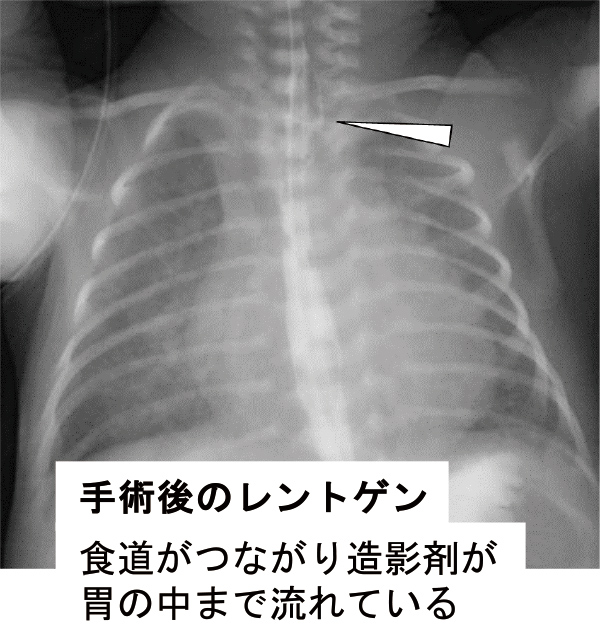
Even after surgery, the baby will need sedation in the NICU. Once the connected esophagus is stable, the baby will start drinking milk little by little. Treatment can be difficult due to leakage or narrowing from the anastomosis (the part where the esophagus is connected).