Medical Research Institute KITANO HOSPITAL, PIIF Tazuke-Kofukai
Inquiry
search
close


Departments
This is a condition in which a baby is born with a hole in the diaphragm, causing the abdominal organs to be trapped inside the chest during fetal development. Because the abdominal organs are inside the chest, the lungs cannot develop significantly. There is no problem during fetal development as the baby receives oxygen from the umbilical cord, but after birth, the baby needs to breathe with its own lungs. As a result, breathing problems appear immediately after birth. Depending on the severity, this condition can be life-threatening.
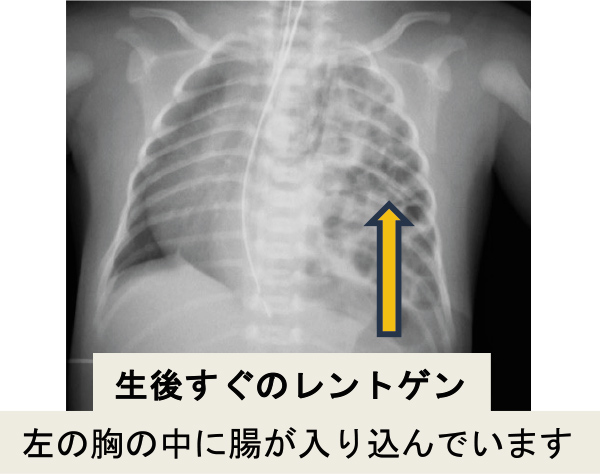
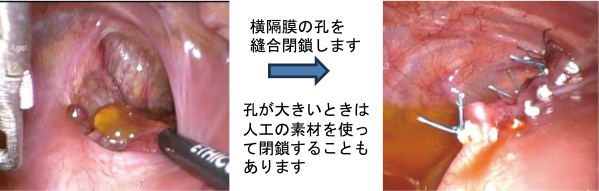
If the condition is diagnosed during the fetal period, treatment must be planned and carried out jointly by obstetrics, neonatology, and pediatric surgery. First, breathing and circulation are managed in the NICU after birth. Once the baby's overall condition has stabilized somewhat, surgery is performed to return the abdominal organs that have risen to the chest and close the hole in the diaphragm. If the hole in the diaphragm is small, thoracoscopic surgery, which leaves a small incision, can also be performed.
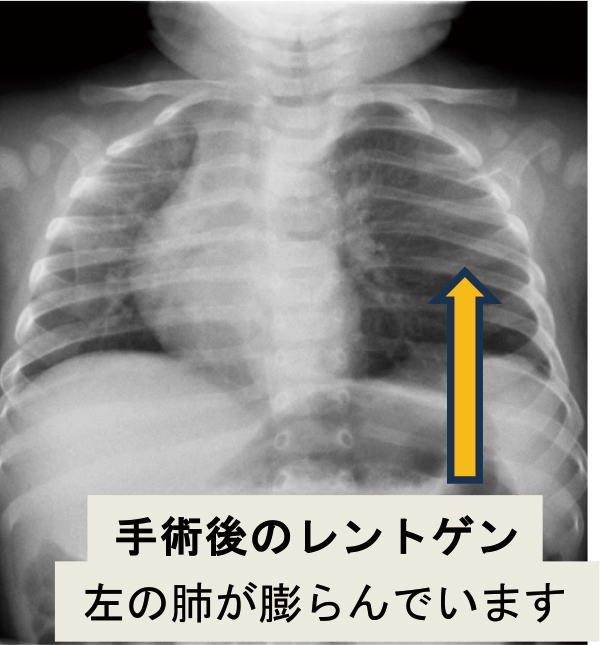
Generally, even after surgery, artificial respiration will be required for a while in the NICU. Once the baby's lungs have expanded and it looks like they can breathe on their own, the ventilator can be removed.


