Medical Research Institute KITANO HOSPITAL, PIIF Tazuke-Kofukai
Inquiry
search
close


Departments
Congenital biliary dilatation is a disease in which the ducts that carry bile (bile ducts) are dilated, and is basically a malformation in which the pancreatic duct and bile duct join abnormally (pancreaticobiliary maljunction). Because the pancreatic duct and bile duct are connected, pancreatic juice can easily flow back into the bile duct, causing various symptoms.
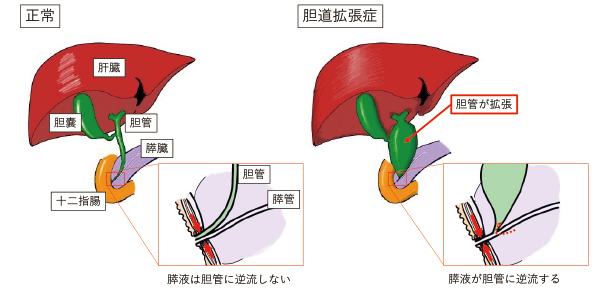
In many cases, the disease begins with sudden abdominal pain and vomiting. Although it is often diagnosed as gastroenteritis based on the symptoms, blood tests reveal abnormalities in the liver, biliary tract, and pancreas. A definitive diagnosis can be made through imaging tests such as ultrasound, CT, and MRI. Some people do not develop the disease in childhood and remain asymptomatic until adulthood. In such cases, pancreatic juice refluxes into the bile duct for a long period of time, causing inflammation, and it is known that there is a high rate of developing biliary tract cancer.
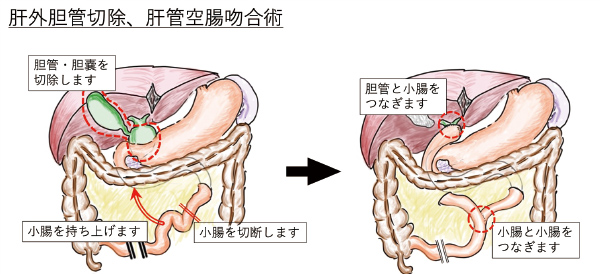
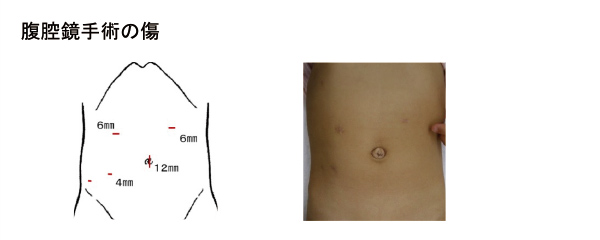
If abdominal pain occurs due to congenital biliary dilatation, hospitalization, fasting, and intravenous drip are required (as eating increases pancreatic secretion). In many cases, symptoms will subside with fasting. The fundamental treatment for congenital biliary dilatation is surgery. Surgery involves removing the extrahepatic bile duct and gallbladder, and connecting the small intestine to the bile duct on the hepatic side to reconstruct the bile flow path (extrahepatic bile duct resection, hepaticojejunostomy). Depending on the patient's condition, we may perform laparoscopic surgery, which leaves a small incision. Our hospital was one of the first to adopt laparoscopy for congenital biliary dilatation.
Generally, most patients experience no particular symptoms after surgery. However, some patients develop stones in the intrahepatic bile duct or suffer from repeated bouts of cholangitis. Although extremely rare, there have also been reports of patients developing bile duct cancer, so even after surgery, this is a disease that requires long-term outpatient monitoring.


