Medical Research Institute KITANO HOSPITAL, PIIF Tazuke-Kofukai
Inquiry
search
close


Departments
The digestive tract consists of organs such as the stomach and intestines. In newborns, holes can form in the digestive tract for a variety of reasons. In low birth weight babies in particular, intestinal movements are weak and they may not be able to expel meconium on their own. Low birth weight babies also have weak intestinal walls, so when the intestines become distended, they can easily develop intestinal perforations.
The contents of the stomach and intestines leak into the abdomen, causing a condition called peritonitis, which rapidly worsens the patient's overall condition and puts them in a life-threatening state.
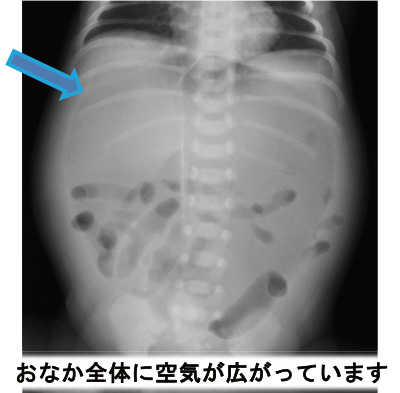
Generally, an abdominal X-ray is taken. If the X-ray shows air accumulating outside the intestines, it is determined that there is a hole somewhere in the digestive tract. In addition, an ultrasound or CT scan may be performed.
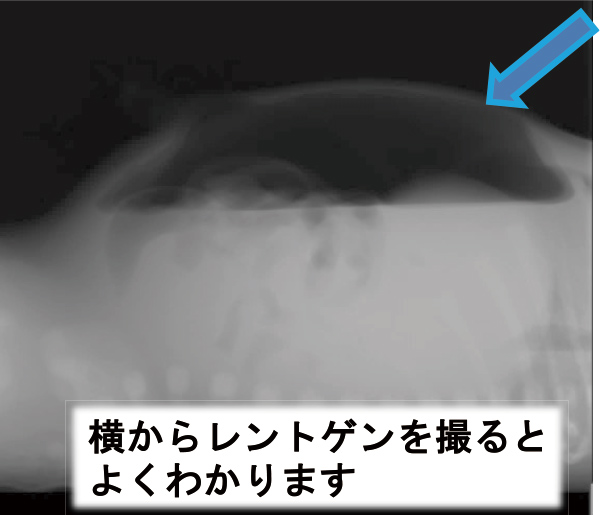
Although it varies depending on the patient's weight and overall condition, emergency laparotomy is generally required. The hole must be closed, or in some cases, a temporary colostomy must be created. If the patient's overall condition is too poor to undergo surgery, a tube is placed in the abdomen to drain any leaking fluids from the body.
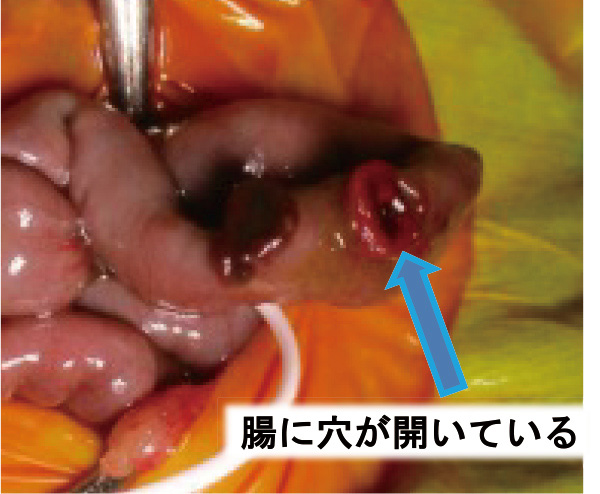
*A hole in the stomach or intestines in a newborn can be life-threatening and requires emergency treatment.


