Medical Research Institute KITANO HOSPITAL, PIIF Tazuke-Kofukai
Inquiry
search
close


Departments
An endoscopy is an examination in which a long, thin tube approximately 1cm in diameter with a small camera (CCD) or lens at the tip is inserted through the mouth, nose, or anus to observe the inside of the esophagus, stomach, duodenum, and large intestine. If cancer is detected early during the examination, it can be removed using only a gastroscope or colonoscope without cutting the abdomen. Our hospital's endoscopy room, which is a certified facility by the Japan Society of Gastroenterological Endoscopy, performs approximately 13,000 endoscopic examinations and treatments of the digestive tract, biliary tract, and pancreas annually (2023 results).

reference:Medical examination and testing reservations (for medical institutions)
| Gastroscopy (upper endoscopy) |
Colonoscopy (lower endoscopy) | |
| Advance preparation | Fasting from the morning of the day |
You will need to fast from the morning of the test and take a laxative to empty your intestines. |
| Insertion port |
Through the mouth (clearer images can be taken) Through the nose (thin camera makes it less likely to cause nausea) |
From the butt |
| Inspection time |
5 to 10 minutes (approximate) |
30 minutes (approximate) |
| Visible place |
Throat, esophagus, stomach, duodenum |
colon |
| Symptoms to be tested for |
Pain in the pit of the stomach, anemia, loss of appetite, abnormal barium test results, etc. |
Abnormalities in medical examinations (positive occult blood in stool), constipation, diarrhea, bleeding, anemia, etc. |
| Target diseases |
Stomach cancer, stomach ulcer, reflux esophagitis, etc. |
Colon cancer, colon polyps, enteritis, etc. |
*The required time may vary depending on the patient's condition.
Our hospital operates five examination rooms. Patients can be very anxious about their first examination, but we can reduce pain by administering anesthesia to the throat and nasal passages beforehand. If you request a sedative when booking your examination, we can administer the sedative through an IV drip and perform the examination and treatment while you doze off. Our staff strives to minimize anxiety, even with small details like patting patients' backs and talking to them during the examination. Please feel free to ask our nurses any questions you may have before the examination.
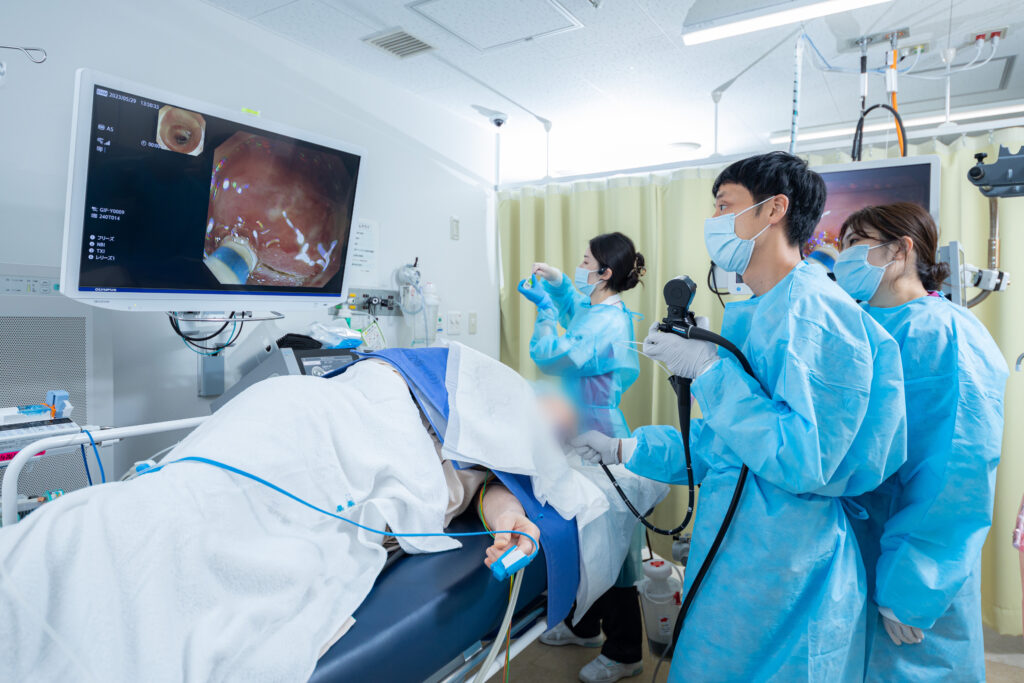 At our hospital, we perform endoscopic submucosal dissection (ESD), which uses an electric scalpel and special instruments inserted into the tip of an endoscope used in gastroscopy and colonoscopy to remove early-stage cancers in the throat, esophagus, stomach, colon, etc. Although ESD is technically difficult, cancers that previously required surgery through an abdominal incision can now be removed endoscopically by making full use of an electric scalpel if they are early-stage cancers that have not metastasized. Early-stage cancers are often curable, so we recommend regular endoscopic examinations to detect them early.
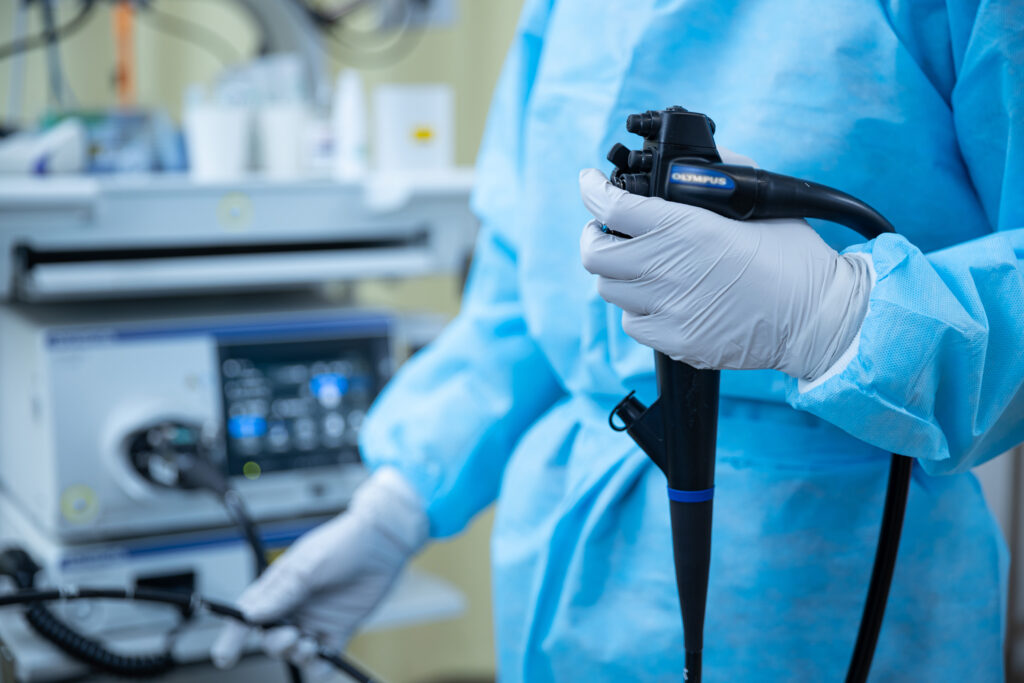 Our hospital has a wide range of endoscopic equipment available to accommodate a large number of patients. Current endoscopic systems are 4K compatible, offering significantly better visibility than before, leading to the detection of lesions at a very early stage. We also have original gastroscopes specially ordered from manufacturers, allowing us to handle even the most difficult treatments.
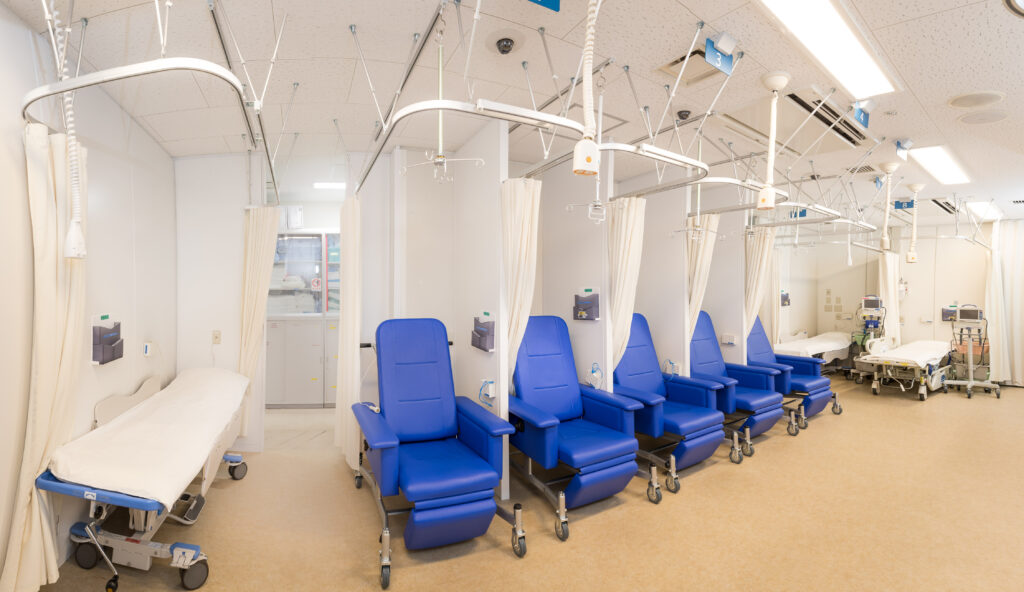 We currently have eight recovery beds available for patients after the examination and treatment. After the examination, you will rest comfortably in a reclining chair for about 30 minutes until the effects of the sedative wear off.
Q. Are there any age restrictions for endoscopic diagnosis and treatment?
A. At our hospital, we judge based on the patient's overall condition, not their age. Even elderly patients can receive diagnosis and treatment if their overall condition is good.
※reference
Patient newsletter "Kitano Public Relations Vol. 8"


