Medical Research Institute KITANO HOSPITAL, PIIF Tazuke-Kofukai
Inquiry
search
close


Departments
We have opened the "Pectus Excavatum Center," which can provide comprehensive diagnosis and treatment for pectus excavatum. Pectus excavatum is a congenital disorder, but many people, both children and adults, suffer from it. We examine those who have been diagnosed with pectus excavatum during a medical examination or who are troubled by a hollow in their chest, including determining whether treatment is necessary. Please feel free to consult us.
Our hospital has a thoracic surgery department that specializes in chest surgery, an orthopedic surgery department that specializes in bones, an anesthesiology department that specializes in anesthesia and pain management, a plastic surgery department that specializes in scars, and a rehabilitation center that specializes in respiratory rehabilitation.Since many of our target patients are children, our center has a pediatric surgeon with extensive experience in treating pectus excavatum who acts as the liaison for consultations and treatment.
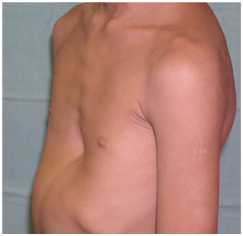
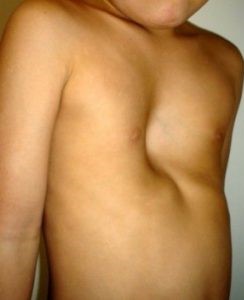
胸の中央部が凹んでいる変形を「漏斗胸」といいます。肋軟骨の変形が原因とされていますが、不明な点も多い疾患です。乳幼児から気づかれる方や、成長とともに目立ってくる方など様々ですが、約1,000人に1人の頻度で起きると言われており、稀な疾患ではありません。凹みの程度によっては風邪症状が長引いたり、喘息様の症状が出たりすることがありますが、多くの場合、凹み以外の症状はありません。身体的な症状がなくても、特に学童期・思春期では凹み自体が心理的・社会的に大きな問題となることがあります。
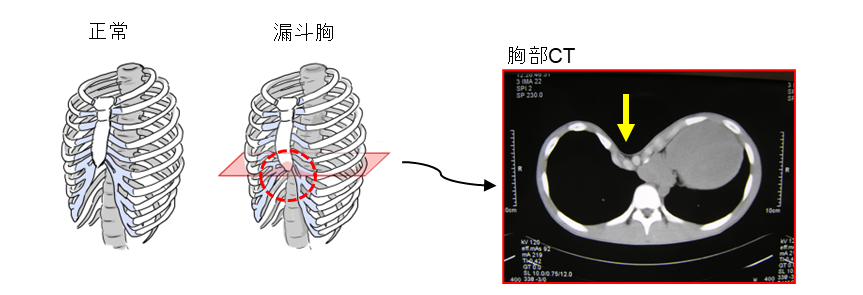
Treatment options at our center include surgical and non-surgical options.
手術治療は、1998年にアメリカのNuss氏が報告した低侵襲手術手技である胸腔鏡補助下胸骨挙上術、いわゆるナス手術を行います。両側胸部(わきの下)に3~4cmの皮膚切開から、金属のバーを胸の中に埋めて前胸部を内側から持ち上げることにより凹みを治します。従来の方法と違い肋骨や胸骨を切らないため、手術時間が短く、出血量も少なく、傷も目立ちません。金属のバーは年齢によって異なりますが、1年半から3年後に抜き取ります。
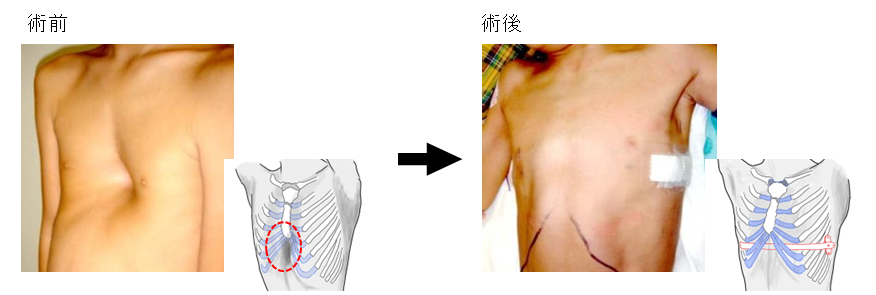
手術は全身麻酔で行います。この手術は骨を矯正する手術のため、術後に痛みが強く出ます。この痛みを抑えるために硬膜外麻酔(背骨の間から細いチューブを入れ、痛み止めを持続的に流す麻酔)を併用します。
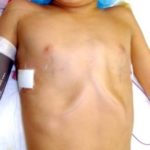
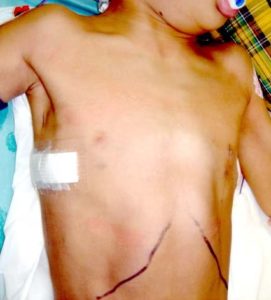
Each case shows the condition before and immediately after surgery.
 →
→ 
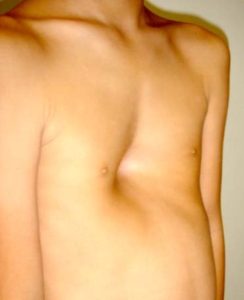 →
→ 
Exercises that open up the chest, such as swimming, increase lung capacity and improve the shape of the chest. While they are somewhat effective, they do not significantly improve the hollowness of the chest itself. Another problem is that people with pectus excavatum often dislike swimming.
Many patients with pectus excavatum have a hunched back, which makes the depression in their chest even more noticeable. If you stick out your chest and take deep breaths, the depression will become less noticeable. Also, making an effort to stick out your chest before and after surgery will improve your posture and prevent the bar from slipping.
前胸壁に大きな吸盤をつけて陰圧をかけて胸壁を持ち上げる方法です。手術を必要としませんが、1日数時間毎日続ける必要があります。手術以上の効果は望めませんが、軽度の凹みの方には有効性も示されています。毎日行うものですので、器具の購入が必要になります。
It is best to perform surgery at an age when the costal cartilage is still soft, but we ask that you avoid surgery at an age where the patient will not be able to remain still after surgery and will not cooperate. Also, if surgery is performed too early, the depression may progress again. Therefore, we believe that surgery is best performed after the fourth grade of elementary school.
On the other hand, once a student reaches high school age or older, their ribs and cartilage become hard, so they may need to insert two or more metal bars or make small cuts in their ribs to create a beautiful chest shape.Our hospital has a wide range of patients, from elementary school students to adults, who undergo surgery.2019年から2025年の間に142人の方に手術を施行させていただいております。手術時の平均年齢は16歳(5歳~42歳)、男性114人、女性28人でした。患者さんの学校のお休みやお仕事のご都合などございますので、ご都合の良い日時を相談させていただいています。
また当院では手術以外の治療方法(陰圧吸引療法:バキュームベル)などもご案内しています。漏斗胸外来では、患者様の状態に沿って治療の必要性なども含め、お話させていただいております。治療を受ける受けないに関わらず、漏斗胸が気になる方はお気軽にご相談ください。
| Clinic date | Wednesday mornings, Thursday afternoons *Excluding national holidays and the New Year holidays |
|---|---|
| Medical reception hours | [Wednesday] 8:45-11:30 [Thursday] 13:30-15:00 |
| How to get examined | You can get a consultation without making an appointment *However, patients who do not have a referral letter from another clinic or hospital at the time of their first consultation will be charged a selected medical fee in addition to the regular initial consultation fee and other medical expenses.What are selected medical expenses?). |
| About reservations | From the patientFor appointment reservations, please see this pagePlease check. |
2nd floor B block reception
Phone 06-6312-8827


