Medical Research Institute KITANO HOSPITAL, PIIF Tazuke-Kofukai
Inquiry
search
close


Departments
Clinical engineers are specialized medical professionals whose job is to operate and maintain medical equipment, including life support systems, under the direction of a doctor. Life support systems include dialysis machines, ventilators, and heart-lung machines, all of which are highly sophisticated, complex, and highly specialized devices. Clinical engineers work in collaboration with doctors and nurses by operating and maintaining these devices.
The Department of Clinical Engineering was established in April 2005, and as of 2025, the Department has 28 members.
| doctor | 1 person |
|---|---|
| clinical engineer | 27 people |
| total | 28 people |
We are responsible for catheter-related work, arrhythmia treatment-related work, and cardiopulmonary bypass work, and we are on call 24 hours a day, 365 days a year to respond to emergency cases at night and on holidays.
We operate vital sign recording and analysis devices, intravascular ultrasound (IVUS) devices, and peripheral vascular penetration catheter devices in procedures such as coronary angiography, percutaneous coronary intervention (PCI), peripheral vascular catheter therapy (EVT), stent graft insertion, catheter examinations for understanding circulatory dynamics in pediatric neonatal heart disease and for pre- and post-operative evaluation, and catheter treatments using coils and balloons.
The clinical engineering department is also responsible for the operation and management of auxiliary circulatory devices such as intra-aortic balloon pumps (IABP) and percutaneous cardiopulmonary support (PCPS).
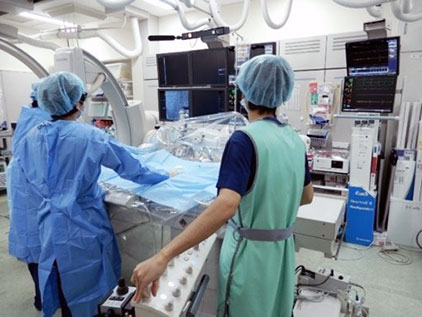
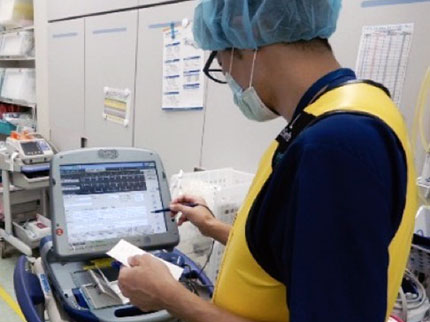
We strive to ensure safety by providing support during surgery for devices implanted in patients' bodies, such as cardiac pacemakers, implantable cardioverter defibrillators (ICDs), implantable cardioverter defibrillators with biventricular pacing (CRT-Ds), and wearable cardioverter defibrillators (WCDs), as well as by regularly checking implanted devices in outpatient clinics and wards, and by monitoring and analyzing remote monitoring.
Catheter ablation treatments use many medical devices that require advanced specialized knowledge and skills, such as intracardiac potential recording devices, 3D mapping systems, cardiac electrical stimulation devices, and high-frequency electrical current devices. By operating these devices, we help elucidate the origin of arrhythmias and provide safe treatment.
Additionally, our hospital began offering cryoablation treatment in February 2016. We have been providing clinical support for this treatment since its inception.
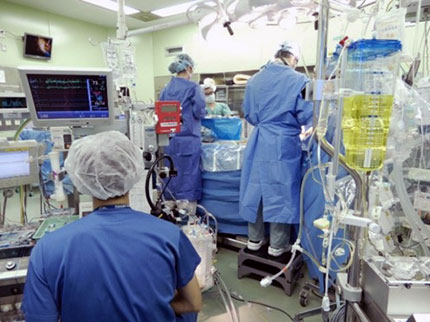
During cardiac or vascular surgery, we operate and manage equipment including life support management devices used in cardiovascular surgery, such as heart-lung machines that take over the heart when the heart is temporarily stopped during surgery, myocardial protection devices that protect the heart muscle, cryoablation devices, and flow meters.
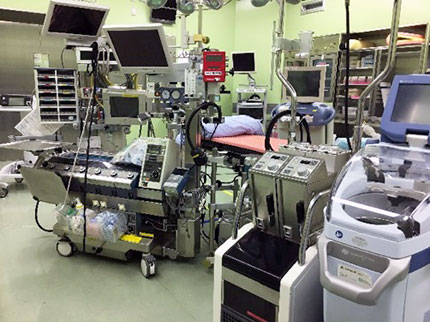
Our hospital's blood purification center has 20 beds and operates two courses on Mondays, Wednesdays, and Fridays, and one course on Tuesdays, Thursdays, and Saturdays.
Currently, in addition to approximately 60 outpatients, patients who require hospitalization for tests or surgery are receiving hemodialysis treatment.
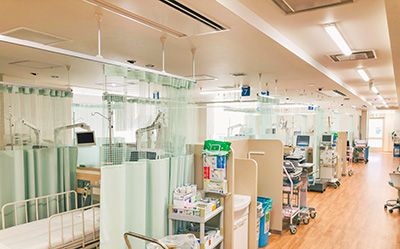
As the core hospital in the region, we also focus on disaster prevention measures so that we can respond in the event of a disaster.
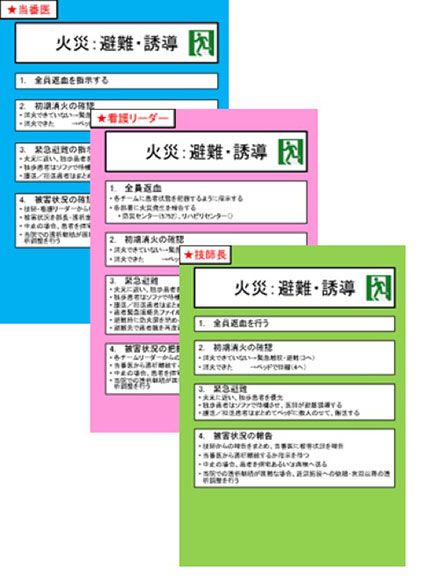
For example, we take safety measures around patients by turning off the caster locks to prevent patient monitoring equipment from falling over during earthquakes, and by ensuring that supply and drainage hoses are of appropriate length.In addition, the Blood Purification Center conducts its own disaster drills and creates disaster action cards.
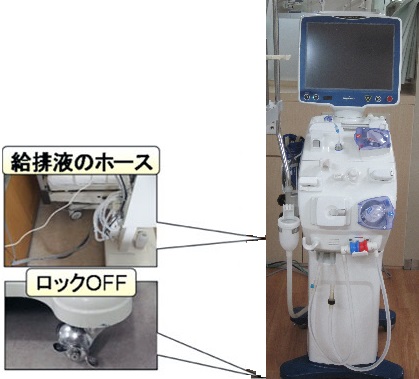
The duties of a clinical engineer include clinical tasks such as preparing dialysis equipment, preparing dialysis fluid, priming, puncturing, monitoring patient monitors during dialysis, and returning blood, as well as equipment management such as regular inspections and overhauls of blood purification equipment and water quality management of dialysis fluid to ensure patients receive dialysis safely.
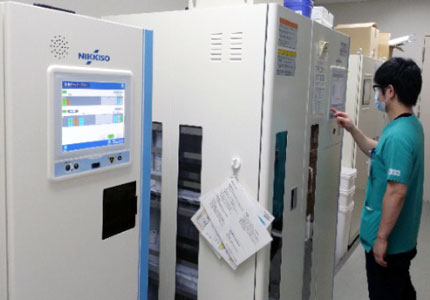
In addition to hemodialysis, the Blood Purification Center also provides plasma exchange therapy (simple plasma exchange, immunoadsorption therapy), LDL adsorption therapy, hemoperfusion therapy (GCAP, LCAP, endotoxin adsorption, etc.), peripheral blood stem cell collection, etc. We also provide ascites filtration and concentration reinfusion therapy for refractory ascites.
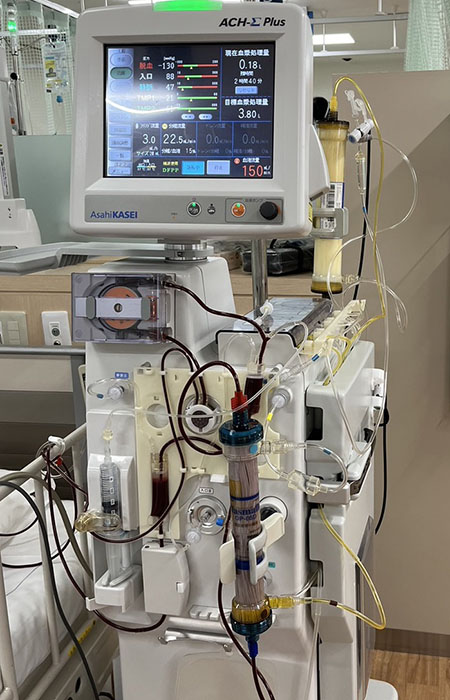
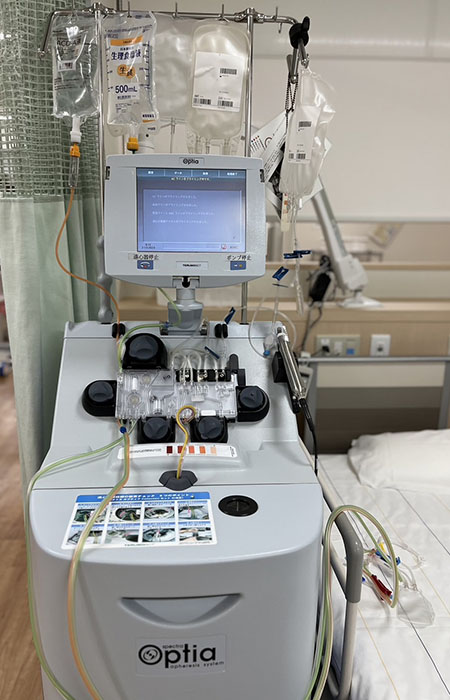
In addition to the Blood Purification Center, we also provide hemodialysis and plasma exchange in the ICU and HCU for critically ill patients, such as those after surgery or with heart disease, as well as hemodialysis and plasma exchange for pediatric patients in the wards. We also provide 24-hour support for emergency cases.
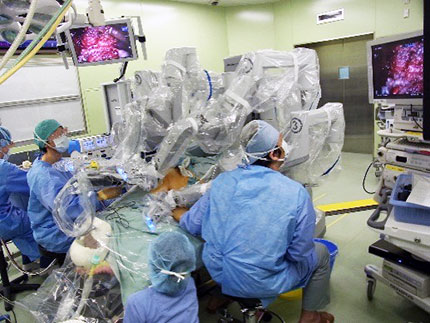
A wide variety of medical equipment is used in operating rooms depending on the surgical procedure, and any problems with these devices can have a significant impact on the progress of the surgery. Clinical engineers working in operating rooms are responsible for maintenance management, promptly responding to equipment malfunctions that occur during surgery, and providing clinical support, with the goal of "contributing to the safety of equipment and the smooth progress of surgery."
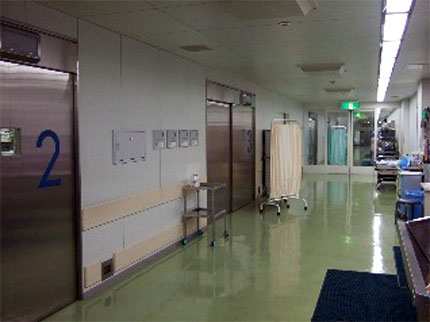
In recent years, equipment has become more sophisticated and complex, making regular and daily maintenance important for maintaining performance and ensuring safety. Clinical engineers are responsible for planning regular maintenance and managing the results of regular maintenance, inspecting equipment before use, inspecting sterilized equipment after use (after cleaning), and managing consumables attached to the equipment.
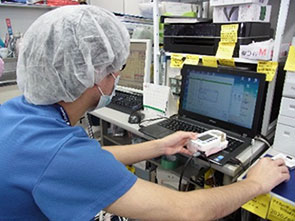
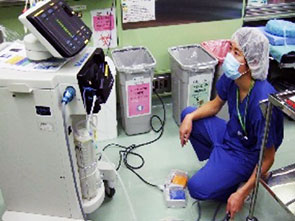
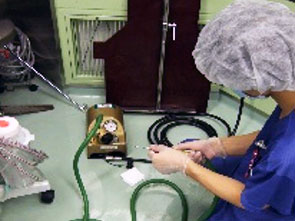
Our hospital has an on-call system in place to respond quickly to equipment malfunctions.In addition to responding to malfunctions, we also provide support services related to medical safety, such as explaining how to use the equipment, holding study sessions, compiling the number of malfunctions, investigating the causes, and considering measures to prevent recurrence.
We attend surgeries and prepare and operate the robotic surgical support device da Vinci Si, navigation device Stealth Station S7, and autologous blood collection device.
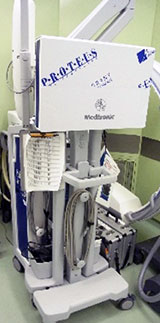
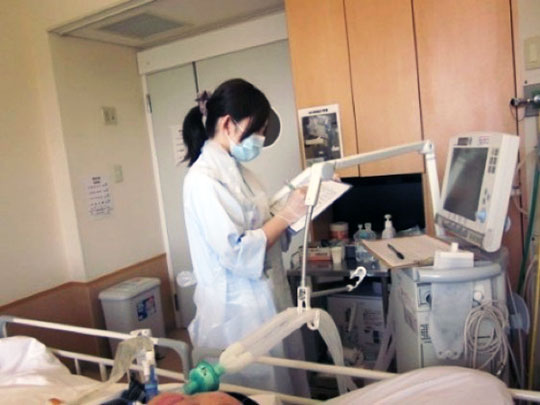
The ME Center, which is responsible for central equipment management, handles a wide range of tasks related to medical equipment within the hospital, including medical equipment repair, regular inspections, troubleshooting in wards and outpatient clinics, equipment loaning, return and location tracking, medical equipment operation safety training for hospital staff, manual creation, and medical equipment selection.In addition, since there is particularly specialized and advanced equipment in the neonatal intensive care unit, intensive care unit, emergency room, and ambulances, we also visit the site to perform equipment maintenance and management.
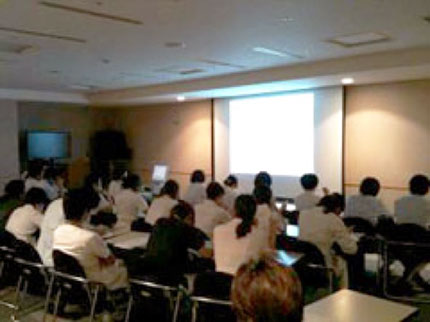
study session
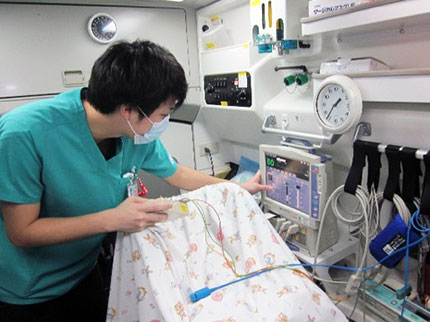
Inspection of medical equipment inside ambulances
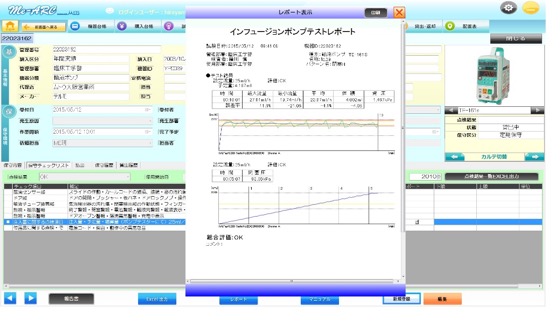
Since March 2013, we have been using database software (METS, me-ARC) specifically designed for medical equipment management, and data is shared among the Clinical Engineering Department, Inventory Management Division, Laboratory Department, and Radiology Department, allowing management throughout the hospital.
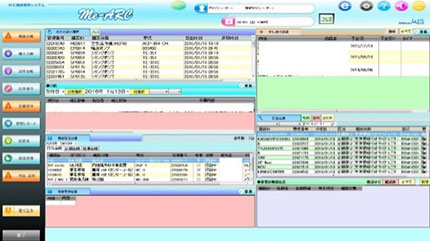
Management software TOP screen
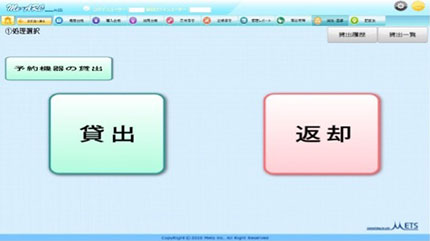
Dedicated terminal for lending and returning
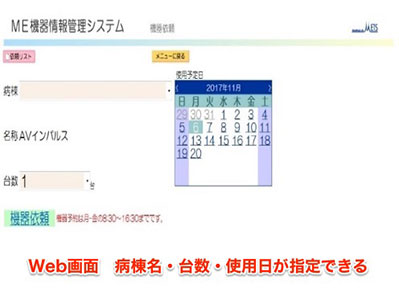
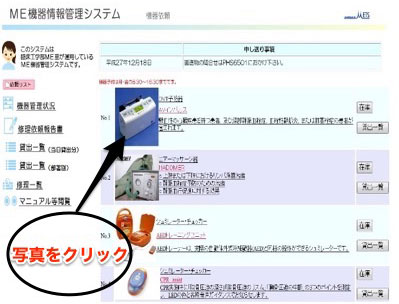
The Department of Clinical Engineering manages approximately 5,700 pieces of equipment by attaching a QR code to each piece of equipment, from purchase to inspection, repair, and disposal.In addition, equipment rental requests can be made by online reservation from the electronic medical record terminals in each department, including wards, preventing near misses due to incorrect delivery.
We use a tester (METS) to inspect flow rate and occlusion pressure tests for infusion pumps, syringe pumps, etc. The tester is made by the same manufacturer as the medical equipment management software, so they are synchronized with each other and inspection result reports can be managed collectively in the management software.
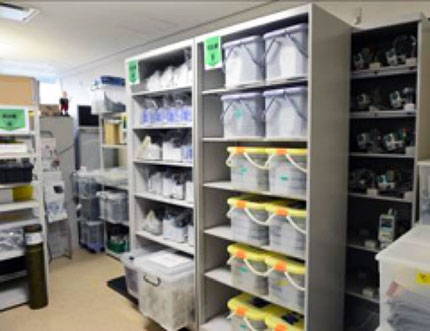
Supplies and equipment are managed in a way that is easy for the person on duty to understand, and remaining stock is checked and replenished daily to ensure that stock does not run out.
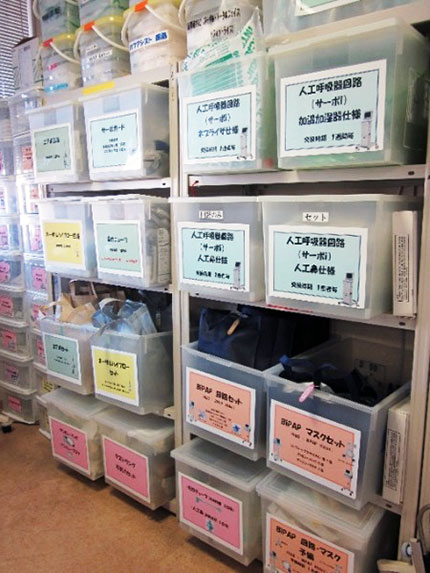
We also participate in the RST (Respiratory Therapy Support Team), which is made up of members from different professions, and are committed to the safety management of medical equipment.