Medical Research Institute KITANO HOSPITAL, PIIF Tazuke-Kofukai
Inquiry
search
close


Departments
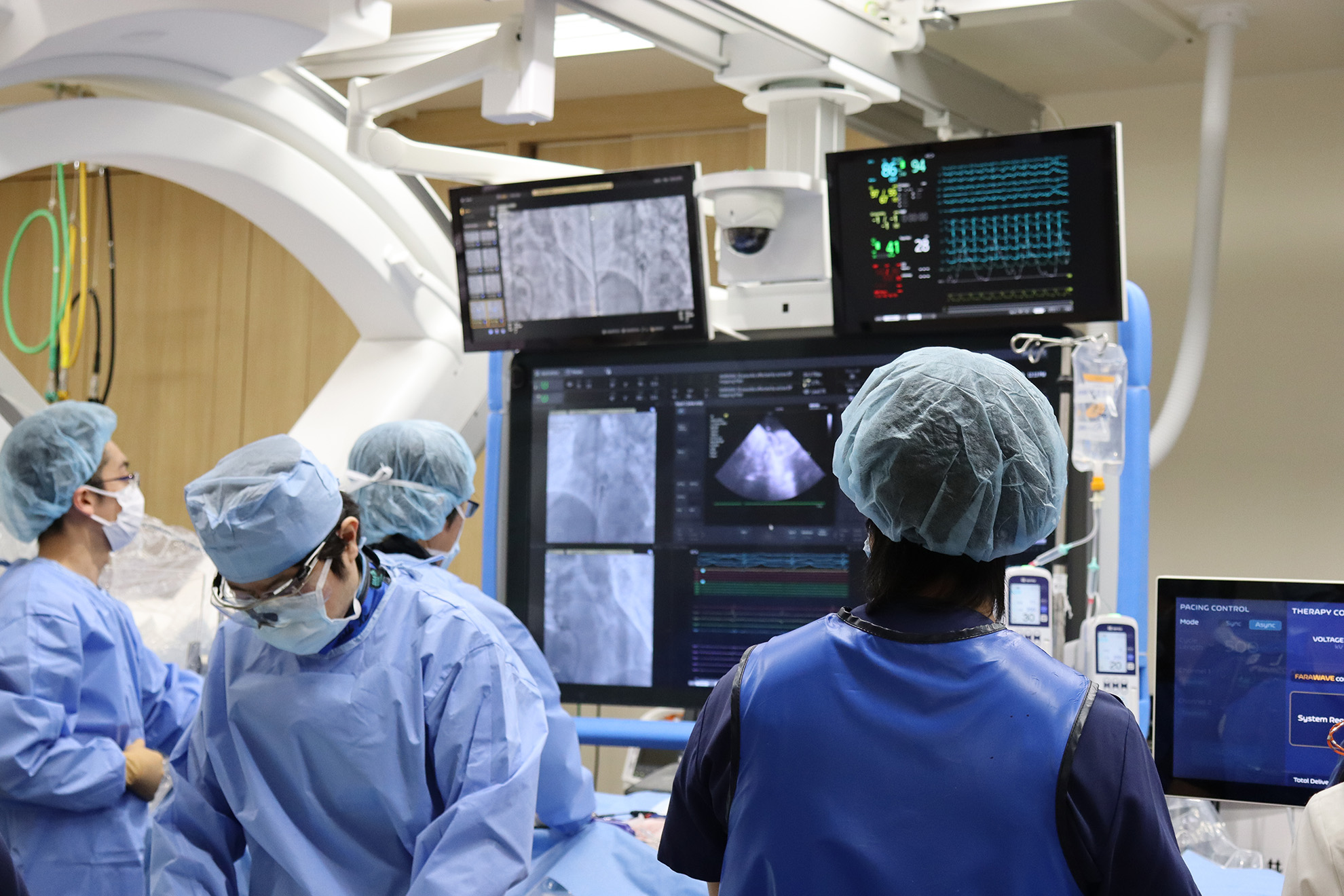
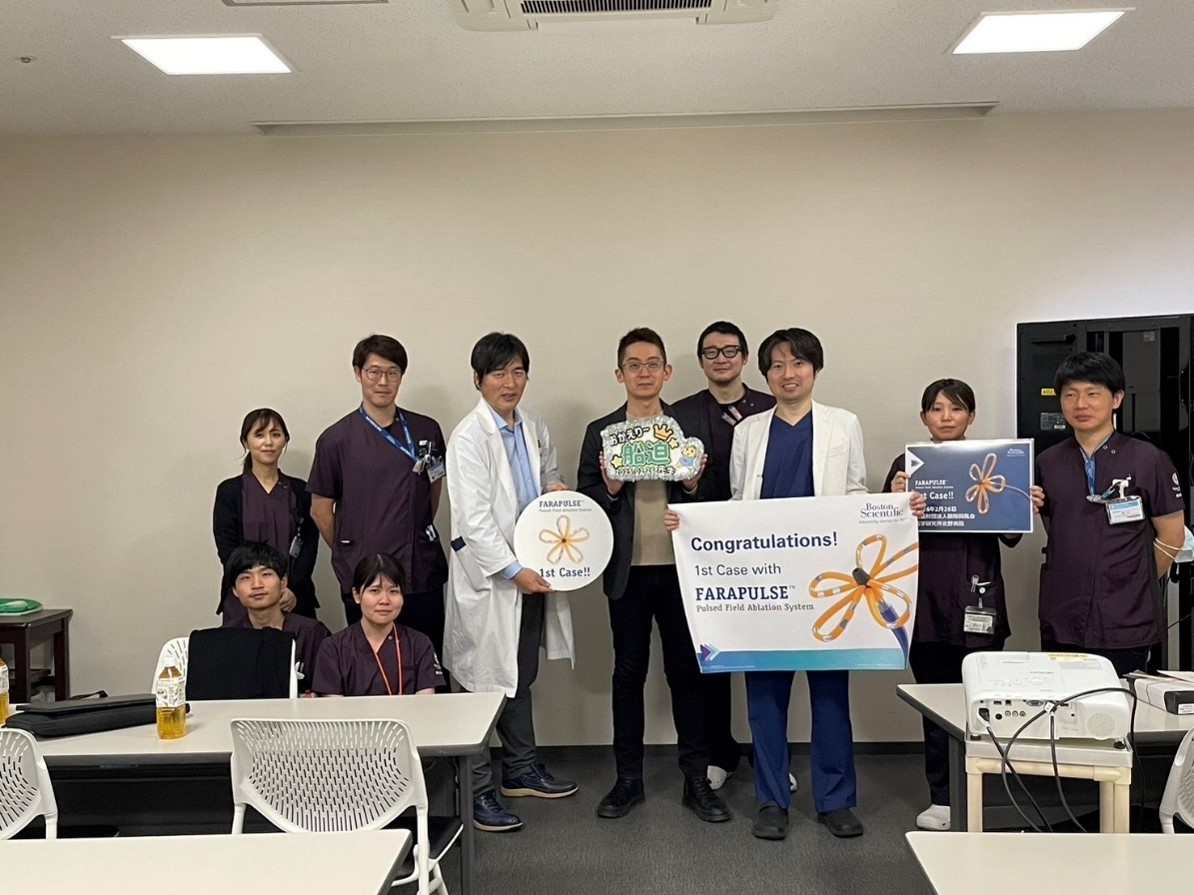
In February 2025, atrial fibrillation ablation was changed to "pulsed field ablation," which can be performed in a short time without affecting surrounding organs.
Atrial fibrillation is a disease that causes heart failure, and if it persists, can lead to cerebral infarction and other conditions. It is feared that the number of patients will increase in the future due to factors such as aging. Until now, atrial fibrillation ablation was a catheter procedure that could be a fundamental treatment for atrial fibrillation, but because it involves cauterizing or freezing the thin atrial muscle, it had problems such as complications to surrounding organs and was time-consuming.
To solve these problems, our hospital has adopted "pulsed field ablation." An electric field is generated around the catheter, which treats only the targeted atrial muscle, leaving no effect on surrounding organs. Treatment takes only a few seconds per area, so the procedure is likely to be completed within an hour.
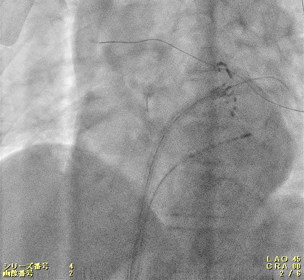
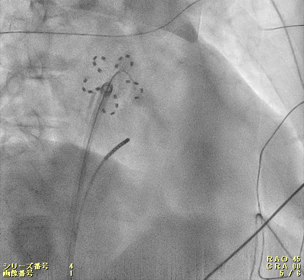
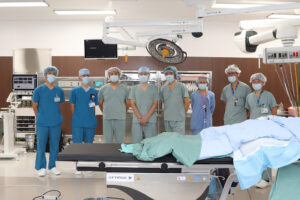
202410As of this month, the Arrhythmia Department has become able to perform all arrhythmia-related surgeries, including percutaneous transcatheter cardiac lead removal (※).
As Japan's population ages, cardiac devices such as pacemakers and implantable cardioverter defibrillators are becoming increasingly common.6million people (total25million people),65ages 18 and over100To people1However, if the leads connecting the cardiac devices to the heart chambers are damaged or become infected through skin infection or sepsis, it can be life-threatening.
To solve these problems, the procedure for removing leads is called "percutaneous transcatheter cardiac lead removal in addition to open-heart surgery." Currently, there are not many medical institutions in Osaka Prefecture that perform this procedure, so our department is expected to play an important role in the future.
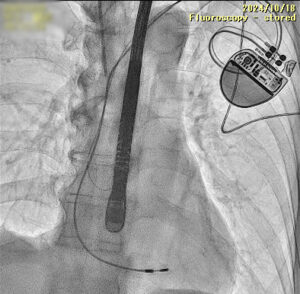
In the hybrid operating room
Cardiac device lead removal surgery
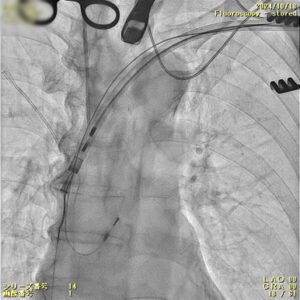
Laser sheath etc.
Right ventricular lead removal was successful
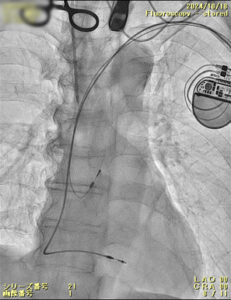
After new right ventricular lead insertion
*On October 18, 2024, in a case of complete atrioventricular block, the right ventricular lead, which had become insufficient for pacing more than 10 years after implantation, was successfully removed and a new right ventricular lead was successfully re-implanted.
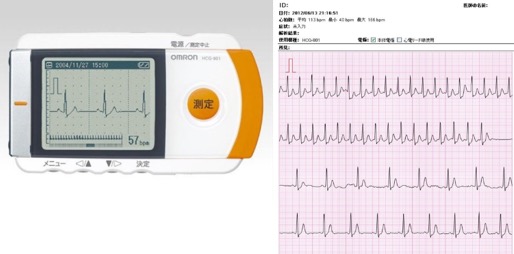
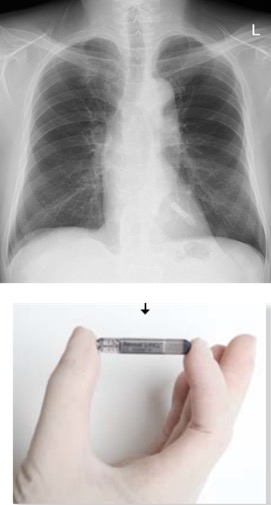
Arrhythmia is when the heart rate exceeds the normal rate, resulting in rapid heartbeat and causing palpitations, fainting, heart failure, etc.Portable electrocardiograph (Figure 1), long-term recording Holter electrocardiogram, implantable loop recorder (Figure 2)is used to identify the diagnosis.
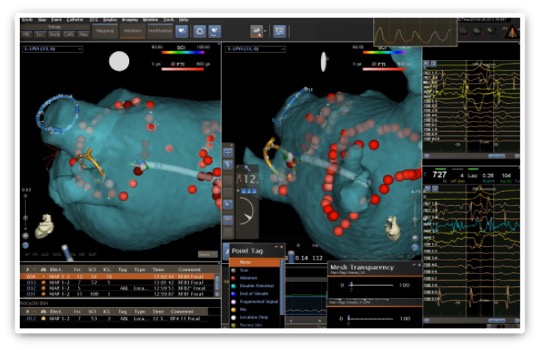
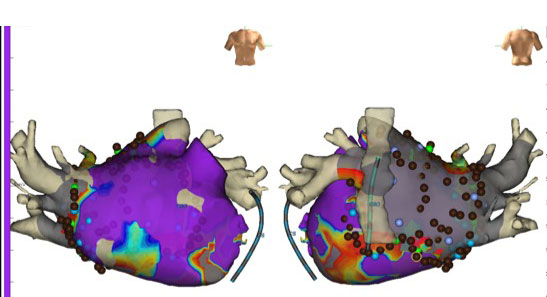
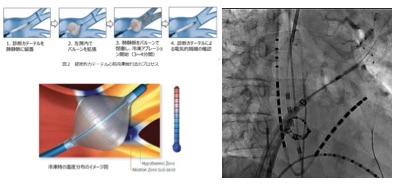
These tachyarrhythmias occur due to certain congenital or acquired abnormalities in the heart, so a three-dimensional arrhythmia mapping system (Cult 3 (Figure 3))orEnsite (Figure 4)) to identify the area and then freeze it with radiofrequency ablation, which uses heat from radiofrequency waves, or a balloon.Cryo-balloon ablation (Figure 5)We are currently working on the following.
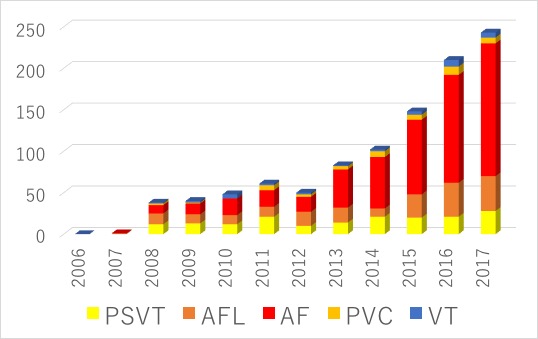
Our department started in 2008 and has been treating not only conventional tachyarrhythmia but also refractory arrhythmias such as persistent atrial fibrillation and ventricular tachycardia associated with organic heart disease. In 2017, we treated 242 cases.(Figure 6)It is one of the leading facilities for catheter ablation in Osaka Prefecture.Chemical ablation of the Marshall veinWe are constantly working on new treatments such as:
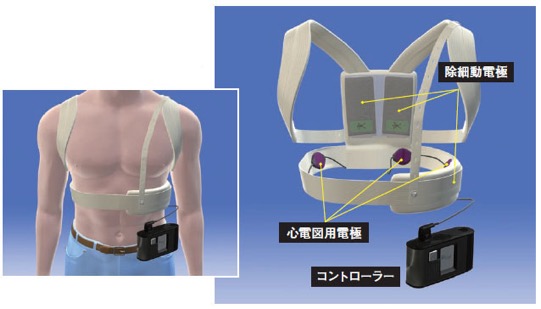
For tachyarrhythmias that remain life-threatening even after catheter ablation,Detachable cardiac defibrillator (Figure 7)orimplantable cardioverter-defibrillatorIn addition, after implantation,Remote Monitoring SystemWe manage this system so that we can respond quickly.
The heart is an organ made up of a muscle bag consisting of four chambers that functions as a pump, and these four chambers are controlled by a minute amount of electrical current. Abnormalities in this minute amount of electricity directly affect the function of the pump. Although it is currently impossible for medicine to directly treat abnormalities in this electricity/current, it is possible to restore the heart to a nearly normal state by applying electricity/current from equipment inside or outside the heart (cardiac devices).
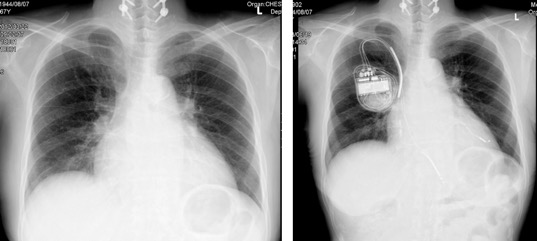
The most well-known iscardiac pacemakerRecently, MRI scans have become available, and some are less susceptible to interference from mobile phones. In addition, some heart failure patients may be able to undergo MRI scans if they meet certain conditions.Cardiac resynchronization therapy (Figure 8)This means that it may be possible to treat heart failure by correcting the abnormal electrical current in the heart using an implantable device. It is also the role of the arrhythmia department to detect such patients and facilitate the management of heart failure.
Even if we have the latest medical equipment and technology, we cannot select the appropriate treatment unless we stand on the side of the patient with arrhythmia and understand their feelings, so our first priority is to have a clinical attitude of finding a solution that suits each patient. Because arrhythmia treatment is a new treatment, it is important to thoroughly examine whether it meets the current needs of patients, and to explain it carefully and thoroughly to ensure their understanding. Therefore,Outpatient treatmentWe place great importance on this and take the time to explain arrhythmia.
We are not limited to relying solely on previously reported results, but are also conducting various tests and other activities to select the appropriate arrhythmia treatment for each individual patient. We report the results both domestically and internationally, and are constantly striving to improve our medical care.


