Medical Research Institute KITANO HOSPITAL, PIIF Tazuke-Kofukai
Inquiry
search
close



About Us
This is a cutting-edge surgical support robot that enables advanced endoscopic surgery.
Surgical robots were originally developed to perform remote surgery in war zones and remote areas. However, their advantages of being able to perform precise operations with an extremely clear field of view have since attracted attention, and their application to general laparoscopic (laparoscopic) surgery has expanded significantly.
Although it is called a robot, it does not perform surgery automatically. It is a system that recognizes the movements of the hands and fingers of a surgeon operating a terminal at a distance, and the surgical instruments (forceps) inserted into the body move in a way that accurately and precisely reflects the surgeon's intentions.
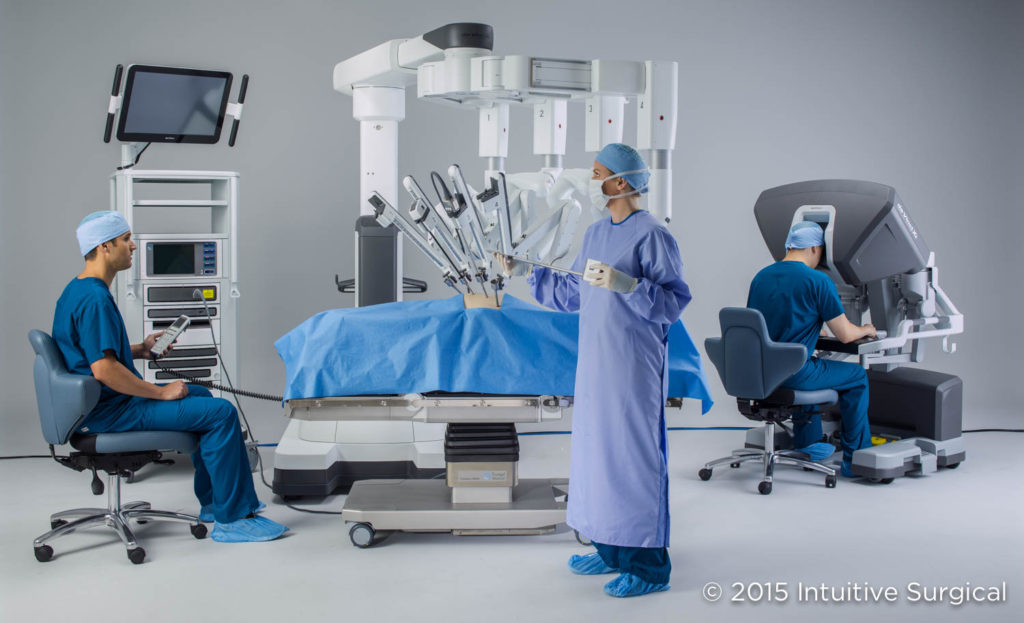
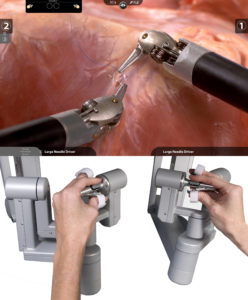
The above is its greatest feature, and during surgery, an endoscopic camera and surgical forceps are inserted into the body through a small incision of 1-2 cm, and the surgeon manipulates the forceps while looking at a 3D monitor screen, feeling as if they were actually putting their hands into the surgical field. Compared to conventional laparoscopic (laparoscopic) surgery, this allows for more delicate surgical operations, making it possible to provide high-quality medical care with less strain on the body.
Robotic surgeries, such as radical prostatectomy for prostate cancer, became covered by insurance in April 2012, and partial nephrectomy for small renal cancer in December 2016. Kitano Hospital also introduced the Da Vinci Si in April 2013, and the latest Da Vinci Xi in December 2018.
Since April 2018, insurance coverage for robotic-assisted surgery has expanded significantly beyond urology.
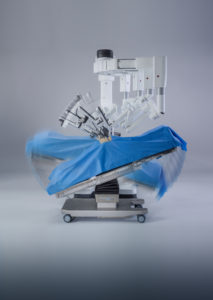
The Xi's dedicated forceps are thinner than previous models, reducing the chance of collisions (interference) between the forceps. Furthermore, the equipment can now be attached from any direction on the body, significantly reducing the effort required for installation. By using a dedicated robotic bed, it is now possible to change the patient's position while the equipment is still attached. These improvements have made it possible to perform robot-assisted surgery on many other organs, in addition to the traditional prostate and kidney procedures.
For more information about robotic surgery, please feel free to consult with a doctor in your department.


