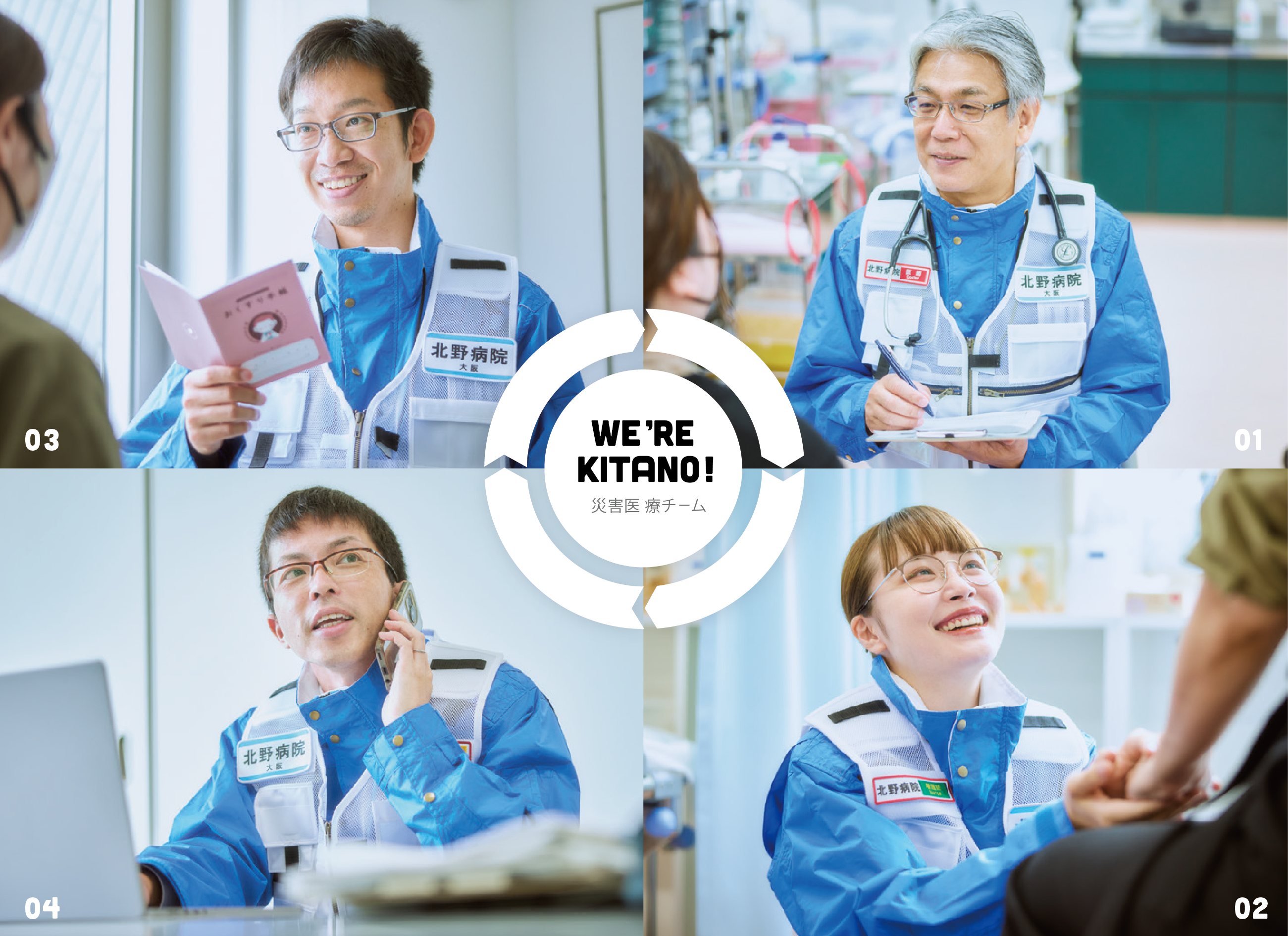
In response to the 2024 Noto Peninsula Earthquake that occurred on January 1, 2024, Kitano Hospital established a disaster response headquarters and dispatched the All Japan Hospital Medical Assistance Team (AMAT) on January 9, and the Japan Medical Association Disaster Medical Team (JMAT) on February 28. We will introduce how members from different professions worked as a team to provide medical support in the disaster-stricken areas.
What is AMAT/JMAT?
AMAT is a medical team dispatched to disaster-stricken areas with the goal of "eliminating preventable disaster-related deaths," while JMAT is "supporting the revitalization of local medical care." Both teams are composed of doctors, nurses, and business coordinators, and this time AMAT mainly treated infectious diseases and underlying illnesses, while JMAT provided medical care mainly in facilities and evacuation centers.
MEMBER 01 Doctor (Chief of Emergency Department) HirakawaAkihiko
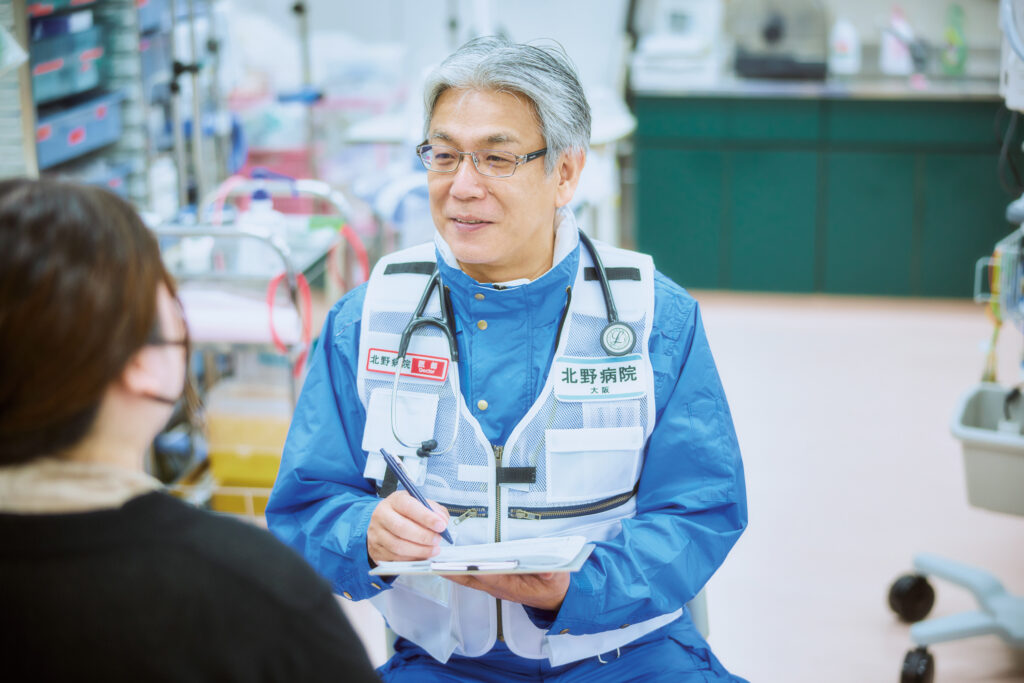
Working closely with other teams, we provide emotional support to disaster victims and respond to their welfare needs.
I arrived on-site as a doctor and team leader, and together with eight other JMAT teams, we conducted mobile medical visits to 165 evacuation shelters around Kanazawa City. Disaster medicine is all about providing support efficiently with limited medical resources. I tried to make quick decisions and put them into action. Many patients were exhausted from living in the evacuation shelters for so long, so I made sure to examine them not only for their physical condition but also for their mental health.
MEMBER 02 Nurse (Emergency Department) TanakaAsumi
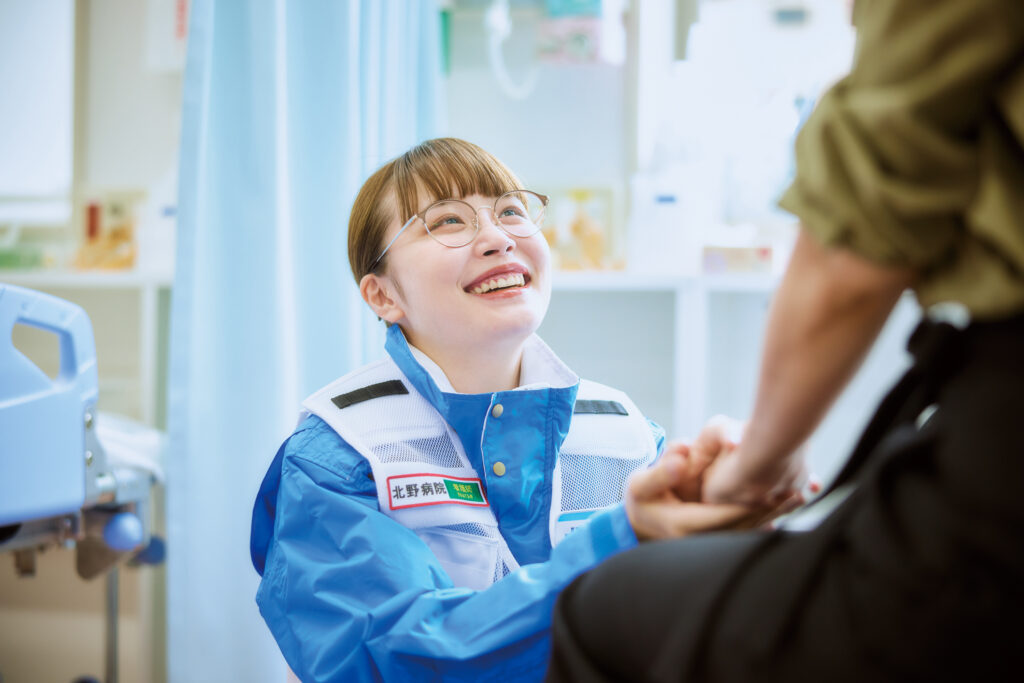
Utilizing her experience in emergency medicine, she engages in disaster nursing with flexible judgment and precise action.
My main duties were to assist doctors in their medical treatment, assess the patients' physical and mental condition, and provide guidance on daily life, such as nutrition and exercise. I worked while maintaining close communication so that the team could demonstrate its strengths even in a situation where it was unclear when another large aftershock would occur. When I saw the relief shown by the evacuees, who said, "I'm glad you came to make the rounds," I felt that disaster nursing was worthwhile, and it served as a source of inspiration for my subsequent work.
MEMBER 03 Pharmacist (Chief of Pharmacy Department) KobayashiKazuhiro
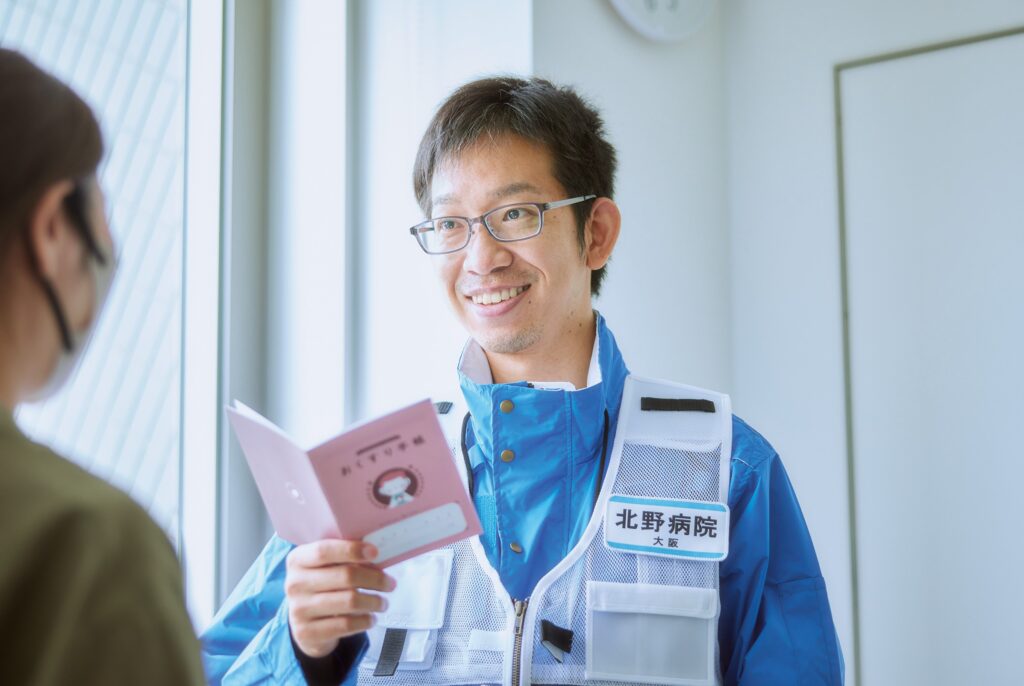
Supporting disaster sites through medicine and helping local medical staff who are also victims
In addition to his role as a business coordinator, managing the team to ensure they could carry out their activities safely, he also assisted with dispensing work, hoping to "support, even if only a little, the local medical staff who have been continuously working on medical activities since the disaster occurred." As he is expected to act as a pharmaceutical expert even at the disaster site, he needs to acquire a wide range of knowledge and skills to be able to respond to the diversification of drug treatments due to advances in medical technology.
I realized my sexuality.
MEMBER 04 Logistics Clerk (Medical Affairs Section Chief) YamamotoSho
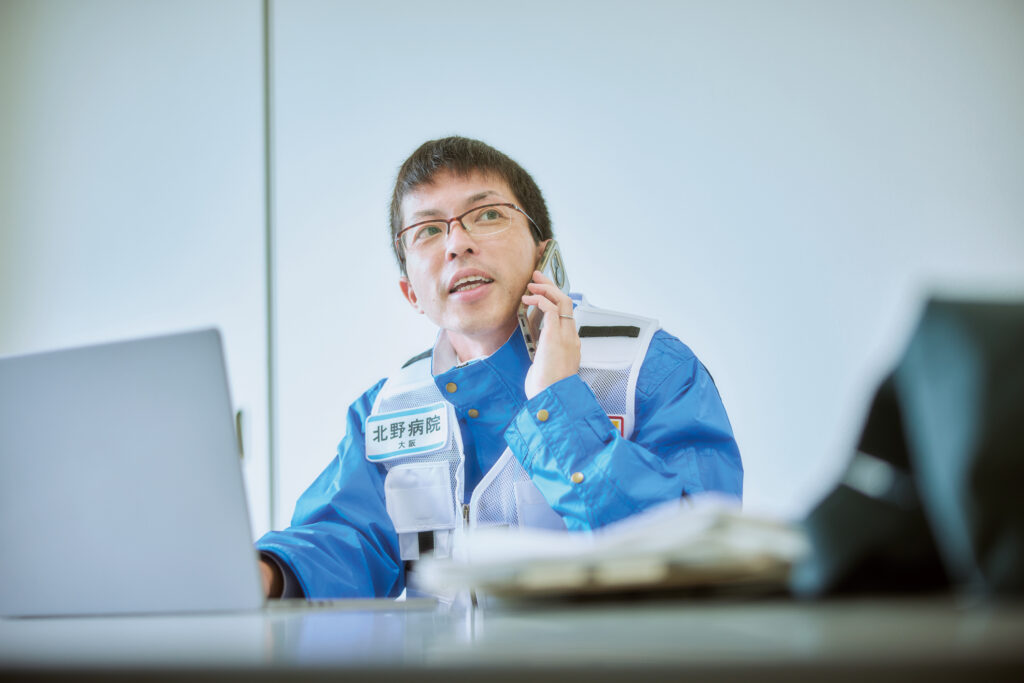
Ensuring the safety of the team while creating an environment where they can focus on relief activities
As a business coordinator (in charge of logistics), I was in charge of communicating and coordinating with the All Japan Hospital Association and Kitano Hospital, recording activities, securing supplies, food, fuel, and accommodations for the team, and also confirming and setting safe routes for travel by car. Despite a lack of information about the impact of snow in the affected areas and road conditions within the areas, I worked to create an environment where all medical staff, including doctors and nurses, could concentrate on providing medical support.
Message from the team dispatched to Noto
Having been deployed to the disaster area and witnessing the situation there, I was reminded once again of the enormous energy a major earthquake can unleash. The Noto Peninsula earthquake occurred on January 1st, a day no one had ever imagined. When we were deployed, the water supply was still cut off, so even though we were only there for a short time, we realized the importance of toilets. Furthermore, when we met with the victims, we encountered a variety of psychological issues, including feelings of despair and fatigue due to the loss or injury of loved ones, and a lack of motivation for physical activity, as well as medication and nutritional issues. Disasters are not just an immediate event; many factors can lead to the emergence of chronic illnesses and mental disorders even after the disaster. Kitano Hospital, which was hit by the disaster, regularly conducts disaster drills to achieve the ultimate goal of disaster medical care: "Saving as many lives as possible." The scale and content of these drills vary widely, including those simulating an earthquake centered in the Nankai Trough and regional joint disaster drills. We conduct training that closely resembles real-life experiences to ensure that we can make flexible decisions and take appropriate action quickly when faced with a disaster. How can we keep our minds and bodies as close to normal as possible amidst environmental changes? To do this, it is essential to be prepared on a daily basis. For example, if you have a "medicine notebook" among the items you prepare for disaster preparedness, you can accurately and quickly provide medication at evacuation centers. Disaster preparation is very important, so please try to anticipate the situation and gather the necessary items in advance.
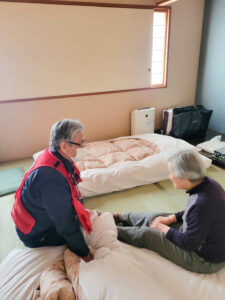
Training to act quickly in the event of a disaster
Kitano Hospital regularly conducts disaster drills to ensure that the ultimate goal of disaster medical care is to "save as many lives as possible." The scale and content of the drills vary widely, including drills simulating earthquakes centered in the Nankai Trough and regional joint disaster drills. Training is conducted in a manner that closely resembles real-life experiences, so that staff can make swift, appropriate decisions and take appropriate action when faced with a disaster.