Checking the patient's respiratory status
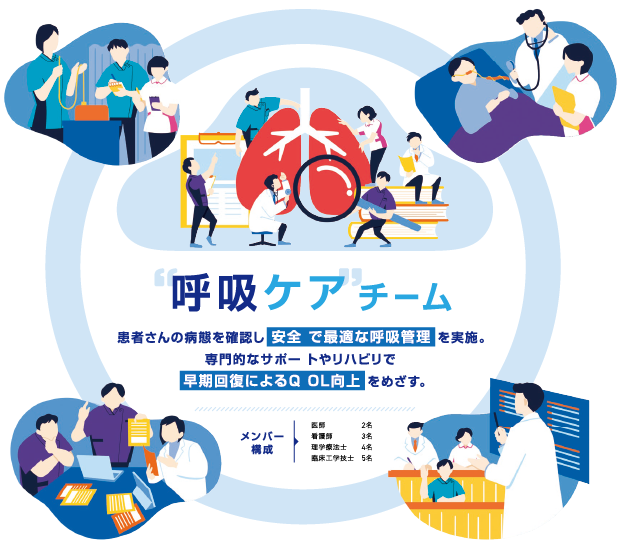
Once a week, the team makes rounds on patients who are unable to breathe on their own and are undergoing artificial respiration therapy or high-flow therapy, which delivers oxygen or air through a nasal tube. They check to ensure safety measures are being observed, such as whether the equipment settings are appropriate for the patient's condition and whether there are any cuts on the skin, and suggest adjustments to the patient's doctor if necessary. Remaining in bed for long periods of time can cause patients' joints to stiffen and muscles to weaken, resulting in a decline in physical function and stress, so physical therapists actively carry out respiratory rehabilitation, such as moving the patient in bed, with the aim of getting them out of bed as soon as possible.
Advice and support for medical staff
In response to requests from doctors in each department, we provide expert advice based on the latest evidence on how to handle patients with difficult ventilator settings and respiratory management. We work with the patient's doctor and ward nurses to consider treatment and care for the patient together. When patients with severe pneumonia require respiratory management, we provide thorough support as a team. We listen to what kind of lifestyle patients want after discharge and support them to ensure a smooth transition to ventilator therapy and oxygen therapy at home.
Equipment usage training and knowledge education
To enable patients to breathe without the aid of equipment as soon as possible, regular training is provided to doctors, nurses, and physical therapists on the knowledge necessary for artificial respiration therapy and the safe use of equipment. By actually wearing a ventilator and experiencing what it's like to be a patient, participants not only improve their skills in a practical way, but also understand the psychological state of patients, such as discomfort and anxiety caused by friction and pressure on the skin. Physical therapists, who have frequent contact with patients on a daily basis, also actively train in suctioning phlegm.
Risk management during power outages and disasters
During rounds, clinical engineers check whether ventilators are being used safely and whether there are any malfunctions with them. They regularly hold meetings to discuss accident prevention measures and problem-solving in the event of an accident, and take the lead in risk management in the event of a power outage or disaster. As part of this, they have created and placed disaster action cards outlining what to do in the event of a problem. They have put in place a system that allows staff to respond calmly at all times, so that patients wearing the devices do not become anxious or experience excessive stress.