We will consider how to cope with pain in a way that is tailored to each patient.
Because postoperative pain and side effects vary from person to person, we have established a system where the operating room and wards work together to respond immediately to any changes in the patient's condition.
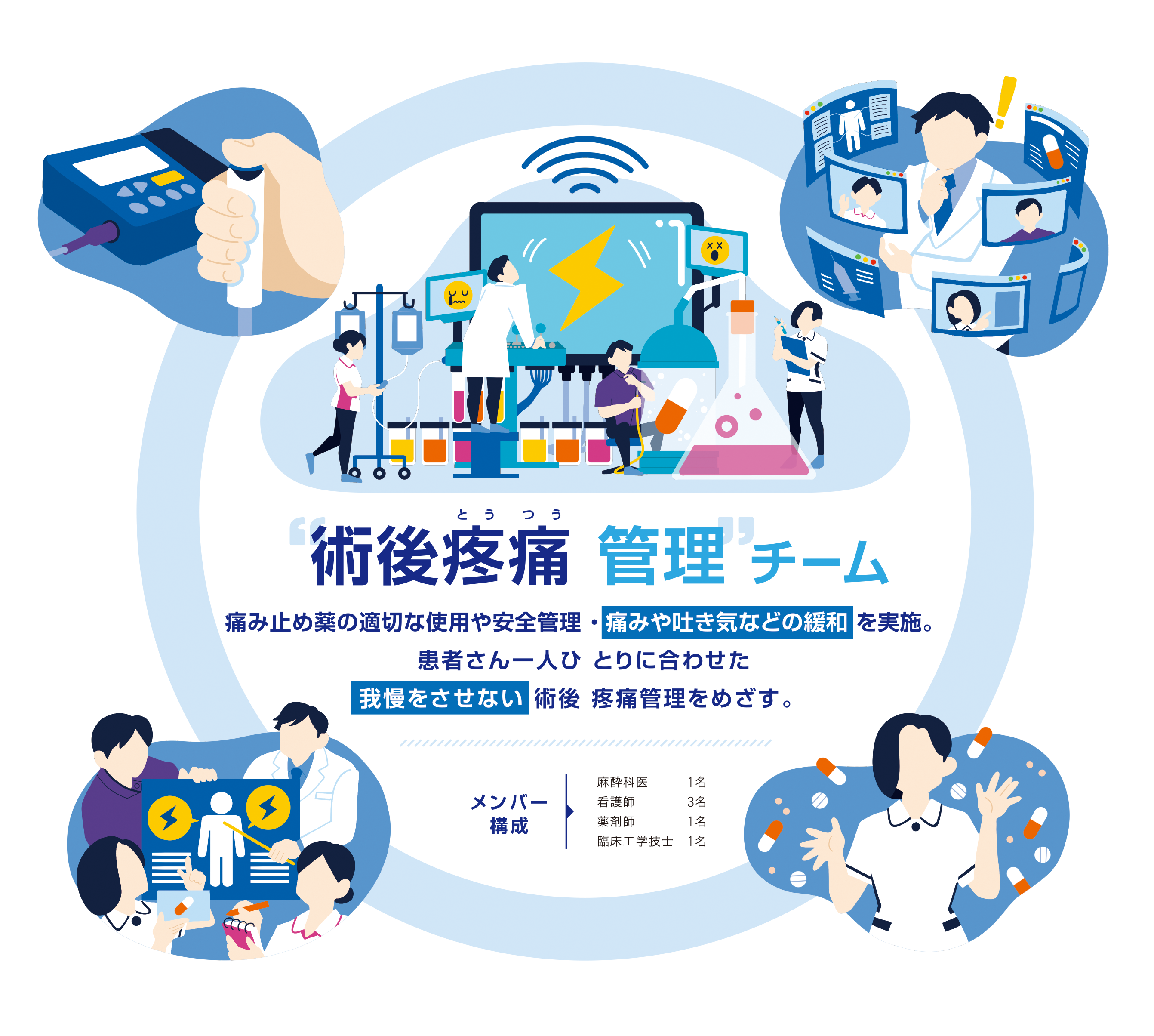
This is where the "postoperative pain management team" comes into play. This team consists of anesthesiologists, nurses who have specialized in methods to alleviate postoperative pain, pharmacists, and clinical engineers.
The anesthesiologist, who is at the heart of the team, takes into account the "nature of the surgery," "type and intensity of pain," and "the patient's condition" during the pre-operative consultation, and then selects and clearly explains the most appropriate way to manage the pain.
During surgery, multiple pain medications are used interchangeably.
During surgery, using a large amount of one medication can increase the likelihood of side effects, so several pain relievers with different mechanisms of action are used, depending on the severity of the pain.
After surgery, pain gradually subsides as the body recovers, but it's crucial not to endure it. If the pain persists, it can make it difficult to breathe deeply, raise blood pressure, and irregular heartbeat, making it hard to move or eat. This can also lead to complications such as pneumonia and blood clots. This is where the postoperative pain management team's expertise comes into play.
After surgery, patients are responsible for controlling their own pain.
After surgery, in order to alleviate pain as much as possible, patients use pain medication at their own timing, a method called PCA (Patient-Controlled Analgesia) is used.*This explains the concept of "controlling pain yourself," which helps prevent a decline in postoperative quality of life (QOL) and promotes early recovery.
During rounds, we also carefully check the effectiveness and side effects of pain medication, the presence of complications, and how much the patient is able to move, and adjust the dosage of pain medication if necessary.
*This method allows you to administer a pre-set amount of pain medication yourself by pressing a button. It allows you to respond immediately when you feel severe pain, and it also includes a safety device to prevent overuse. The main advantage of this method is the peace of mind it provides, allowing you to control your pain yourself without having to endure it.
Support and education for various medical staff also available.
In addition to alleviating the patient's pain, it is also important to "reduce complications" and "enable them to move their body as soon as possible."
To this end, the postoperative pain management team discusses the use and management of pain medications with the attending physician, and also provides specialized support and education to various medical staff within the hospital, such as holding study sessions for ward nurses.