I don't really know much about hospitals.
There is something I would like you to know.
Having knowledge will come in handy in an emergency and give you peace of mind.
And you'll probably want to talk to someone
We will introduce you to the basics of hospital work.
Q4: Is it okay to call an ambulance immediately if I'm not feeling well?
A In cases of high urgency, it is necessary to call an ambulance immediately, but the number of ambulances and emergency personnel is limited, so it is not advisable for people with mild symptoms to call an ambulance without careful consideration. Here are some points to remember so that you can use an ambulance appropriately.
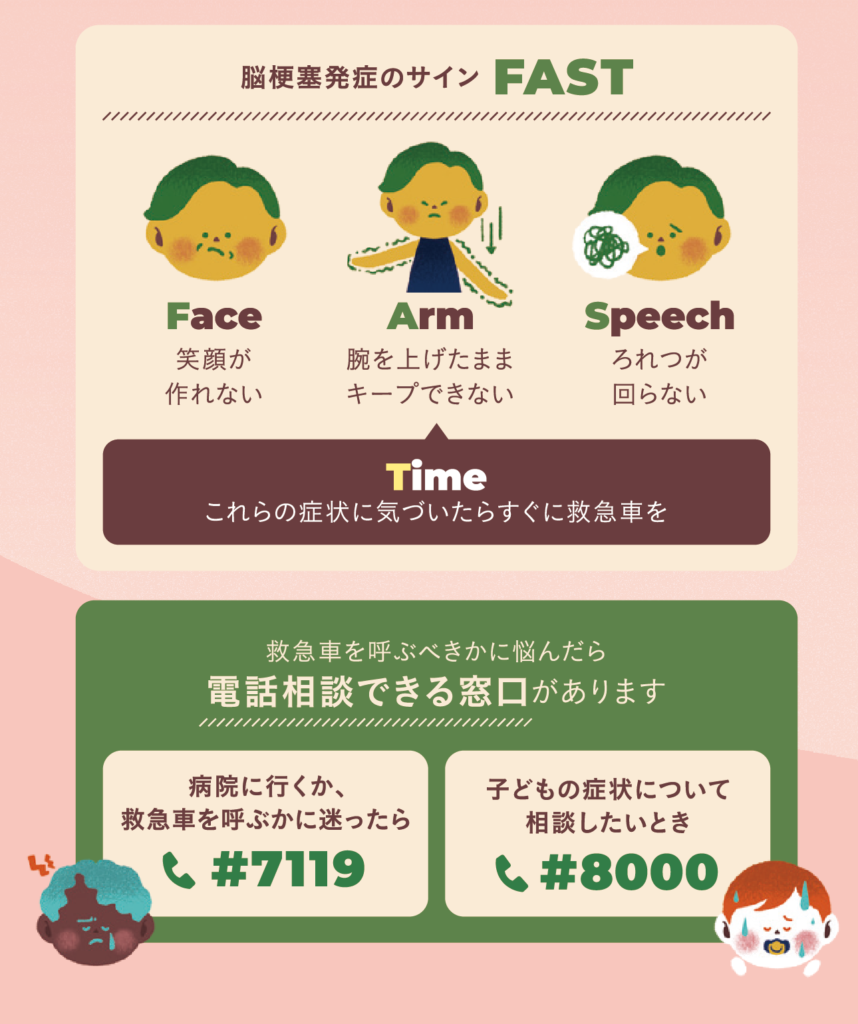
For example, there is a confirmation method called "FAST" for cerebral infarction, where the time until treatment begins affects prognosis.
Also, if you are unsure whether you should call an ambulance, you can call #7119 for advice, and if your child is suddenly ill or injured, you can call #8000 for advice on holidays and at night.
Doctor cars that save patients' lives
A doctor's car is an emergency vehicle owned by a medical institution. Kitano Hospital's doctor's car is used to transport patients referred by local medical institutions. It is specially designed to be able to carry an incubator, and upon request, it transports not only adult patients but also newborns.
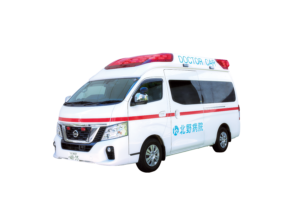
Doctor's car
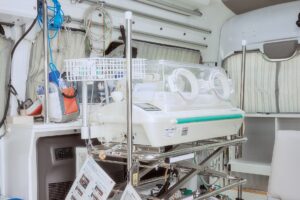
incubator
Q5: What should you prepare in case of an emergency?
AHave you ever thought about what kind of treatment you would want if you were to suffer a serious illness or injury that put your life at risk?
If this happens to a family member, it can be difficult if you don't know what the person wants: whether they want the best possible treatment, something to do with the pain, or no treatment at all.
"What if" situations can happen suddenly. While you are still healthy, it is important to discuss with your family and trusted people what kind of medical care you would, or would not, like to receive.
Would you like to try an "ACP (Advance Conference on Life)"?
Advance care planning (ACP) is an initiative in which you repeatedly discuss and share your desired medical care and lifestyle with your family, doctors, and caregivers. A life conference is not about thinking about how you will die, but about thinking about "what it means to live life to the fullest, true to yourself." First, think about your own values and outlook on life, discuss them with people you trust, and write them down in writing.
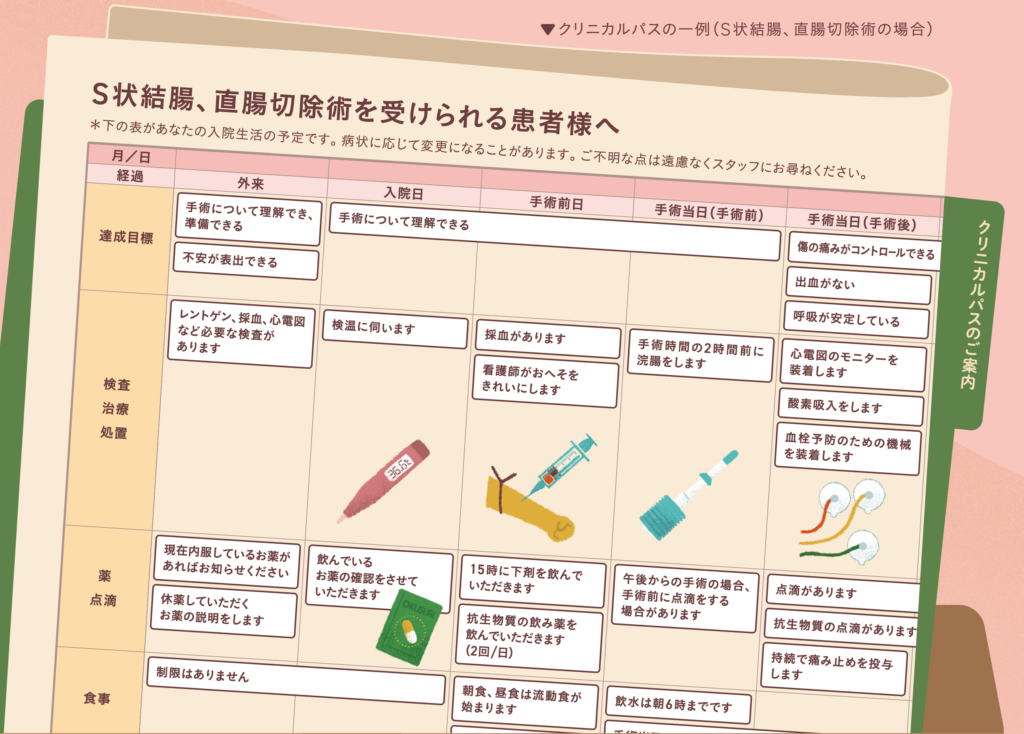
Q6: What is a "clinical path"? What does it say?
A A clinical path is a schedule that outlines treatment plans from admission to discharge with the aim of providing uniform medical care. By providing detailed information about the timing of tests, surgeries, meals, etc., it helps patients and their families visualize their hospital stay and reduces anxiety. Both before and after surgery, "treatment" is carried out through cooperation between the patient and the hospital. At Kitano Hospital, we create easy-to-understand clinical paths so that patients receiving treatment can properly understand the process and prepare for hospitalization.
During the pre-admission interview between the patient and a nurse at the Admission and Discharge Support Station, in addition to explaining the contents of the clinical path, detailed advice is also given that takes into account the patient's condition after surgery, such as "bring underwear that is not too tight so that it does not rub against the wound and cause more pain" for open surgery, or "we recommend renting Japanese-style sleepwear instead of pants-type pajamas, which are difficult to wear," for orthopedic surgery.