I don't really know much about hospitals.
There is something I would like you to know.
Having knowledge will come in handy in an emergency and give you peace of mind.
And you'll probably want to talk to someone
We will introduce you to the basics of hospital work.
Q1: Are all hospitals the same?
A Hospitals are classified into categories such as "designated function hospitals," "regional medical support hospitals," and "general hospitals."
Kitano Hospital is one of the "regional medical support hospitals," and as its name suggests, it is a hospital that supports regional medical care. We provide patient-centered medical care in cooperation with other hospitals, medical offices, clinics, and nursing facilities so that patients can receive medical care with peace of mind in the town where they live.
We also specialize in the treatment of "acute phases" where emergency medical care is required, and provide not only emergency care but also specialized, advanced medical care such as consultations upon referral from your family doctor.
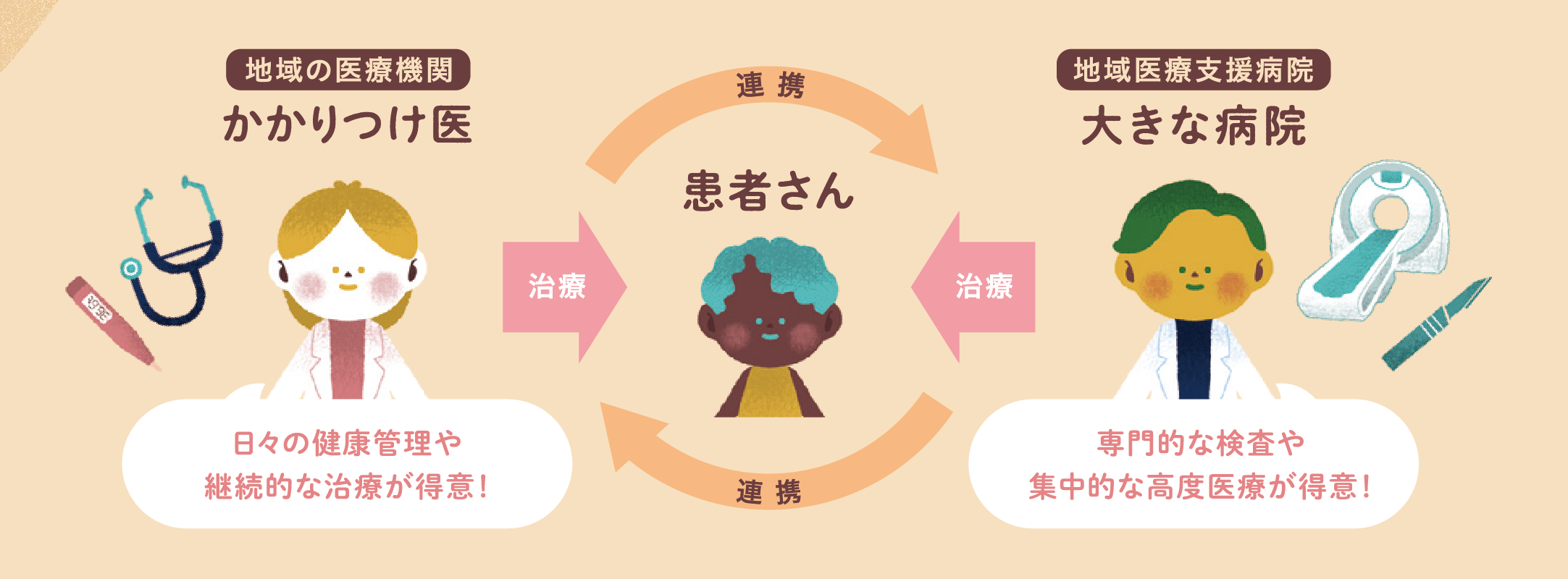
Q2 What is the difference between a local medical institution and a large hospital?
AHave you ever heard of the term "two-doctor system"?
The two-doctor system is a system in which both a local medical institution (family doctor) and a local medical support hospital (large hospital) like Kitano Hospital serve as a patient's primary physician, and they work together to provide medical care, utilizing the strengths and characteristics of each. To ensure a smooth consultation, it is important to understand the differences between the two and choose the appropriate medical institution based on your symptoms.
Q3 What is a letter of introduction?
AThis is a letter prepared by a family doctor when requesting a patient's examination or examinations from a doctor to whom the patient is referred. Its official name is "Medical Information Disclosure Letter." By having the family doctor accurately convey symptoms, test data, etc. to the doctor to whom the patient is referred, treatment can begin smoothly.
When referring a patient who has completed treatment at the hospital to their regular doctor, we prepare a referral letter that describes the progress of the surgery and the details of the treatment, and work together while sharing information about the patient.