
In recent years, technologies that are gentle on the mind and body of patients have been continuously strengthened and developed, from cancer diagnosis to treatment and follow-up.
Endoscopic surgery (including robot-assisted surgery)
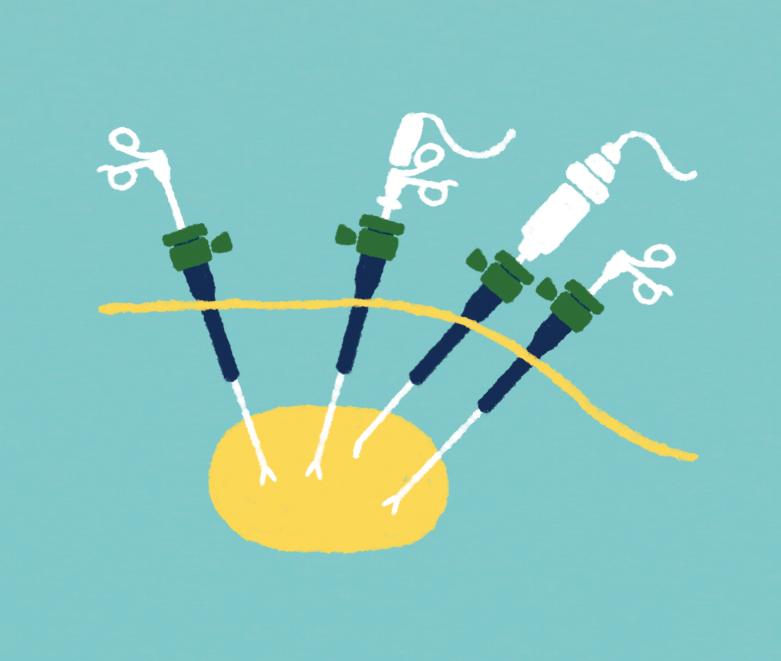
Sharing a wide and clear surgical field with multiple people
This is a type of surgery that uses a long, thin camera-equipped device called an endoscope to observe the inside of the body on a screen. This allows multiple people to view the details of minute tissues and organs that are difficult to see with the naked eye, making for more precise surgery.
Diagnostic imaging technology

Visualize your body in greater detail and clarity
Diagnostic imaging is an advanced medical technology that provides the information necessary for diagnosing and treating illnesses by clearly visualizing the inside of the human body. Patients can receive treatment without any pain, and the visualized information can be used to confirm their condition, which can help patients understand their own condition.
Radiation therapy

Concentrating the irradiation area on the tumor to protect normal cells
This is a treatment that damages cancer cells by irradiating them directly with radiation, stopping their division and proliferation. Various technological advances have been made to minimize the impact on normal tissue while maintaining a high level of radiation exposure.
The future of medical care, which continues to evolve in various fields
AI-based diagnosis, which excels at analyzing vast amounts of medical data and can improve the accuracy of diagnostic imaging, is attracting attention. Expectations are rising for AI to play a supporting role for doctors, including detecting tiny cancer cells that the human eye might miss and formulating treatment plans.