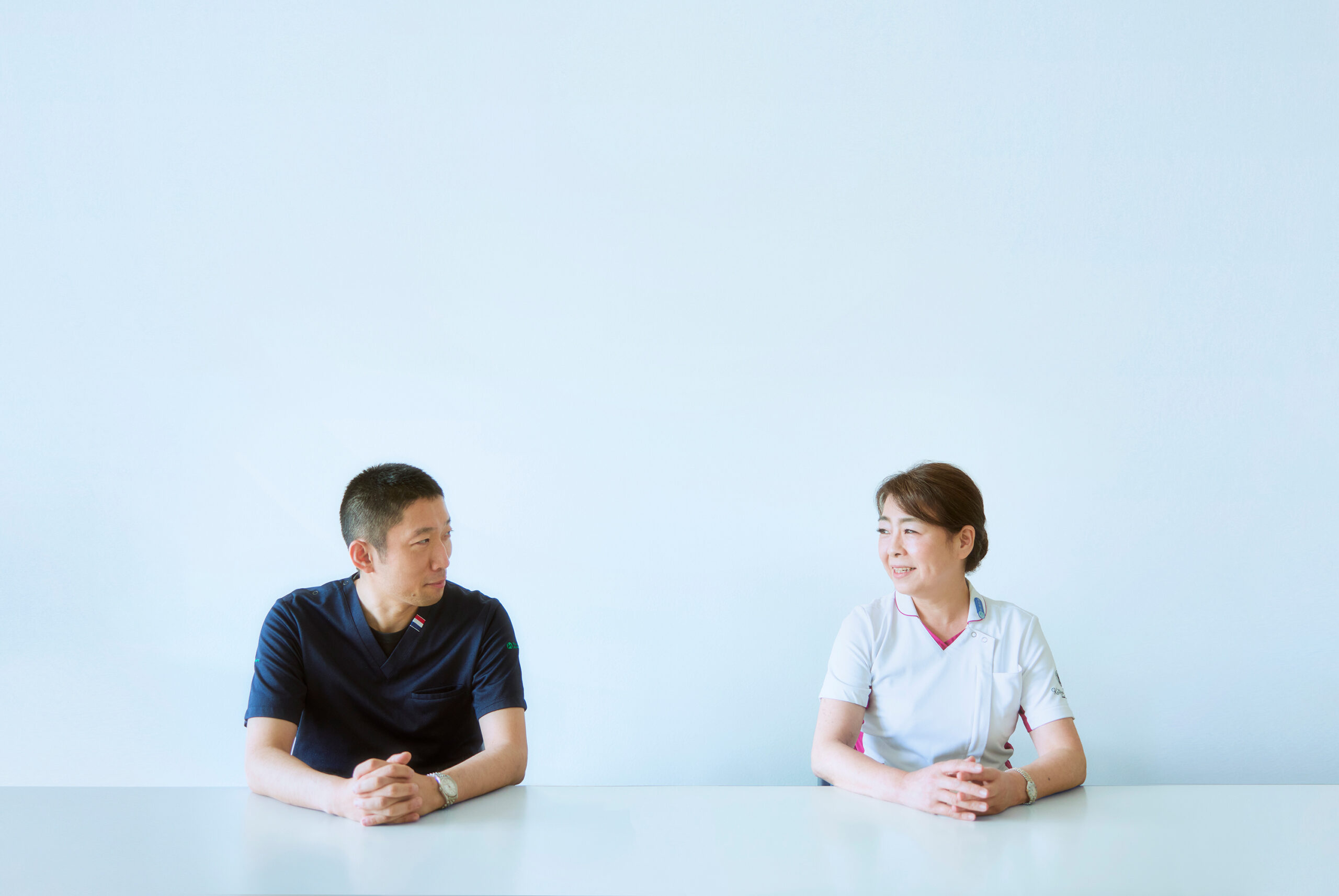
Doctors who provide medical care in the event of a disaster (Inoue) and a nurse who wants to "protect as many people as possible from disasters" (Fujiwara).
Based on our experiences in the disaster-stricken areas, we, as medical professionals, first thought about what kind of disaster prevention plan is truly necessary.
Raising disaster awareness before earthquakes and typhoons occur
InoueI thought I was mentally prepared through disaster drills and media reports, but when I was actually sent to the disaster site and saw damage that was beyond my imagination, I realized that no matter how much preparation I had, it was still not enough. Nothing beats experiencing it firsthand. Perhaps because I was on edge for a few days in the disaster area, I didn't really feel tired, but on my way home, I felt exhausted as soon as I arrived home.
FujiwaraIt was the same for me. Even those of us who were only there for a few days were in such a state, so I can only imagine the mental stress that the medical staff and victims in the disaster-stricken areas are going through while suffering from the effects of the disaster themselves.
InoueWhen a disaster occurs, people's medical needs suddenly increase, which leads to a shortage of medical resources. Furthermore, medical needs change daily as time passes after the disaster, so in order to avoid missing out on lives that could have been saved, it is important to have not only a rapid response but also a long-term support system.
FujiwaraIn terms of the support system, I also felt the importance of "medical staff supporting recovery throughout the community." Because the damage and circumstances of disasters vary greatly depending on the characteristics of the region, I think it is important for medical staff who are involved in the community on a daily basis and have a good understanding of the region's characteristics to be involved in disaster prevention.
InoueCertainly, that's important.
FujiwaraCurrently, I am involved in disaster prevention activities in my role as a "town disaster prevention nurse*," participating in evacuation shelter opening drills and local meetings in the Kita-ku and Nakatsu areas of Osaka City. My involvement in disaster prevention is diverse, including confirming contact methods and evacuation locations in the event of a disaster, evacuation routes, and the status of voluntary disaster prevention organizations.
InoueIt is very important for medical professionals to share their experiences, including speaking about their own experiences at local meetings, etc. Disaster prevention is one of the roles of the government, but we would also like to continue to share information so that many people can see it as something that concerns them personally.
FujiwaraTo that end, we would like to first spread the word about town disaster prevention nurses in this area.
By working together with nurses who understand the characteristics of the region and maintaining contact with local residents, we hope to raise awareness of disaster prevention, including how to prepare for things that have not yet happened.
Community Disaster Reduction Nurse
A nurse who is responsible for local disaster prevention activities.
Armed with disaster prevention knowledge, they are closely involved in the local community during peacetime and can act quickly immediately after a disaster occurs.
Established in response to the Great Hanshin-Awaji EarthquakeJapan Academy of Disaster Nursing (Tokyo)The organization is certified by the WHO, and is also training instructors to spread the activities.