Medical Research Institute KITANO HOSPITAL, PIIF Tazuke-Kofukai
Inquiry
search
close


Recruitment Information
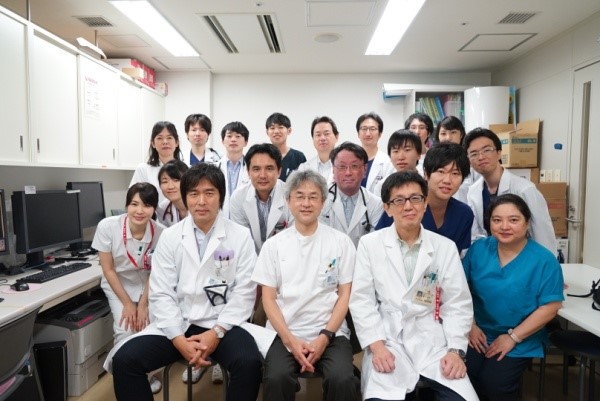
At Kitano Hospital's Heart Center, the Cardiology Department, Cardiovascular Surgery Department, Cardiac Rehabilitation Department, and Pediatric Cardiology Department work together to respond to all cardiovascular diseases and provide comprehensive treatment with a focus on advanced medical care.
"We can do it all." This means that we provide care for patients from emergencies to chronic conditions and prevention, including those with many complications, through teamwork between cardiologists, arrhythmia specialists, cardiovascular surgeons, nurses, clinical engineers, physical therapists, radiologists, and nutritionists, in cooperation with staff from other departments.
Through our advanced training program, you will not only gain a wide range of knowledge and skills in cardiovascular diseases, but also gain more than enough experience and knowledge to become an internal medicine specialist.
Please come and take your first step as a cardiologist at Kitano Hospital.
Chief of Cardiology, Heart Center
Inoko Moriaki
About the Internal Medicine Resident Recruitment Page
Cardiology and arrhythmia treatment often involve severe, emergency cases, and rapid initial response determines the success of treatment. During advanced training in cardiology, students will experience numerous invasive procedures and surgeries, including cardiac catheterization, PCI, pacemaker implantation, and catheter ablation. They must master the ability to determine the appropriateness of life-saving procedures and the skills to perform them quickly and safely. Mastering the general knowledge of internal medicine and intensive care necessary for treating critically ill patients is also an important goal. Many cardiovascular disease treatments require the involvement of multiple physicians and co-medical professionals, necessitating smooth teamwork. One of the goals of advanced training is to develop leadership skills that enable teamwork with co-medical professionals, including nurses, clinical technologists, radiologists, clinical engineers, and physical therapists, to provide prompt, high-quality medical care to patients. In addition to acute care, identifying and addressing risk factors as part of primary and secondary prevention efforts is also an important goal. Cardiovascular diseases often present with complaints that cannot be quantified, such as chest pain and shortness of breath, so it is important to approach the patient with compassion and empathy. It is also important not to be satisfied with acquiring basic knowledge and skills, but to take the initiative and persevere in striving to reach even higher levels.
At Kitano Hospital's Heart Center, the Cardiology Department and the Arrhythmia Department work as a single team. Residents treat patients under the supervision of supervising physicians in the Cardiology Department and the Arrhythmia Department. They conduct their own assessments, develop treatment plans, and provide care with the supervising physician's approval. Residents acquire the skills for invasive examinations and treatments under the supervision of the supervising physician.
Regarding ischemic heart disease, arrhythmia, heart failure, arteriosclerosis obliterans, pulmonary embolism, aortic dissection, aortic aneurysm, deep vein thrombosis, etc.
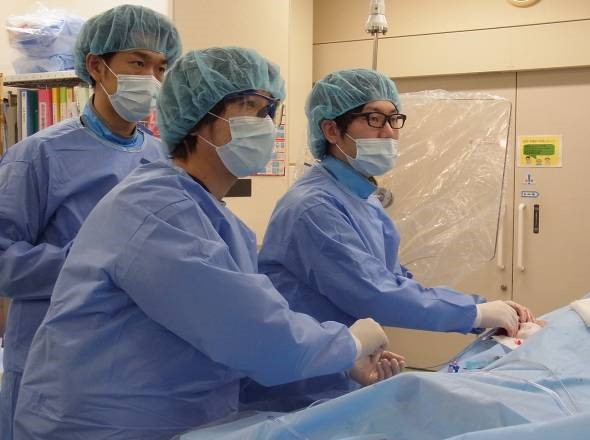
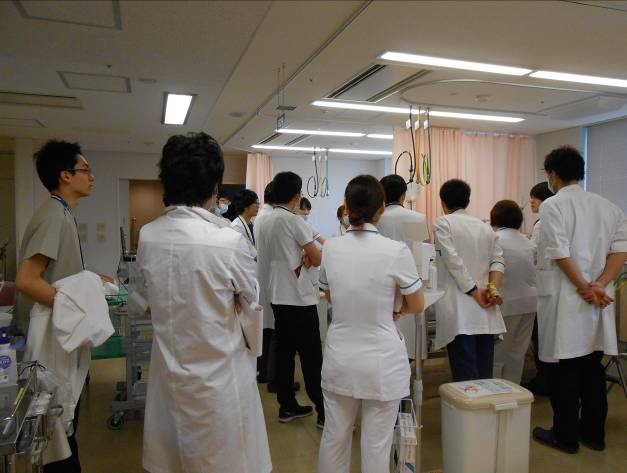
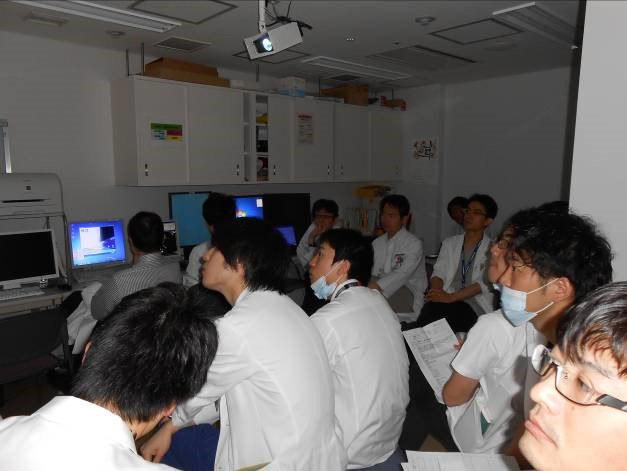
Instructors will evaluate the experience and skills required as an internal medicine specialist and cardiologist using evaluation systems designated by academic societies, such as the Resident Registration Evaluation System. In addition, technical and communication skills will be evaluated at the end of training using a format separately determined by our hospital.
| month | fire | water | tree | gold | |
|---|---|---|---|---|---|
| morning | Conference | Morning Lecture Conference |
Conference | Conference | abstract reading meeting Conference |
| morning | Cardiac catheterization (pediatric) RI |
Cardiac catheterization | Department head rounds Heart Failure Conference Cardiac catheterization (ablation) |
Cardiac catheterization (ablation) RI |
Cardiac catheterization |
| afternoon | Cardiac catheterization | Cardiac catheterization CCT |
Cardiac catheterization (ablation) CCT |
Cardiac catheterization (ablation) CCT, cMRI |
Cardiac catheterization Pacemaker outpatient clinic |
| evening | Cardiac rehabilitation and arrhythmia conference | Echocardiogram Conference | Internal medicine CC |
Note: (2021)
[Hospitalized patients] 1,272 people per year
[Examination] Cardiac catheterization: 1,073 cases
[Surgery] PCI 277 cases, peripheral artery PTA 106 cases, ablation 116 cases, pacemaker implantation 82 cases, ICD implantation 7 cases, CRT-D implantation 15 cases, CRT-P implantation 7 cases
Moriaki Inoko, Chief of Cardiology, Heart Center
38 beds
14 people
10 people
4 people
Kyoto University, Kobe University, Osaka University, Wakayama Medical University, Nara Medical University, Kinki University, Osaka Medical College, Osaka City University, Tokushima University, Hokkaido University, University of Fukui, Fukushima Medical University, etc.


