Medical Research Institute KITANO HOSPITAL, PIIF Tazuke-Kofukai
Inquiry
search
close


●At the 20th Clinical Endocrinology and Metabolism Update held on January 28-29, 2011 (Sapporo), Dr. Yoshiharu Wada from our department won the Outstanding Presentation Award for his presentation entitled "Characteristics of Lymphocytic Panhypophysitis in Japanese People."
http://www.youtube.com/watch?v=eLOh5GlkjNQ
●At the 20th Clinical Endocrinology and Metabolism Update held on January 28-29, 2011 (Sapporo), Dr. Yoshiharu Wada from our department won the Outstanding Presentation Award for his presentation entitled "Characteristics of Lymphocytic Panhypophysitis in Japanese People."
http://www.youtube.com/watch?v=eLOh5GlkjNQ
A new arrhythmia department has been established at the Kitano Hospital Cardiac Center. Many people may still be unfamiliar with the term arrhythmia department.
When you hear the term arrhythmia, what do you imagine?
Do you have impressions such as "palpitations," "abnormal electrocardiograms," and "sudden death"?
"Arrhythmia" is one of the symptoms of heart disease, and is known to be related to many other heart diseases. It has been reported that nearly 40% of outpatients with cardiovascular diseases have problems related to arrhythmia. Research into arrhythmia has also progressed rapidly, with significant progress over the past decade.
On the other hand, because information related to arrhythmia is specialized and complex, misconceptions and outdated thinking can lead to problems such as "causing unnecessary worry to patients" and "not providing appropriate treatment."
In this situation, the presence of specialists with extensive experience in arrhythmias is becoming essential in facilities providing advanced, specialized medical care for cardiovascular diseases, both in Japan and overseas. Therefore, there is a trend toward establishing arrhythmia departments to provide more specialized arrhythmia treatment. In response to this situation, our Heart Center has also decided to establish a new arrhythmia department specializing in arrhythmia treatment.
Now, let me introduce some of the specific treatments we offer.
With the support of the Cardiovascular Surgery Department and the introduction of cutting-edge equipment such as the CART system, catheter ablation treatment for tachyarrhythmias such as atrial fibrillation and ventricular tachycardia began in April 2008. This treatment can be a more fundamental treatment than drug therapy, and has been performed in nearly 200 cases to date. We have also introduced implantable cardioverter-defibrillator surgery for life-threatening ventricular arrhythmias and cardiac synchronized therapy for severe heart failure.
We participate in large-scale clinical trials both in Japan and overseas, and are involved in creating new guidelines for arrhythmia treatment. Furthermore, we are collaborating with Kyoto University Graduate School and Shiga University of Medical Science to conduct genetic research into arrhythmia-related diseases and clarify the relationship between genetic abnormalities and clinical arrhythmias. We are utilizing the results of these research in our clinical practice.
Finally, while arrhythmia is one of the important symptoms of heart disease, at the Kitano Hospital Cardiac Center Arrhythmia Department, we do not limit ourselves to arrhythmia alone; we take a deeper look at each patient's background and provide medical care without relying solely on invasive treatments. If you have any problems related to arrhythmia, please feel free to consult us.
We have an arrhythmia outpatient clinic on Tuesdays, but if you have any other questions, please feel free to contact us directly and we will respond as soon as possible.
Kitano Hospital Cardiac Center, Chief of Arrhythmia
Tetsuya Haruna
●An interview with Koshiyama was published in the January 15th issue of Weekly Post.
An interview with Dr. Koshiyama, the director of our center, was published in the February issue of the monthly magazine "Ikkojin" (KK Bestsellers).
Featured article: "Incretin-related oral drugs expected to change diabetes treatment"
●当センターの佐藤運動生理学講師がACSM(アメリカスポーツ医学会)の発行するHealth & Fitness Jornalの2011Trend特集の中で、International Expertsの一人として紹介されました。
http://journals.lww.com/acsm-healthfitness/Fulltext/2010/11000/Worldwide_Survey_of_Fitness_Trends_for_2011.6.aspx
Since November 2010, we have been providing lunch at Hotel New Otani Osaka to those who undergo health checkups, and after lunch, we have started offering dietary classes led by a registered dietitian on how to prevent lifestyle-related diseases.
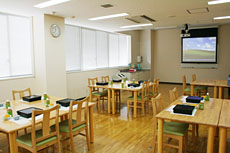
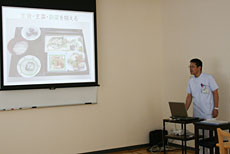
This is a special menu for health-conscious patients undergoing medical checkups at Kitano Hospital.
It uses plenty of vegetables and 29 different ingredients.
(Calories: approx. 700kcal, Salt: approx. 4g)

*The menu may change slightly depending on the season.
Dr. Koshiyama was invited to give a lecture at Steno Diabetes, a world-famous diabetes center in Denmark, on November 16-17. Koshiyama H. “Status of Diabete Mellitus in Japan - Clinical Research, Incretin-based Therapy and New Paradigm-” Special Lecture in Steno Diabetes Center 2010.11.16 (Steno Diabetes Center, Cphenhagen, Denmark)
●On October 23rd, we held our first international diabetes endocrinology nursing seminar as outlined below. It was very well received and we would like to express our gratitude. We plan to continue this type of activity in the future, so please join us again.
The INTERNATIONAL KITANO Nurse Diabetes & Endo SEMINAR (IKNDES)
Date and time: Saturday, October 23, 2010, 15:00-17:00
Location: Kitano Hospital Kitano Hall
special lecture
(Chairperson) Associate Professor, Department of Health Sciences, Graduate School of Medicine, Osaka University
Professor Natsuko Seto
"NP in the USA: Past, Present and Future"
Community Hospital of the Monterey Peninsula FNP (Family Nurse Practitioner) Dr. Eri Matsumoto
Symposium
(host)
Director of the Diabetes and Endocrinology Center, Kitano Hospital, Medical Research Institute, Tatsunokofukai Foundation
Dr. Hiroyuki Koshiyama
(theme)
"The Role and Potential of Nurses in Diabetes Care"
(Panelist)
・Community Hospital of the Monterey Peninsula FNP
(Family Nurse Practitioner) Dr. Eri Matsumoto
・Harden Urgent Care Medical Center Alfred M. Sadler Jr. MD
Osaka University Graduate School of Medicine
Associate Professor Natsuko Seto, Department of Health Sciences
・International University of Health and Welfare Graduate School, Nursing Department, Nursing Management and Development Area
(Health and Medical Sciences) Professor Yae Yuzawa
・Head Nurse, Kitano Hospital, Medical Research Institute, Tatsunokofukai Foundation
Noriko Nakayama Nurse
●An open journal has been launched with Dr. Koshiyama as Editor-in-Chief. Case reports and mini-reviews are welcome, so please submit them.
http://www.la-press.com/japanese-clinical-medicine-journal-j172
●Kitano Hospital was featured in the ranking of endocrine system patients.
http://hospia.jp/toplst/?id=10
[Source] Data reported by the Medical Fee Survey Specialist Organization, DPC Evaluation Subcommittee
Adiponectin is a beneficial hormone secreted by fat cells and is reduced in obese people. Adiponectin has the effect of suppressing arteriosclerosis and improving the effects of insulin, and is also reduced in ischemic heart disease and diabetes. It is known that reduced adiponectin levels also increase when obesity is improved through exercise, etc., making adiponectin measurement useful as a new indicator of metabolic syndrome.
Adiponectin measurement 10,000 yen
Total cholesterol and LDL cholesterol are measured as indicators of arteriosclerosis, but arteriosclerosis actually occurs when oxidized LDL, or oxidized LDL, is taken up by the intima of the arterial wall, and it can be said that oxidized LDL is a risk factor for arteriosclerosis. It has also been reported that oxidized LDL levels are elevated in patients with myocardial infarction and angina pectoris. Oxidized LDL is useful as a new indicator of arteriosclerosis.
Oxidized LDL measurement: 2,000 yen


