Medical Research Institute KITANO HOSPITAL, PIIF Tazuke-Kofukai
Inquiry
search
close


●At the 7th Acromegaly Forum held on November 5th, Dr. Fujimoto received the Encouragement Award for his report on the genetic analysis of familial acromegaly.<Award ceremony (photos)>
The first Osaka Marathon was successfully completed!
Although it wasn't a clear autumn day, the cloudy skies were perfect for running, and I was able to run comfortably with the constant support of over one million people along the road.
The 35km hurdle was a big one, and I suffered from muscle cramps in both thighs, meaning I couldn't reach my target time, but I really enjoyed running for 3 hours and 40 minutes through the streets of Osaka, a place I normally wouldn't be able to run in. There were many runners dressed in Osaka-themed costumes, which entertained not only the runners but also the people along the route.
I took blood tests before and after the full marathon to understand the physical effects of the marathon.CK deviating from muscle(creatinine phosphokinase)However, the previous value was 70 IU/l.(International unit/1 liter)to 6600 IU/lThis shows the tremendous impact on the skeletal muscles.It depends on the speed you run, but I think that unless you have had a certain amount of training, a full marathon can have many negative effects on the body.
The optimal exercise intensity for your body is a "happy pace." Regular jogging or brisk walking at an intensity that allows you to have a conversation with the person next to you will help maintain good cardiopulmonary function and skeletal muscles that are less likely to fall.All of our staff hope to utilize their own experience in exercise to help manage the health of everyone at Kitano Hospital's Cardiac Center.
Everyone, live a comfortable life with comfortable exercise habits!

●Friday, October 22nd During the final game at Koshien Stadium for the Hanshin Tigers, Dr. Koshiyama's comments on diabetes were broadcast on "Liner Vision" between the 5th and 6th innings.http://www.youtube.com/user/KITANODIABENDOPlease refer to.
Sentinel lymph node biopsy can now be performed for endometrial cancer as well as cervical cancer.
Metastasis occurs when cancer spreads from the place where it first began (the primary tumor) to other parts of the body.
Broadly speaking, cancer spreads through two routes: blood flow and lymphatic flow.
When cancer cells enter the lymphatic system and travel to lymph nodes, where they multiply, this is called lymph node metastasis.
Cervical cancer and uterine cancer are diseases that are more likely to metastasize via the lymphatic system than via the bloodstream.
They are also called "sentinel lymph nodes" or "sentinel lymph nodes." They are "the lymph nodes that cancer cells reach first through the lymphatic flow." Therefore, cancer metastasis to the lymph nodes occurs first in the sentinel lymph nodes.
Examining this sentinel lymph node during surgery to diagnose whether or not there is metastasis can have a significant impact on the surgical strategy.
Sentinel lymph node testing has already been widely adopted clinically for breast cancer, and several research results have already been produced in cervical cancer and endometrial cancer, demonstrating its usefulness.
Our obstetrics and gynecology department has been conducting research into finding and removing lymph nodes called "sentinel lymph nodes" for cervical cancer, and has also become able to conduct research into uterine cancer.
The sentinel lymph node is the first lymph node to receive blood from the primary tumor, so if it can be found and examined in detail, even small lymph node metastases can be removed without being overlooked.
In addition, if there is no metastasis when the sentinel lymph node is examined, it is assumed that there is no metastasis to other lymph nodes. In the future, the goal is to be able to reduce the physical burden of surgery by not removing other lymph nodes if there is no metastasis to the sentinel lymph node.
At the current stage, sentinel lymph nodes are examined to check for metastasis in detail, but conventional lymph node dissection is still necessary. However, it is now possible to adjust the intensity of lymph node dissection, and by detecting small metastases during surgery that were previously undetectable, it is now possible to make decisions that have a major impact on treatment plans.
Currently, our hospital is the only one in the Kinki region that performs this test.
●On Thursday, October 6th, Dr. Shinji Sato (Associate Professor, Osaka Sangyo University), an external lecturer in exercise physiology at the Diabetes and Endocrinology Center, was featured on the TV program "Kansai Information Network ten!" (Yomiuri TV) in which he was giving exercise guidance to people who were taking on the Osaka Marathon to improve their health.
●23rd IKESwas a great success. Thank you very much to everyone who participated.
●As of October 1st, Dr. Atsuko Matsuoka joined us as a late-stage resident in our department (for a while she will also be working in the Medical Checkup Department). This means we now have a large team of 10 doctors, including 8 full-time staff (1 department head, 3 deputy department heads, and 4 late-stage residents) and 2 part-time (outpatient) staff. Without relying on our numbers, we will continue to work hard towards our long-awaited goal of establishing basic research in addition to our existing clinical research and collaborative research.
We have started a "Metabolic Syndrome Exercise Checkup" for people who have been diagnosed with metabolic syndrome during a medical checkup. In the "Metabolic Syndrome Exercise Checkup," we provide an appropriate exercise prescription through an exercise stress test and then recommend exercise.
●Nurse Nakayama (NP certified) at our center has been certified by the Ministry of Health, Labor and Welfare as a designated nurse practitioner.
<For more information, please see here (Ministry of Health, Labour and Welfare website)>
●Recently, I presented three papers at the AASD held in Beijing, China.http://www.youtube.com/user/KITANODIABENDOPlease refer to.
In rheumatoid arthritis, inflammatory molecules such as TNF-α and IL-6, and immune cells called T cells, play an important role in bone destruction.
In recent years, drugs (known as biologics) that can pinpoint and suppress these molecules and cells have been developed and are attracting attention.
Currently, there are five biologics available: Remicade, Humira, Enbrel, Actemra, and Orencia. They are used when symptoms cannot be controlled with regular anti-rheumatic drugs, and have an excellent efficacy rate of 80-90%.
It has also been suggested that early use may allow for future discontinuation of treatment.
However, it can also weaken the immune system and increase the risk of developing infections.
Before using these biologics, please consult a specialist first.
Our hospital has been certified as an affiliated training facility for the Japanese Association of Infectious Diseases specialist system since March 2009, and as an accredited training facility since March 2011. Since 2010, training at a training facility has been a requirement for applying for the infectious disease specialist examination, and at our hospital, it is possible to obtain infectious disease specialist qualification under the supervision of a Japanese Association of Infectious Diseases supervising physician.
●About "Integrated Network Systems: Evolutionary Endocrinology and Metabolism INS-EDEN": In May 2011, we published a new book titled "Integrated Network Systems: Evolutionary Endocrinology and Metabolism INS-EDEN." This is what could be called a professional version of our previous "Endocrinology and Metabolism Handbook." Part 1 is an updated version of the previous "Endocrinology and Metabolism Handbook," while Part 2 proposes a hypothesis that endocrinology and metabolism should be integrated with currently developing fields such as network science, complex systems, evolution, developmental biology, and regenerative medicine. We would like to receive critical feedback from professionals specializing in endocrinology and diabetes. We also believe that it will be enjoyed by those specializing in fields other than endocrinology and diabetes who are interested in these fields, as well as the general public. The price has increased slightly, so we believe that the above-mentioned "Endocrinology and Metabolism Handbook" is sufficient for medical students, residents, and those aiming to become endocrinologists or diabetologists.<For more information, click here>
* "Vascular Diabetes 2011," co-authored by Dr. Kawasaki, "1000 Years of Wisdom for Diabetes: What We Have Learned from Patients" (Ishiyaku Publishing), co-translated by Nurse Nakayama Noriko, and "JNN Special: What You Need to Know About Diabetes" (Igaku Shoin), co-authored by Nakayama Noriko, Kamishiro Eiko, and Koshii Yukako, were published in May 2011.
When talking about changes caused by arteriosclerosis, the focus is usually on stenotic changes, but there are also changes in which the arterial wall becomes weak and develops aneurysms. For a long time, surgical artificial vascular replacement was the only radical treatment for aortic aneurysms, which account for the majority of arteriosclerotic aortic disease.
However, with the increase in elderly patients, there is also a growing demand for less invasive treatments for those who are less suitable for surgical treatment, and for individual needs.Stent graft insertionThe advent of endovascular aortic repair (AAA) has brought about a major revolution in clinical practice. This is a transcatheter endovascular procedure using an endovascular artificial graft, a metal stent covered with an artificial vascular material. The principle is to guide the stent graft into the artery using a catheter sheath, expand it, and fix it, blocking blood flow within the aneurysm and inducing thrombus occlusion, thereby simultaneously achieving decompression within the aneurysm and revascularization. This method is a minimally invasive treatment, reducing blood loss and preventing complications associated with laparotomy compared to conventional surgery, making it particularly beneficial for high-risk patients and those with traumatic aortic injuries. In Japan, endovascular stent graft repair has been covered by health insurance since 2002, and the Zenith AAA endovascular graft (manufactured by Cook) was approved for the treatment of abdominal aortic aneurysms in 2006.
Since March 2009, Kitano Hospital has also begun performing stent graft insertion procedures for abdominal aortic aneurysms.
If you are interested, please visit the Aortic and Peripheral Vascular Disease Outpatient Clinic (2nd Consultation) every Thursday afternoon. (*Registration is open until 11:30.)
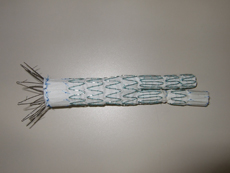 Figure 1: Exposed femoral arteries on both sides
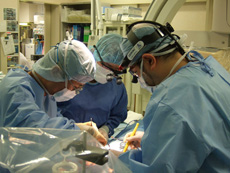 Figure 2: Catheter intervention scene
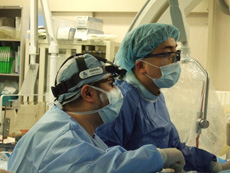 Figure 3: Stent graft preparation
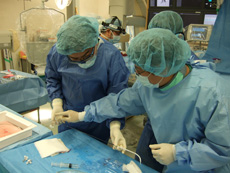 Figure 4: Overview of the aortic stent graft (Zenith)


