Medical Research Institute KITANO HOSPITAL, PIIF Tazuke-Kofukai
Inquiry
search
close


Neonatal invasive GBS infection, including meningitis, is a very serious disease that can result in death or severe disability in newborns.
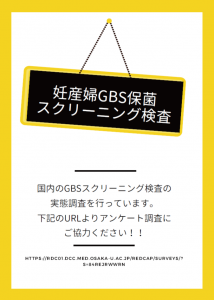
Traditionally, newborn invasive GBS infection has been prevented by screening mothers for GBS carriage in the genital area during pregnancy and administering penicillin during delivery, but there has been no research into whether this is being done correctly.
Therefore, we have decided to conduct a survey on actual screening methods in order to reduce GBS bacteremia, including raising awareness of the correct methods.
We ask for your cooperation in considering the purpose of this initiative.
You can answer the survey from the page linked below.
We sincerely appreciate your cooperation.
GBS (Group B Streptococcus) is a bacterium that can normally reside in the vagina, and is rarely a problem in non-pregnant women unless they have a urinary tract infection such as cystitis. If GBS is present in the vagina at the time of birth, it can cause serious GBS infections such as sepsis, meningitis, and pneumonia in the newborn.
It is classified into early-onset type, which occurs before 7 days of age, and late-onset type, which occurs between 7 and 89 days of age.
GBS screening in pregnant women involves vaginal and rectal cultures. Testing before the 35th week of pregnancy is too early, and testing after the 37th week increases the risk that the baby will be born before the culture results are available, making the test results useless.
The Japan Society of Obstetrics and Gynecology guidelines recommend culture testing at 35-37 weeks of pregnancy, but do not mention the need for enrichment culture.
On the other hand, US CDC guidelines recommend culture testing using enrichment medium to check for the presence of GBS in the vagina and rectum at 35-37 weeks of pregnancy.